India’s power demand was supposed to ease by this time of the year. Why hasn’t that happened?
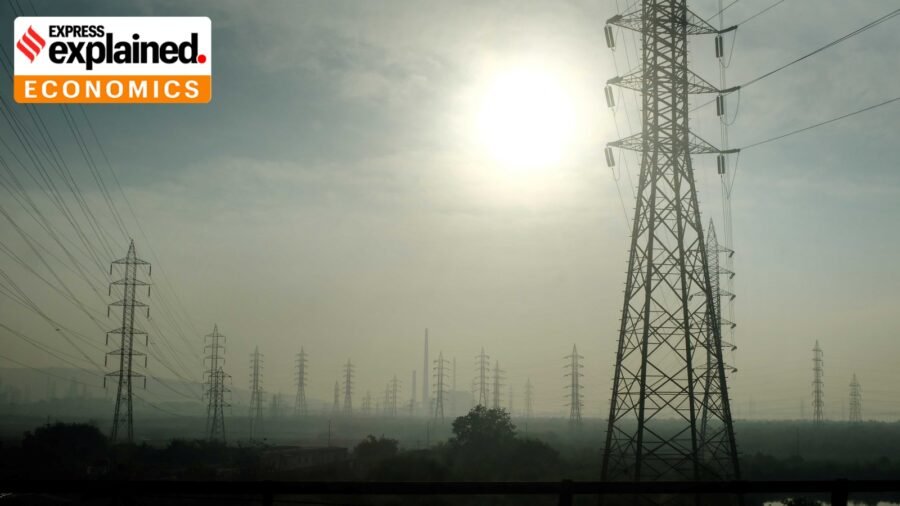
India is witnessing an unusual surge in electricity demand this September, with peak power demand nearing the level recorded during peak summer.
On September 10, the country’s peak power demand touched 269 gigawatts (GW), the highest-ever peak demand recorded for the month. So far, the peak power demand for the year was 270 GW which was recorded during the peak summer in May.
In recent years, electricity demand has generally peaked during the summer months of April, May, June and July, driven largely by widespread use of air conditioners and other cooling appliances across households and commercial establishments.
Story continues below.
Subscribe to see fewer ads.
By September, demand typically begins to ease as the summer heat recedes and the country moves into the post-summer demand pattern. Yet this year, electricity consumption has remained unusually high, keeping peak demand close to its summer level.
September has recorded the year’s highest peak demand only twice in recent years — in 2023-24 and 2020-21.
So, what is driving electricity consumption to remain elevated this September? What challenges does it pose to the power system?
Rain deficit surging power demand
According to power sector experts, the unusually high demand is being driven by a combination of persistent heat, deficient rainfall and higher irrigation demand, with weather conditions linked to El Niño adding to the pressure.
Story continues below this ad
“The increase is being driven by persistent heat and cooling demand, with El Niño-related weather conditions and deficient rainfall also contributing to higher irrigation demand,” said Alekhya Datta, Director, Electricity and Renewables Division, TERI.
The India Meteorological Department (IMD) had also forecast that monthly average maximum temperatures in September are likely to remain above normal over most parts of the country. It also forecasted below-normal rainfall across the country in September, at less than 91 per cent of the long-period average.
“When monsoon is deficient and temperatures are high, both agricultural load and air conditioning load go up, leading to surge in peak demand,” said Alok Kumar, former Power Secretary who currently serves as director general of the All India DISCOM Association, adding that this type of uncertainty will prevail given the today’s global warming and consequential changes in the weather and climate.
Between June 1 and September 9, India received 648 millimeters (mm) of rainfall, compared with the normal 760.6 mm, leaving the country with an overall seasonal deficit of 15%, data from IMD shows.
Story continues below this ad
“A 15% deficit in monsoon rains so far, likely withdrawal of monsoon from North-West India, and rising temperatures have contributed to higher demand for cooling and irrigation,” Rohit Bajaj, Joint Managing Director of Indian Energy Exchange (IEX), the country’s largest power trading platform, told , while highlighting that India’s electricity consumption stood at 49.84 billion units during September 1-9, up 20.7 per cent from the same period last year.
The demand surge in September is also coming at a time when deficient rainfall has squeezed hydropower generation, increasing the power sector’s dependence on thermal generation even as demand remains elevated. The combination has tightened the supply-demand balance and pushed up prices in the electricity market.
“Lower hydro generation due to deficient rains has increased dependence on thermal power, while monsoon-related disruptions led to tighter coal availability at some power plants. With supply availability tightening, buy bids on the exchange increased significantly, thereby resulting in an increase in market prices,” Bajaj said.
As per the data provided by IEX, the average market clearing price in the Real Time Market during September 1-9 was Rs 7.48 per unit, compared with Rs 2.86 per unit during the same period last year.
Story continues below this ad
However, Bajaj said the pressure on thermal power plants has started to ease as rainfall recedes, with an improvement in coal production and dispatches helping strengthen fuel availability.
Supply constraints
This year, rainfall deficit due to weather conditions linked to El Niño has squeezed hydropower output. Since April, hydropower generation has declined by 10.85%, from 91,652.19 Million Units (MU) in 2025 to 81,709.09 MU in 2026.
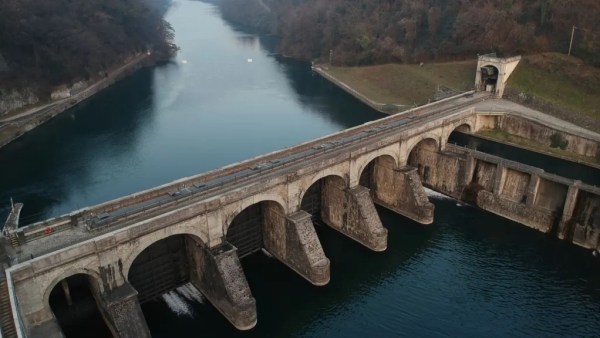 Hydropower generation is down. (Pixabay)
Hydro power plays a crucial role in meeting evening peak demand during summer when solar output drops. However, rainfall deficit has altered the equation. Earlier, the Ministry of Power informed Parliament that reservoir levels at hydroelectric power plants across the country have fallen to their lowest for the April 1–July 30 period since 2023, as erratic weather conditions linked to the effects of El Niño reduced water availability for power generation.
Out of 30 major hydro power reservoirs, 23 have recorded lower water levels during April 1-July 30 period compared with the corresponding period last year. With hydro generators prioritising reservoir conservation, grid operators are relying more on thermal sources in providing flexible peak-hour generation.
Story continues below this ad
As a result, coal-based power generation increased by 10.64%, from 553,730.78 MU between April 1 to September 9 in 2025 to 612,663.37 MU for the same period in 2026, reflecting heavy reliance on coal to meet the demand during non-solar hours.
Meanwhile, power system operators are also relying on expensive gas-based power to meet the evening demand as supply constraints tighten. Electricity generation from gas-based power plants increased by 80.32% during September 1-9 compared with the same period last year, an analysis of data from the National Power Portal showed.

Navier-Stokes problem: The questions raised by OpenAI’s latest maths ‘breakthrough’
By Sohail Khan · 13 Sep
Listen to women in pain
By Sohail Khan · 13 Sep
What Russia brings to BRICS and India
By Sohail Khan · 13 Sep
Leave a Reply