In murder of musician from Manipur, a familiar unease for people from the Northeast
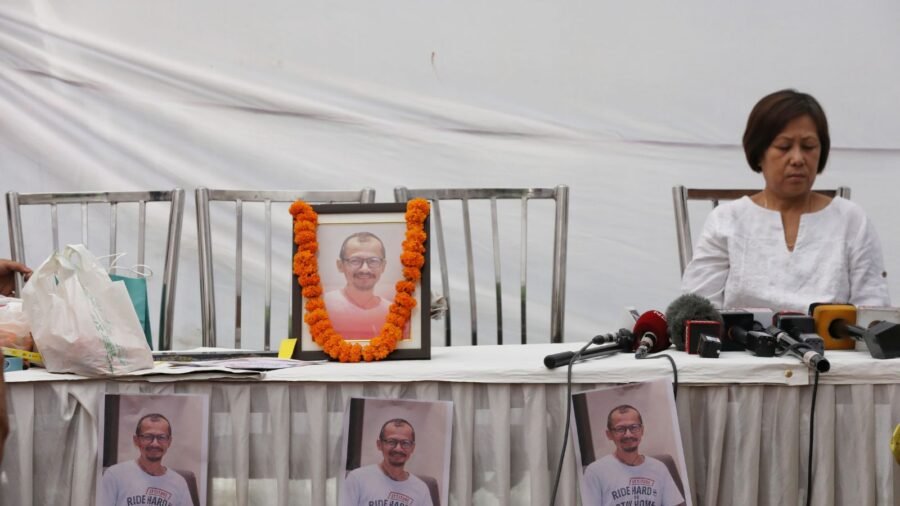
For those who knew Chongtham Vikram Singh, the story begins long before the night he died. He was a guitarist who came of age in Manipur’s early rock scene, playing lead guitar with Ultra Vires, Phoenix and Eastern Dark, in a state shaped by periods of political uncertainty and conflict. He was part of a generation of musicians whose lives and music took shape amid that uncertainty. Nearly two decades ago, Singh moved to Delhi to build a life around music. He spent around 17 years working and teaching in the capital, establishing a music school, mentoring students from home and teaching at the Delhi School of Music. He died early Monday of haemorrhagic shock after being assaulted by a group of people in his building. Seven adults have been arrested and a minor apprehended. Police said the immediate dispute was over noise outside Singh’s home.
For people from the Northeast who have made their lives in India’s larger cities, the unease surrounding his death is all too familiar. In 2014, Arunachal Pradesh student Nido Tania was killed in Delhi after an altercation with shopkeepers in Lajpat Nagar, bringing national attention to the discrimination and violence faced by people from the Northeast. The Delhi Police subsequently set up the Special Police Unit for the North East Region, and other measures created avenues for people to seek help. More than a decade later, however, the sense of vulnerability has not disappeared from everyday life. An investigation this year found that one in four PCR calls received from Northeastern residents was linked to landlord harassment.
Advertisement
For a country that speaks of becoming Viksit Bharat, there is a difficult irony in people from one part of India still having to negotiate safety, recognition and belonging in its capital, even after years of living and working there. The same questions have surfaced beyond Delhi, too. Last December, 24-year-old Tripura student Anjel Chakma died in Dehradun after being attacked by a group of men. His brother alleged that racial slurs had preceded the assault, while police said their preliminary investigation found no evidence of a racial motive and described the incident as a confrontation that escalated in the heat of the moment. For many from the Northeast, however, there is a discomfort that remains.
By the time of his death, Singh had spent almost 20 years in Delhi, establishing a profession, making friends and raising a family. He had students he taught, people he knew, streets he had walked for years and a place he returned to every day. He had carried Manipur with him, too, through the music he had begun playing there and continued to teach in the Capital. Twenty years is long enough for the unfamiliar to become familiar, for friendships to deepen, for students to grow up and for a home to gather its own history.
After his death, however, the story can so easily be reduced to one night: The noise outside his home, the argument, the blows in the stairwell, the journey to hospital. Behind those few hours was the life that had come before them — decades of music, teaching, friendship and family, and the years he had spent making a place for himself in the city. For someone who had spent so long there, the question his death leaves behind is difficult to put away: How many years does a person have to live in a city before he is simply of that place, rather than someone from somewhere else?
Hansing is a researcher and writer based in Manipur

The jungle knows where the tiger is — here’s how to read the signs
By Sohail Khan · 1 Oct
Jyotika praises her mother-in-law, says ‘only a queen can raise a prince’
By Sohail Khan · 1 Oct
Can a police confession justify NSA detention? What Supreme Court said in Sambhal case
By Sohail Khan · 1 Oct