IDSFFK: Salt of resistance captures a forgotten chapter in Keralam’s coastal history
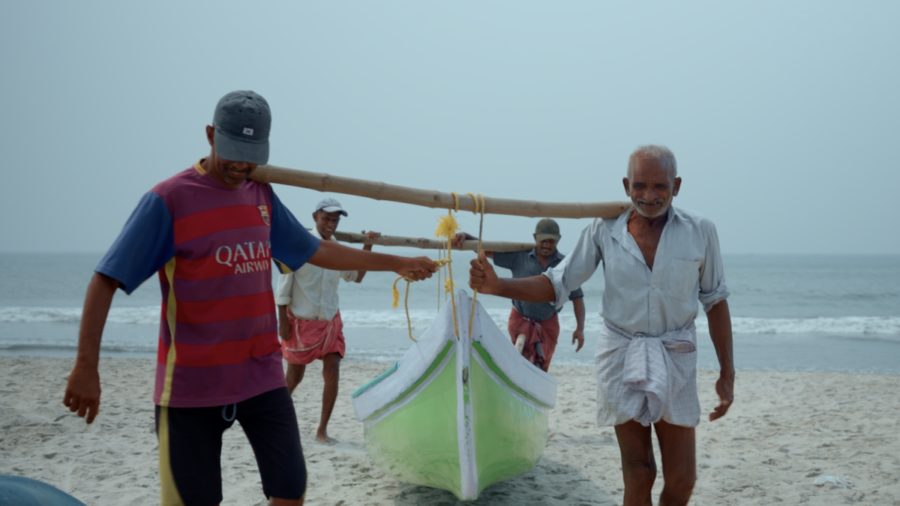
The 52-day trawling ban in Keralam during the monsoon season, meant to allow the dwindling marine resources to regenerate, is now taken for granted, but the implementation of the ban happened only after long years of protest by the fishing community.
Shawn Sebastian’s documentary Salt of Resistance being screened at the 18th International Documentary and Short Film Festival of Keralam (IDSFFK) is an attempt at recording an important but forgotten struggle in the State’s history.
Keralam implemented trawling ban in 1988, becoming the first State in the country to have such a seasonal fishing restriction. The documentary presents the story of the protest through the memories of the fisherfolk, activists of the Swathanthra Matsya Thozhilali Federation and nuns who were part of the struggle and journalists who covered the events.
“Even I was unaware of this bit of history of the trawling ban until I started working on a long documentary on Keralam’s coastal history commissioned by the Kerala History Museum,” says Mr. Sebastian, who along with N.C.Fazil made the 2017 documentary In the Shade of Fallen Chinar, which looks at how art takes the form of resistance in the conflict-ridden Kashmir valley.
The mobilisation of traditional fisherfolk in Keralam began in the 1980s after being fed up with lack of action or support from the government despite a spate of accidents at sea.
Abdul Raziq, one of the young protesters back then, remembers that hardly any welfare measures reached the coastal community back then. However, the strong protests across the State’s entire coastal belt pushed the government to not only implement trawling ban but also various welfare schemes such as pensions, subsidies for fishing equipment and assistance for school children in coastal schools
One of the interesting aspects of the struggle was the involvement of nuns like Sister Alice of the Win Society, Alappuzha and the debates around liberation theology in the State’s public sphere during that period. She reminisces how the church, which was focussed mostly on welfare handouts rather than protests to empower the fisherfolk, did not warm up initially to the protests.
The concerns raised by traditional fishers of a Lakshadweep island featured in Anand Rama Krishnan’s documentary Billam are somewhat similar to those voiced by fishers in Keralam four decades ago. The film follows fishers using simple gear and deeply embedded ecological knowledge passed through generations to fish in the reefs and lagoons near the islands. Most of these traditional fishers are against modern and at times unscientific fishing practices which they say are affecting the fish wealth in the reefs.
Anand tells the story through some arresting visuals including breathtaking underwater shots of the turquoise sea. One of the memorable shots is of a local fisher gently coaxing an octopus out of a deep crevice in a reef. The documentary captures the way of life of the fishing community here whose work depends on not just traditional knowledge but a deep understanding of the sea and its inhabitants which is possible only through long hours of observation. The documentary also captures the transformation that these regions are witnessing due to climate change.

Court admits actor Ansiba Hassan’s contempt plea against SHO
By Sohail Khan · 30 Sep
No seat belt on bikes, no helmet in cars: Odisha’s bizarre traffic fines
By Sohail Khan · 30 Sep
Leave a Reply