How will Mumbai-Ahmedabad bullet train change tracks at high speed? NHSRCL explains
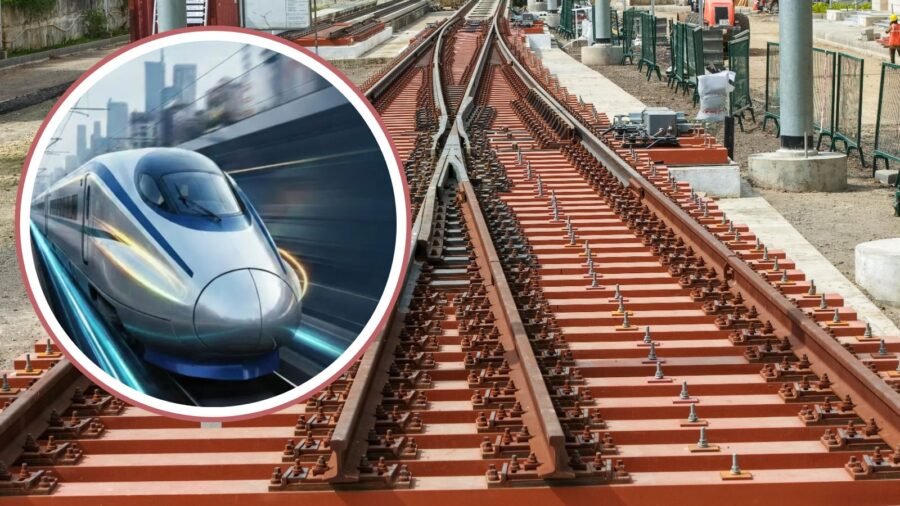
Mumbai Ahmedabad bullet train track change: As the Ministry of Railways targets the start of operations on the priority section of the Mumbai-Ahmedabad bullet train corridor next year, new technologies are being introduced to ensure trains can run safely and smoothly at speeds of up to 320 kmph.
One of the crucial technologies being used on the corridor is a special track-switching system. In simple terms, it will help a bullet train change from one track to another while maintaining the high level of safety and precision required for high-speed operations.
 Mumbai-Ahmedabad bullet train: How it changes tracks at high-speed
How will a bullet train change tracks at high speed?
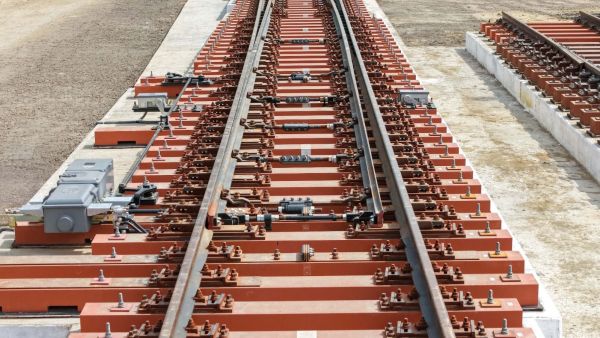
On Indian Railways tracks, trains change tracks through a system known as a turnout. At the point where two tracks meet, there is normally a small gap in the rail. At very high speeds, passing over this gap can create greater impact, vibration and wear.
Story continues below.
Subscribe to see fewer ads.
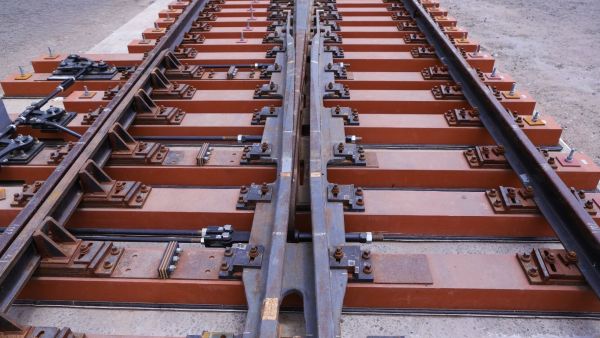
According to National High-Speed Rail Corporation Limited (NHSRCL), the Mumbai-Ahmedabad bullet train corridor will use movable crossings, also known as swing-nose crossings, instead of conventional fixed crossings. The movable part of the track shifts into position along with the switch rails. This helps create a more continuous rail surface for the train to pass over, reducing the impact and vibration caused by a conventional fixed crossing.
 Mumbai-Ahmedabad bullet train: How it changes tracks at high-speed
For passengers, this technology is aimed at providing a smoother and more comfortable ride, while also reducing wear on the track and train components.
“For the first time on the Indian railway network, the Mumbai-Ahmedabad High-Speed Rail (MAHSR) project is introducing turnouts equipped with movable crossings (also known as swing-nose crossings). This technology is a fundamental requirement for safe, reliable operation at design speeds of up to 320 km/h and represents a decisive departure from fixed-crossing turnouts used on conventional railway lines,” NHSRCL said in a statement.
 Mumbai-Ahmedabad bullet train: How it changes tracks at high-speed
Why are two point machines being used?
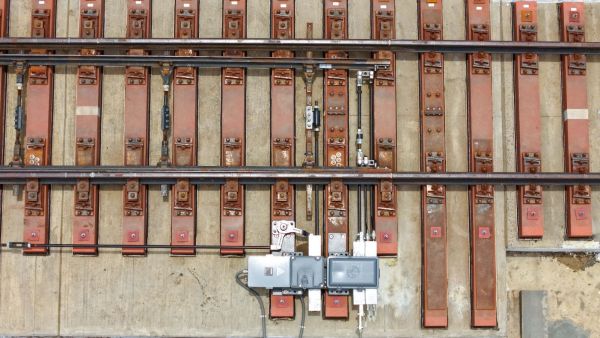
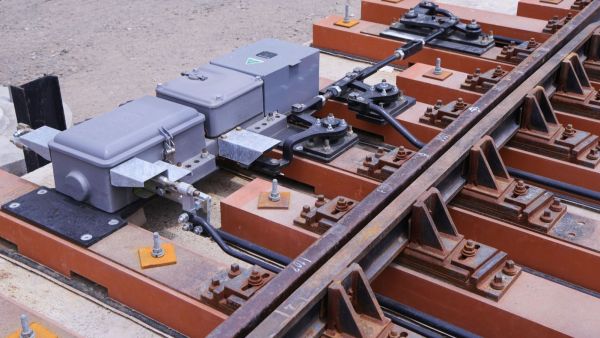
The high-speed turnouts on the corridor will have two point machines. One point machine moves and locks the switch rails, while the second operates and locks the movable crossing. Both have to work together before a train is allowed to pass through the turnout.
Story continues below this ad
The signalling system checks that both components have reached the correct position and are securely locked. Only after these checks are completed can the route be cleared for the train.
 Mumbai-Ahmedabad bullet train: How it changes tracks at high-speed
What happens if something is not in the correct position?
The system has multiple layers of detection and safety checks. It continuously monitors the position of the switch rails, the movable crossing and their locking.
If the required position and locking are not confirmed, the signalling system will not authorise the train to move through the turnout. This is particularly important for a high-speed railway, where trains are designed to operate at speeds of up to 320 kmph, it said.
1. Fixed Crossing (Conventional) vs. Movable / Swing-Nose Crossing (MAHSR)
| Aspect | Fixed Crossing (Conventional Lines) | Movable Crossing (MAHSR, up to 320 km/h) |
|---|---|---|
| Running surface | Gap at the crossing nose that the wheel must bridge | Gap-free, continuous running surface — crossing nose physically shifts with the switch rails |
| Dynamic impact | High-impact dynamic forces at the gap | Continuous wheel guidance; significantly reduced dynamic impact |
| Noise & vibration | Elevated vibration and structure-borne noise | Lower vibration and interior noise, improving passenger comfort |
| Wear | Accelerated wear of wheel flanges and crossing components | Reduced wear rates on rails and rolling stock |
| Safety risk | Increased risk of flange climb / irregular wheel behaviour under residual irregularities | Higher intrinsic operational safety; longer maintenance intervals |
| Suitability | Adequate for conventional speeds | Non-negotiable requirement for sustained 320 km/h commercial operation |
2. Dual Point-Machine Architecture (per turnout)
| Point Machine | Function | Coordination |
|---|---|---|
| 1. Switch-end point machine | Drives and locks the switch rails | Interlocking issues a single route-setting command that moves both machines simultaneously and in sync. Position detection + locking confirmation from BOTH machines required before any train movement is authorised. |
| 2. Movable-crossing point machine | Drives and locks the movable crossing nose |
3. Technical Requirements for High-Speed Point Machines
| # | Requirement |
|---|---|
| 1 | Higher actuation forces and precise stroke control for greater mass/stiffness of HS switch & crossing components |
| 2 | Extremely tight positioning tolerances (typically millimetres) for continuous wheel guidance |
| 3 | Robust locking mechanisms to resist high lateral forces generated at 320 km/h |
| 4 | Proven performance under Indian climatic, vibration and electromagnetic conditions |
| 5 | Integration with high-integrity detection systems meeting HS signalling safety integrity levels |
4. Multi-Layered Safety Assurance — Independent Detection Checks
| Check Layer | What It Verifies |
|---|---|
| Switch rail position | Correct final position of the switch rails |
| Crossing position | Correct final position of the movable crossing |
| Mechanical locking | Secure mechanical locking of both components |
| Route release | Interlocking releases the route only when ALL independent checks confirm correct setting & locking |
Key Takeaway
Movable-crossing turnouts with dual point-machine operation are one of the key technical enablers allowing the Mumbai–Ahmedabad corridor to meet international high-speed rail standards for safety, ride quality, asset life and operational reliability.
What does this mean for passengers?
The technology may not be visible to passengers during a journey, but it plays an important role in how the bullet train will operate.
Story continues below this ad
The movable crossing is designed to provide a smoother path when the train changes tracks, while the dual point-machine system and multiple safety checks help ensure that the track is correctly set and locked before the train passes.

‘4F’ crisis cannot be left to itself: Jaishankar calls for global guardrails
By Sohail Khan · 22 Sep
Elections to 10 UP Rajya Sabha seats on October 16, Bengal by-election on same day
By Sohail Khan · 22 Sep

Leave a Reply