How to appoint judges: A view from South Africa
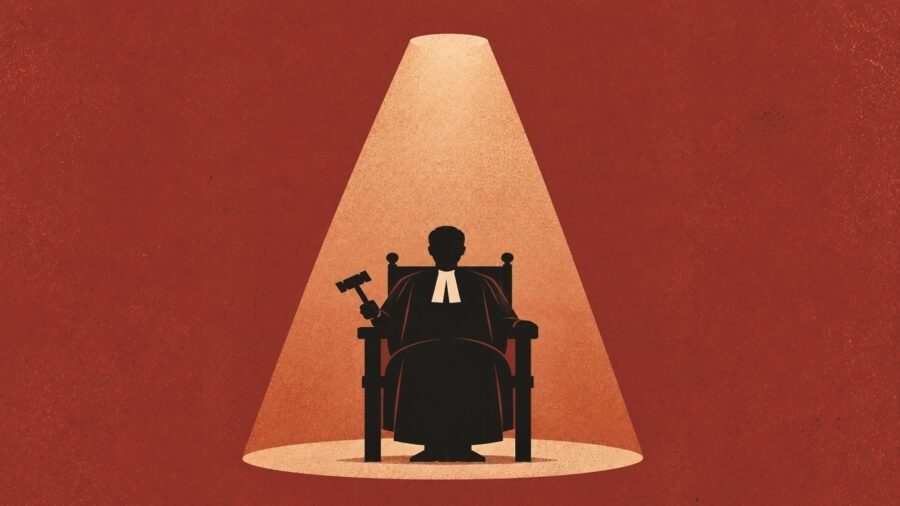
The prompt for this article came from the Supreme Court of India’s judgment in Arvind Malhotra v. High Court of Himachal Pradesh. The verdict concerned the elevation of a high court judge to the Supreme Court. This can and should be done through a process that elevates experienced and competent judges who are not aligned with a particular political position or the government of the day.
In Arvind Malhotra, the applicant, an experienced judge of the Himachal Pradesh High Court, was aggrieved that a judge junior to him had been elevated to the SC in preference to him. He alleged that the appointee was seen as supporting the current government.
Advertisement
The SC judges were not sympathetic to the applicant. They pointed out that the high court collegium had recommended the elevation and that the apex court’s collegium had approved the decision. The SC cautioned that confidentiality in the judicial appointment process was necessary to preserve its integrity. This reasoning inspired me to write this article.
I am a retired judge of the Constitutional Court of South Africa. I was also involved in the process that led to the drafting of South Africa’s new constitution and advised the Constitutional Assembly on the appointment process for judges.
Here, judges at all levels are appointed, confirmed or recommended by a constitutional entity, the Judicial Service Commission (JSC). It consists of senior judges, lawyers and legal academics. Political parties have limited representation. There is nothing secret about the process. The proceedings are broadcast on national television and radio channels. Indeed, these broadcasts are extremely popular and avidly watched.
Advertisement
The process begins with calls for nominations by the commission, followed by the drafting of a short list. Public comments are sought on the candidates. An interview conducted in public determines their suitability for appointment to various levels of court. If the Commission’s members cannot agree on who to appoint, the matter is put to a vote. The only aspect of these proceedings kept confidential is the identity of who votes for whom and who votes against a particular nominee.
Sometimes, during an interview, it becomes clear that a nominee is not competent, impartial or independent and, therefore, should not be appointed. This is because the nominees face tough scrutiny over their lifestyles, allegations against them, views they expressed as lawyers and, if they have served as judges, the quality of their work. Judges in South Africa do not enjoy special immunity. There have been cases of judges being accused of improper conduct. The JSC conducts an investigation and, if appropriate, a public enquiry is held. One example will suffice. A relatively senior high court judge was subjected to a public enquiry after a sexual harassment complaint. The proceedings were broadcast on radio and television. Ultimately, the JSC’s Judicial Conduct Committee found him guilty of gross misconduct and recommended his impeachment (by parliament). The impeachment is still pending, but the judge has been suspended.
The first issue that arises from a comparison of the appointment and disciplinary processes in India and South Africa relates to transparency. Is openness the best approach, or should everything be cloaked in secrecy? I have a strong preference for transparency. A transparent process enables public and professional confidence in the system and is the key to preserving the very integrity that the Supreme Court of India refers to.
The second question relates to the appointing authority. Should it be a collegiate or a more representative structure reflecting society, political parties, the legal profession and judicial officers? Because judges perform a public function, the public must have confidence in the judiciary. An appointment process cloaked in secrecy cannot generate the respect essential for the proper execution of judicial functions.
The next matter is whether any complaint process against a judicial officer should be determined in an open public enquiry or in secret. Here too, I prefer South Africa’s constitutional provision.
The final question is what should be done to fix the problem. Issues should be raised and debated publicly and fearlessly among lawyers, politicians, legal academics and the judiciary itself. An open and vigorous debate is a precursor to the judicial system’s independence. It will not be an easy road to traverse. But it is essential for a truly democratic society.
The writer is a retired judge of the Constitutional Court of South Africa

Jyotika praises her mother-in-law, says ‘only a queen can raise a prince’
By Sohail Khan · 1 Oct
Can a police confession justify NSA detention? What Supreme Court said in Sambhal case
By Sohail Khan · 1 Oct
How is HbA1c calculated? Expert explains what your blood sugar test really means
By Sohail Khan · 1 Oct