How INS Nipun strengthens India’s deep-sea diving, submarine rescue ops
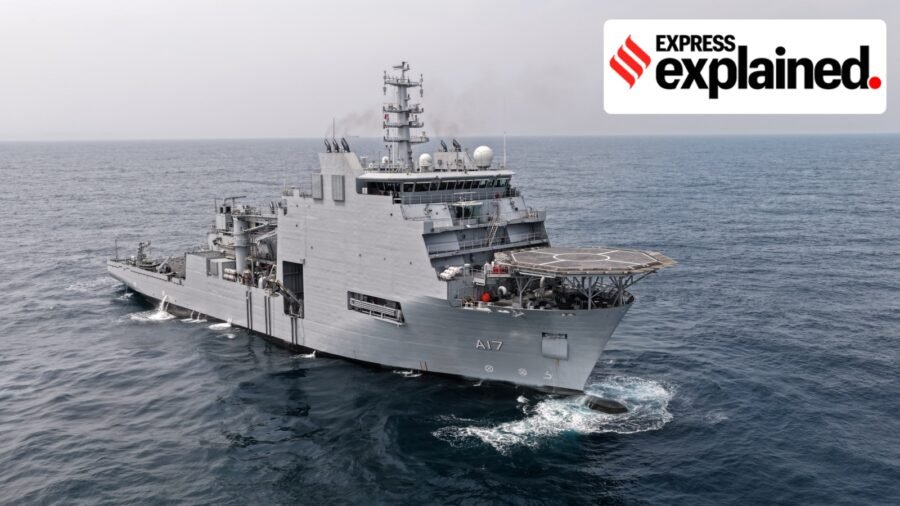
The Indian Navy on Monday (August 31) commissioned INS Nipun, the second diving support vessel (DSV) of the Nistar-class, at the Naval Dockyard in Mumbai. With a mighty whale and diving helmet on its crest, the vessel will significantly strengthen the Western Naval Command’s deep-sea diving, underwater intervention, and submarine rescue capabilities.
Here’s how this specialised ship functions and why it’s crucial to submarine operations.
Why DSVs are needed
A DSV is essentially a specialised platform that allows a navy to sustain complex underwater operations for extended periods, particularly in deep and challenging waters. Naval operations often require divers and specialised teams to inspect, repair, recover, or intervene around ships, submarines, and other underwater assets. A DSV provides the diving systems, equipment, medical facilities, and operational support needed for such missions, reducing dependence on shore-based facilities, and enabling the Navy to respond quickly to underwater contingencies.
Story continues below this ad
In addition to operating submarines to secure our waters, the Indian Navy undertakes diving operations in the Indian Ocean Region. This needs extensive diving operations for activities such as submarine rescue, underwater inspection, testing or salvage, and recovery of objects, ships, or aircraft lost at sea. As these activities involve diving operations with divers remaining underwater for prolonged durations, it requires a suitable platform for their launch and recovery, as well as for carriage of related tools and equipment.
In the past, the Indian Navy operated Russian-origin submarine rescue vessels and relied on a mix of shore facilities along with specialised diving units and suitably equipped naval vessels. But these lacked the multidomain operational capabilities and ability of long deployments at sea.
In September 2018, a contract was signed by the Indian Navy with Hindustan Shipyard Limited, Vishakhapatnam, for construction of two DSVs. The first of the two vessels, INS Nistar, was commissioned in July last year.
INS Nipun
Admiral Krishna Swaminathan, Chief of the Naval Staff, said at the commissioning ceremony of INS Nipun: “As a dedicated diving support and submarine rescue vessel, Nipun adds specialised capability to support complex underwater operations and respond to emergencies in one of the most demanding and mysterious environments known to the world. True to her name, this 9,000-tonne vessel brings together a range of capabilities possessed only by a handful of Navies.”
Story continues below this ad
INS Nipun draws her name from Sanskrit, signifying “one who is adept, capable, and well versed in a particular discipline”. True to the name, the ship is highly specialised and is capable of undertaking deep-sea dive operations and rescue operations at sea, the Navy said. According to the Navy, the crest has a whale symbolising sustained deep-sea endurance and a modern diving helmet representing the diver at the core of the mission.
“The ship is installed with dive equipment and has capability to undertake deep sea saturation diving, which denotes operations divers live under pressure for long periods to work deep underwater. A side diving stage has also been provided for undertaking diving operations. The Remotely Operated Vehicles further enhance the ship’s operational capabilities by facilitating diver monitoring and salvage operations. In addition, the ship also serves as the Mother Ship for the Deep Submergence Rescue Vessel (DSRV), to evacuate personnel in case of an emergency on a submarine,” the Navy said.
The contract for procurement of two sets of non-tethered DSRV, capable of effecting submarine rescue up to depths of 650 metres, has been concluded with M/s James Fisher Defence, UK in March 2016. The first DSRV was delivered at Mumbai in April 2018 and the second DSRV at Visakhapatnam in 2019.
INS Nipun has a self-propelled hyperbaric lifeboat, which is a pressurised lifeboat that can independently evacuate divers and diving compression chambers. It can undertake diving and salvage operations: recovery of damaged, sunken, or stranded ships and equipment.
Story continues below this ad
“The ship incorporates modern systems for navigation, platform management and precise station keeping, complemented by specialised facilities for diving, underwater intervention and medical support. These capabilities enable Nipun to function as an integrated platform for complex operations beneath the surface,” the Navy said.
Underwater domain
“The importance of DSVs goes beyond supporting individual diving missions. For a navy operating across the vast Indian Ocean Region, the ability to sustain specialised underwater operations at sea is an important part of maritime preparedness. This is particularly relevant to submarine operations, where an accident or technical emergency can quickly become a race against time,” a retired Navy officer, who has served on submarines, told . “A DSV acting as the mothership for a DSRV provides the platform from which a rescue system can be deployed to reach a submarine in distress and evacuate its crew. India has two DSRVs, one for each seaboard, capable of rescue operations to depths of 650 m.”
The capability also has a wider strategic dimension. DSVs allow the Navy to maintain an underwater presence for extended periods, conduct interventions and recover objects in difficult conditions, and support search-and-rescue missions without being tied to shore facilities.
For India, this is significant as underwater capabilities become increasingly important to maritime security. “The induction of indigenous DSVs also means the Navy is building and sustaining specialised expertise and equipment domestically, while strengthening its ability to provide submarine rescue assistance to regional partners. INS Nistar’s participation in Exercise Pacific Reach 2025 demonstrated this wider role, including international submarine-rescue operations and interoperability with other navies,” said the retired officer.

Where arrival feels much like belonging
By Sohail Khan · 1 Sep
India needs a new deterrence doctrine
By Sohail Khan · 1 Sep

Leave a Reply