Guess who will ultimately pay for UPI’s new changes? You, the customer
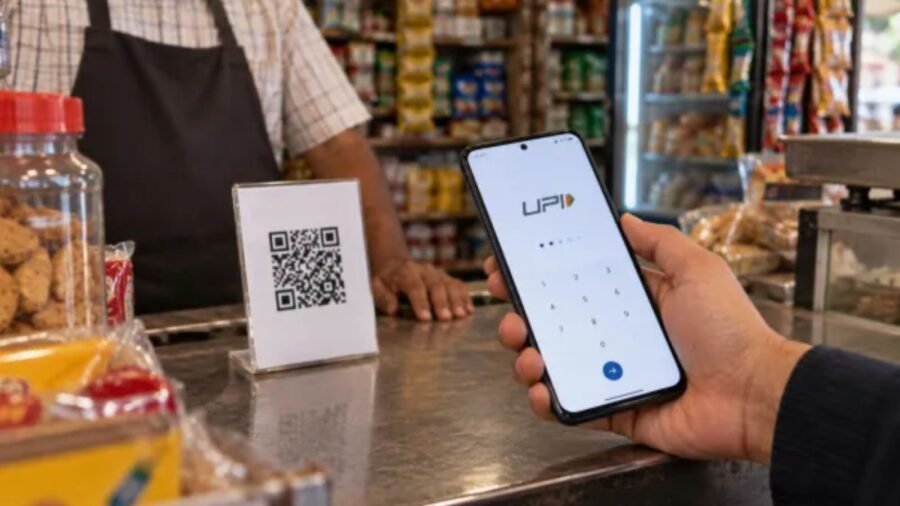
Since 2016, India has incorporated UPI, the app-based system that allows you to pay anyone instantly by means of just a phone number or QR code, into what is now the world’s largest digital payments network. Last year, it processed Rs 314 lakh crore through 24,161 crore transactions. That equals a huge amount of Rs 50 chai payments and Rs 5,000 online orders, all of which took place without the use of cash.
The fact that it expanded so rapidly can be attributed to a single choice: In 2020, the government decided to make UPI free for merchants. In order to see why this was important, you have to know what an MDR (Merchant Discount Rate) is. Each time a shop takes a card or makes a digital payment rather than accepting cash, the bank or payment network usually charges a small fee, typically a percentage of the amount of the sale, for processing the transaction. That fee is known as the MDR. You can think of it as similar to a toll booth: Every digital transaction that goes through has to pay a small toll to the banks and payment companies who operate the system.
Advertisement
In 2020, the government got rid of that toll altogether for UPI. With zero MDR, the shopkeeper or online seller kept 100 per cent of what they earned, whether the customer paid in cash or by using UPI. That was a major point since it meant there was no cost involved in accepting digital payments, no setup fee, no percentage taken off, nothing at all. It, therefore, made UPI the clear, cheapest option for small businesses. However, in reality, the toll booth didn’t vanish; instead, the government paid it through an incentive scheme that compensated banks for handling small transactions. That scheme increased from Rs 1,389 crore in FY 2021-22 to Rs 3,631 crore in FY 2023-24, with the taxpayer effectively bearing the cost so users and sellers wouldn’t have to.
On October 15, a new MDR of 0.4 per cent (with a cap of Rs 300) will be applied to merchant UPI payments exceeding Rs 2,000, while a fixed fee of Rs 5 will apply to transactions such as utility bills, telecom, and fuel. Even though traders and opposition politicians have objected, the government has stated that there will be no reversal, arguing that this will make UPI “self-sustainable”, that is, the system will cover its own operating costs rather than depending on the taxpayer-funded incentive scheme. The government has also made it clear in just what way the fee is being charged: It will be charged to merchants and not to customers, and will not appear as a direct charge on your UPI app. Exemptions apply to small transactions, peer-to-peer transfers, and to “micro-merchants” (those who sell for less than Rs 1 lakh per month).
Now here’s the problem, and it rests on a simple economic concept known as “cost pass-through”: If the cost of carrying out an activity increases, the business doesn’t normally just absorb that cost in silence; instead, it tends to pass it on by raising the price. This is the same reason that the prices at your favourite restaurant go up when the rent or the cost of ingredients rises. Even though the MDR appears on the merchant’s accounts rather than on the customer’s payment screen, a seller who is losing Rs 20 on every Rs 5,000 sale has a clear motive to slightly increase the price of the item to make up for the loss. While the argument that “it’s not on the consumers” is correct in a narrow and technical way, it overlooks what typically happens afterwards.
Advertisement
This is essentially a question of economic incidence: Who legally pays a charge and who actually bears its cost are two different things, and they rarely match. Just as with a tax, the statutory burden may sit with the merchant, but the ultimate incidence tends to shift toward the consumer through higher prices. That shift matters beyond the extra rupees on a bill, because higher prices affect demand itself. When goods become marginally costlier, some buyers cut back, delay purchases, or switch to cash to avoid the pass-through altogether. A dip in demand then feeds back into merchant sales volumes, meaning the very cost meant to make UPI “self-sustainable” could end up denting the transaction growth the system depends on for that sustainability.
The impact is most felt by the companies that UPI was initially intended to assist. One of the attractions of the “free” UPI service was that small online sellers could open up their businesses without having to pay the normal overhead costs associated with a standard payment gateway; there were no processing fees and no infrastructure costs, merely a QR code. This low cost of doing business also allowed them to keep their prices low. When a transaction fee is added back in, you are once again introducing the very cost that originally made digital selling so attractive — specifically for the sellers who can least afford to bear it, since many small online businesses often sell items above the Rs 2,000 limit.
To be fair, running a payment network isn’t free, and a capped fee that spares small transactions is more thoughtful than charging everyone the same. Whether Rs 2,000 and 0.4 per cent is the right balance or just a convenient number is genuinely an open question. The prices in effect after October 15 will answer that better than any government statement can. Because, in the end, a payment system is only as trustworthy as the promises it keeps, and India spent a decade convincing 300 million people that “digital” meant “free”. October 15 won’t just be a fee taking effect. It’ll be the moment we learn whether that trust was policy, or just a phase.
The writer teaches economics at Dr B R Ambedkar College, University of Delhi

Who is Jagtar Singh Johal, the UK citizen granted bail after nine years in jail in India?
By Sohail Khan · 18 Sep
Katrina Kaif on postpartum skin, changing beauty standards and self-care: ‘Looking my best…’
By Sohail Khan · 18 Sep
From folklore to big screen: The story of Van Devi Temple in Bihta
By Sohail Khan · 18 Sep
Leave a Reply