Green Card or citizenship? DHS clarifies what happens to US-born children of foreign government employees
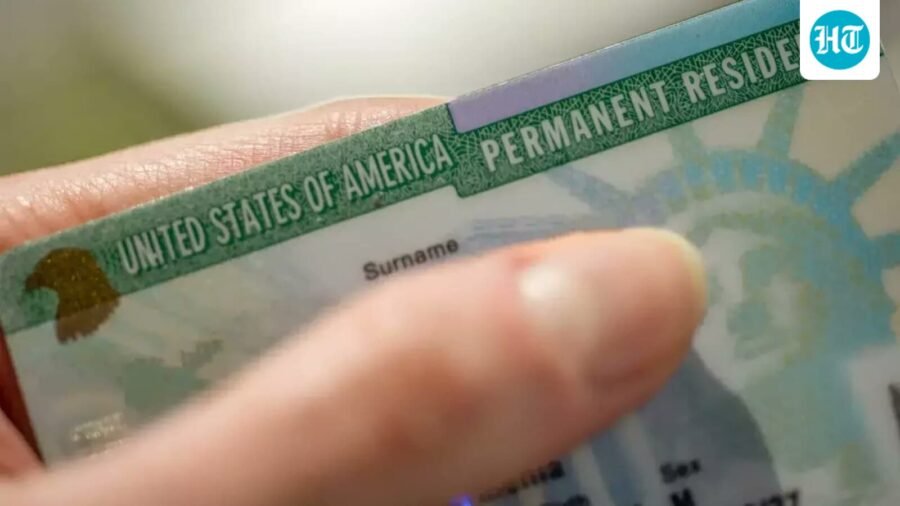
The DHS clarified documentation for US-born children of foreign government employees seeking permanent residence instead of citizenship at birth.
Published on: Sep 19, 2026, 12:26:54 IST
Prefer HTon Google
Share via
Copy link
The US Department of Homeland Security has clarified documentation requirements for a new category of US-born children who may qualify for permanent residence rather than automatically receiving US citizenship at birth.
The clarification follows an interim final rule issued in September that expanded the federal regulations covering children born in the United States to certain foreign government employees. DHS said some evidentiary language was inadvertently removed when the rule was initially codified and has now been restored.
The correction applies retroactively to children born to foreign government employees on or after September 4, 2026, the effective date of the original rule.
Who is covered by the new Green Card category?
Under the revised rules, DHS says a child born in the US to a foreign government employee who is not a US citizen is not considered a US citizen at birth unless at least one parent is a US citizen.
The broader category includes foreign diplomatic officers, employees of foreign governments working in an official capacity and certain employees of international organizations with immunity. DHS also distinguishes between foreign government employees and people who may work for foreign missions or governments in other capacities.
The rule therefore goes beyond the narrower category of children of foreign diplomats that had previously been addressed in federal regulations.
DHS said the change creates a route for eligible children to voluntarily register as lawful permanent residents. The agency's rule states that permanent-residence registration is not mandatory, although separate federal registration requirements may apply.
What documents will applicants need?
The latest correction restores evidence requirements that were accidentally omitted from the regulatory text.
Applicants may need to provide documentation including evidence of the child's birth in the United States and proof that a parent was employed by a foreign government at the time of the child's birth. The rules also address cases in which the parent was a foreign government employee but did not hold diplomatic status.
For some applicants, DHS said Form I-508, used to waive certain rights, privileges, exemptions and immunities associated with diplomatic status, may not be required. Instead, evidence of the parent's foreign government employment may be sufficient for the relevant category.
The rule also makes corresponding changes to the Form I-485, Application to Register Permanent Residence or Adjust Status, and Form G-325R.
Green Card does not mean US citizenship
The distinction is significant for families affected by the rule.
A Green Card gives a person lawful permanent resident status, but it does not make that person a US citizen. Permanent residents and citizens have different rights and obligations under US immigration law.
DHS's rule specifically says that registration as a lawful permanent resident is voluntary for people covered by the new provision.
The administration's move comes amid broader changes to the interpretation of birthright citizenship. The Trump administration has sought to narrow the circumstances in which people born in the US automatically acquire citizenship, including through Executive Order 14160 issued in January 2025.
The latest DHS rule, however, specifically addresses children of foreign government employees, rather than creating a general new rule covering all children born in the US.
What happens next?
The interim final rule is already in effect, while DHS accepts public comments. The agency's September correction says it is treated as having been included in the original rule from its September 4 effective date.
The broader legal implications of changing birthright citizenship rules remain subject to litigation and judicial review. For families potentially covered by the new category, the immediate issue is determining whether a parent falls within DHS's definition of a foreign government employee and what evidence is required to establish that status.
See Less

Trump claims ‘permanent control’ over Greenland security: What new US-Denmark deal entails
By Sohail Khan · 19 Sep

Leave a Reply