Global South in front row of crises, but back row of decision-making: Jaishankar in US
Story continues below.
Subscribe to see fewer ads.
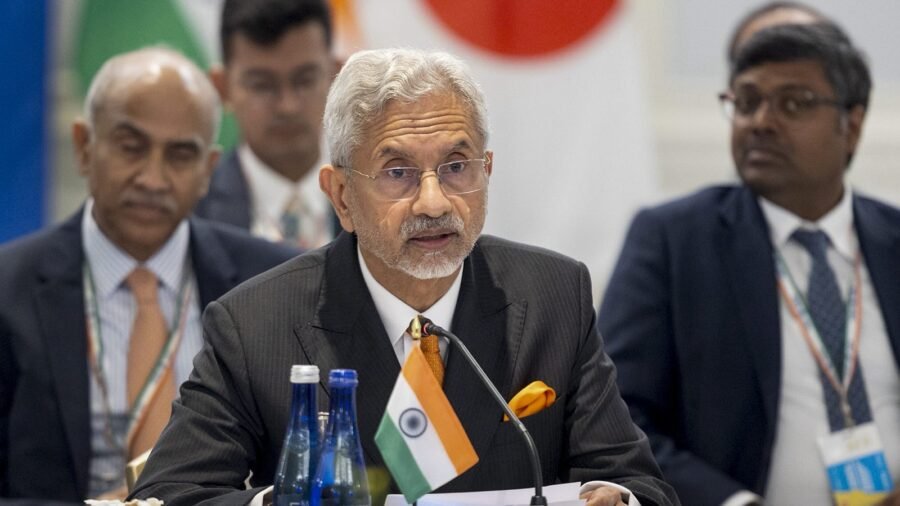
“The Global South today may be in the front row of the global crises, but is in the back row of decision-making,” Jaishankar said, noting that institutions created for a different era inadvertently continue to reflect the power structures of that time.
“The Global South needs to be part of decision-making structures that deliberate on issues that directly pertain to our future,” the EAM said, adding that in the past year, the world has seen an increase in the number of active conflicts, which pose a significant risk to the global economy, particularly for the Global South.
“At a time when we needed to turn to multilateralism, we actually witnessed its dismantling,” Jaishankar said.
Jaishankar chaired the meeting under the theme ‘Navigating Together Towards a Brighter Future – the Compelling Case for an Empowered Global South’, as per the Ministry of External Affairs (MEA).
Story continues below this ad
Representatives from the participating countries expressed shared concern over the weakening of multilateral institutions, and emphasised the urgent need for comprehensive reforms, particularly in the United Nations, an MEA statement read.
Jaishankar also stressed that Global South countries must “not accept or legitimise” chokepoints, whether in supply chains, finance or connectivity. “Energy security is at the heart of development. Availability and prices should not be manipulated for political ends,” he said.
On the sidelines of the UNGA High Level Week, where he is leading the Indian delegation, Jaishankar also held a series of bilateral and multilateral meetings, calling for an effective UN Security Council, and collaboration in the fields of AI and space.
He also participated in the India-UAE-France trilateral on Tuesday. “Collaboration in the fields of AI, Space, health sciences, energy and culture was the main topic of discussion,” he wrote on X after the meeting, adding, “Our shared interests and complementary capabilities offer immense scope for cooperation. Agreed to meet again soon to take the discussion forward.”
Story continues below this ad
The Foreign Ministers of the G4 nations of India, Brazil, Germany and Japan also met in New York and “discussed the imperative of reformed multilateralism and a more representative, responsive, and effective UN Security Council that reflects today’s global realities”. Jaishankar said India will continue to work together with the grouping “to advance this shared objective”.
He also held discussions with Nepalese counterpart Shisir Khanal, Qatar’s Emir Sheikh Tamim bin Hamad Al Thani, Philippines’ Foreign Affairs Secretary Theresa Lazaro, and German Foreign Minister Johann Wadephul.
During his meeting with Italy’s Deputy Prime Minister and Foreign Minister Antonio Tajani, the focus was on the Gulf situation, the India-Middle East-Europe Economic Corridor (IMEC), and the Ukraine conflict.
“We want to work together to achieve the goal of 20 billion euros in trade exchange by 2029, seizing all the opportunities offered by the EU-India Free Trade Agreement and the strategic development of the IMEC corridor,” Tajani said.
Story continues below this ad
Earlier, during a conversation in New York, US President Donald Trump also said that his administration strongly supports the India-Middle East-Europe Economic Corridor (mooted by New Delhi in 2023). Trump said there was a need to shift energy infrastructure away from Iranian checkpoints amid multiple strikes on West Asian countries during the war.
Ladakh administration withdraws cases against 20 booked in last year’s Leh violence
By Sohail Khan · 23 Sep
India could see nearly 16,000 more heat deaths in next 6 months: Report
By Sohail Khan · 23 Sep
Identifying weak areas, manning emergency hotlines: How Odisha braces for deep depression
By Sohail Khan · 23 Sep
Leave a Reply