Germany’s political churn is about a shrinking centre
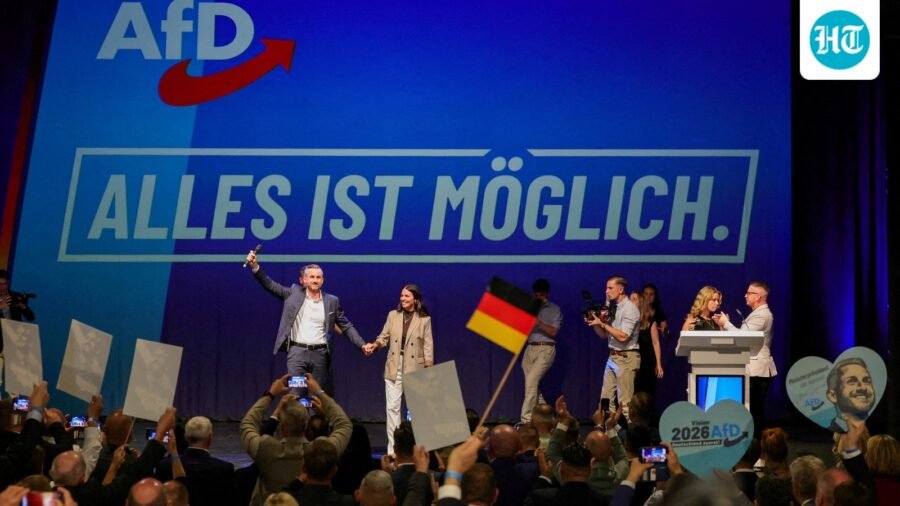
The elections show that, though Chancellor Friedrich Merz is unpopular, the deeper manifestation is of a German socio-economic model under political challenge
Published on: Sep 24, 2026, 06:50:28 IST
Prefer HTon Google
Share via
Copy link
Elections in three German states this month have altered the country’s political landscape. The Alternative for Germany (AfD), has effectively broken through in eastern Germany. The ruling Christian Democratic Union (CDU) stands diminished. In Berlin, voter unhappiness shifted to the Left rather than the Right. Altogether, these elections show that, though Chancellor Friedrich Merz is unpopular, the deeper manifestation is of a German socio-economic model under demographic and political challenge. The political centre appears to be unable to marshal discontent.
In Saxony-Anhalt, the AfD cornered 43.8% of the votes, almost doubling its 2021 vote share. It has 39 seats, just three short of a majority. The CDU fell to 17.2%. A fortnight later, Mecklenburg-Western Pomerania threw up another warning. The AfD leaped to around 38%, ahead of the Social Democratic Party (shortened to SPD in German), while the CDU failed to secure the 5% threshold for entry into the legislature, and one of its worst state election results since 1945.
The election in the capital, Berlin, showed a different trend. The Left Party almost doubled its share and emerged as the largest party, while the AfD rose to around 16% from about 9% in 2023. The governing CDU, which had secured around 28% in the previous election, fell to about 19%. Housing availability and rents were among the core issues in the election.
Besides the message that Germany is moving to the Right, the elections show that Germany is now more fragmented and dissatisfied with its political core. Voter behaviour shows various insecurities around migration, public services, and housing, with economic insecurity more widespread across Germany.
This fragmentation helps the AfD move beyond a protest vote and gain adherents beyond its traditional vote bank, including from the CDU. The jury is still out on whether people actually believe the AfD can govern well, because the firewall other parties have put up prevents the AfD, even with majorities, from forming a government. This was evident earlier in Thuringia, and now, though it is only three seats short of a majority in Saxony-Anhalt, nobody is yet touching it. In Mecklenburg-Western Pomerania, its victory is significant, but it will not translate into government.
The CDU now sees the contradictions beyond Merz’s loss of popularity. The centre-Right party traditionally represented economic stability, social security, integration with Europe, and Germany’s security. Voters whose concerns now centre on migration, economic decline, and a challenge to the welfare State seem to be moving towards the AfD. Voters worried about social protection are increasingly moving to the Left or the SPD, leaving the CDU squeezed from both sides.
The breach in the energy partnership with Russia has had a deep impact on Germany. Its industrial base benefited from cheap, steady Russian gas, while its manufacturing exports benefited from access to China. That model is now vulnerable. In a small state like Saxony-Anhalt, these disruptions contributed to industrial restructuring and unemployment.
Germany also confronts lower productivity, intense bureaucracy, inadequate investment in infrastructure, an aging demographic, shortages of skilled labour and rising costs, which have put its core automotive industry through a difficult transition. Following two years of recession and weak growth, German growth in 2026 and 2027 is likely to be modest, while energy prices will continue to trouble both households and companies.
The German welfare State is now at the focus of the political churn. Built around a large working-age population, it is being challenged by a rising share of retirees, driving up pension and health care costs. This creates a vicious circle: Weak growth reduces available resources, while pressure on welfare measures fuels political discontent, which is reflected in election results.
Germany has undertaken the Zeitenwende (epochal shift) to invest heavily in its defence sector. However, strategic resilience also requires strengthening its economic base. “Winning the war at home” must go beyond challenging the AfD’s electoral victories. It needs to redefine how political competition is handled by focusing on growth, security, the welfare State, and confidence in what lies ahead.
The economic and security segments of the Zeitenwende have to come together. The proposed expansion of defence spending could stimulate industrial growth, technology, and infrastructure development, but it also requires financial resources which the welfare State wishes to tap into. Germany does not appear to be in a position to simply spend its way out of trouble.
Migration is now a politically toxic subject because the states are unable to deliver housing, education, public health care and security to German citizens who feel threatened by migration and are annoyed by the amount of welfare funds directed towards migrants. Germany certainly needs workers, but the flows have to be managed, and integration into the German socio-economic system needs major improvement.
The three elections in eastern Germany have definitely provided a warning. The Brandmauer, or firewall, against the AfD has not reduced its political significance. It is isolated in the legislature, but its popular vote continues to grow. For the CDU, occupying the centre is no longer a panacea for its political future, and dissatisfaction can lead people away from the mainstream parties towards the fringes.
The main challenge, therefore, is which parties can provide renewal to overcome stagnation, confidence to overcome growing insecurity, improve economic performance, and create a better-accepted social contract.
The Zeitenwende was initiated as a response to the Ukraine crisis. Its major test could well be whether it can help rebuild the German economy and sustain its welfare State model. If it achieves that, it will restore faith in the central segment of the polity. If it fails, the consequences will reverberate far beyond the three state elections we have just seen.
Gurjit Singh is former Indian ambassador to Germany. The views expressed are personal
Get Current Updates on India News, Elections 2024, Lok sabha election 2024 voting live , Karnataka election 2024 live in Bengaluru , Election 2024 Date along with Latest News and Top Headlines from India and around the world.
See Less
India should chase its own IP-led global standards
By Sohail Khan · 24 Sep
New cat in habitat, and some glimmer of hope
By Sohail Khan · 24 Sep
Leave a Reply