FSSAI Chief Backs Tukaram Mundhe’s Food Safety Drive, Says It Is No ‘Punishment Posting’
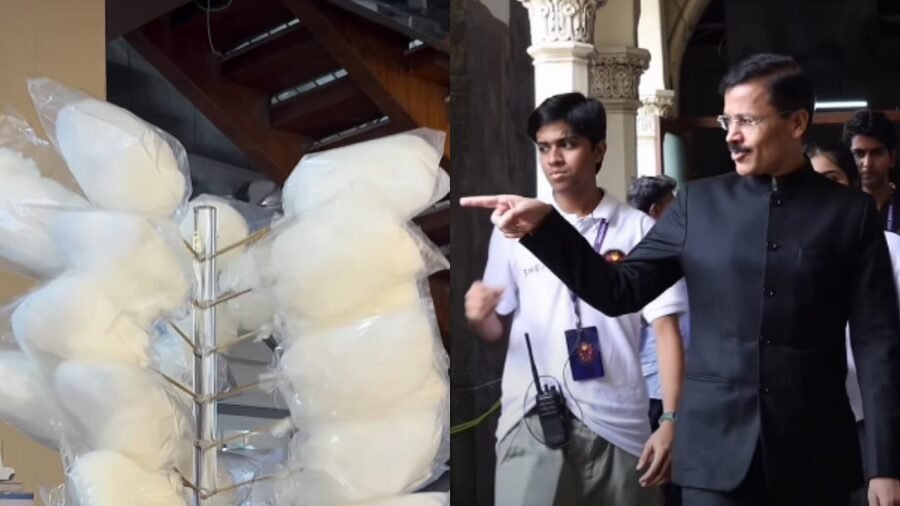
FSSAI Chief Backs Tukaram Mundhe's Food Safety Drive, Says It Is No 'Punishment Posting'
FSSAI CEO Rajit Punhani has praised Maharashtra FDA Commissioner Tukaram Mundhe’s food safety crackdown, saying it shows effective enforcement is possible with existing resources. Punhani said food safety departments need greater administrative focus and dedicated commissioners in every state. His remarks come amid debate over Mundhe’s strict actions.

FSSAI Chief Backs Tukaram Mundhe's Food Safety Drive, Says It Is No 'Punishment Posting' | File Pic
Maharashtra Food and Drug Administration (FDA) Commissioner Tukaram Mundhe’s tough enforcement of food safety rules has received strong backing from the country’s top food regulator, with Food Safety and Standards Authority of India (FSSAI) CEO Rajit Punhani saying the officer has demonstrated what can be achieved even with existing manpower.
Punhani also sought to challenge the long-held perception that heading a food safety department is a “punishment posting”. His remarks underline a larger problem: food safety, despite directly affecting the public, has historically struggled to receive the administrative attention given to other areas of healthcare.
Mundhe Shows What Existing Teams Can Do
Speaking in an interview with TV, Punhani praised Mundhe’s enforcement drive and said his work was a testament to the saying, “if there’s a will, there’s a way”.
`;
Mundhe has stepped up inspections and enforcement across Maharashtra, targeting restaurants, food businesses, warehouses and other establishments suspected of violating food safety norms. The Maharashtra FDA has reported thousands of inspections and hundreds of licence suspensions in recent months.
Punhani pointed out that food safety departments have historically not been given the importance they deserve, with several officers reluctant to head them, .
“Otherwise, many considered it a punishment posting. Many officers didn’t want to become food safety commissioners,” Punhani said.
Why Food Safety Took A Back Seat
Explaining why such postings were viewed negatively, Punhani said food safety had traditionally received less attention than the health system.
“Because no one paid any attention. We would rather be in health. You know, in health you have your doctors, your primary health centre. You have a system, an old system. It’s about maybe a hundred-year-old system,” he said.
Food safety, in comparison, is a relatively new administrative area and is often handled as an additional responsibility.
“While food safety is relatively new, people don't know. Most people are given an additional charge. Because if it was important, then there should be no additional charge. You should have a separate food safety commissioner,” Punhani said.
His comments make a straightforward case for treating food safety as a core public function rather than an administrative afterthought. Giving officers additional charge of such departments can also raise questions about whether adequate attention and resources are being devoted to enforcement.
Dedicated Commissioner Needed In Every State
Punhani said having a dedicated food safety commissioner in every state should now be considered necessary.
“Which is must now,” he said when asked whether every state should have a separate food safety commissioner.
Mundhe’s Maharashtra drive, according to Punhani, also demonstrates that stronger enforcement does not necessarily depend on immediately increasing staff strength.
“You know, he has done it with the same team. It's not that more food safety officers have been recruited. So, if there's a will, one can do it with the same food safety officer, same number,” Punhani said.
He said he was “happy” with Mundhe’s work and noted that the crackdown had helped increase public awareness about food safety departments and the role of food safety commissioners in states.
Also Watch:
Praise Comes Amid Court Criticism
However, the strong endorsement from the central food regulator comes against the backdrop of criticism of Mundhe’s enforcement measures from the courts.
The Bombay High Court recently strongly criticised the Maharashtra FDA’s actions under Mundhe, likening the regulator’s approach to “killing a mosquito with a sword” and questioning what it viewed as a disproportionate response to regulatory violations.
The judges also alleged a pattern of “undue haste”, saying the regulator appeared to be acting pedantically rather than pragmatically by shutting down commercial establishments and revoking licences without following due process.
The contrasting positions bring the central issue into sharp focus. Strong food safety enforcement can protect consumers and make businesses take compliance seriously, but regulatory action must also remain proportionate and follow due process. Mundhe’s drive has put food safety firmly in the spotlight; the challenge is ensuring that greater enforcement and procedural fairness go hand in hand.

Add As a
Trusted Source 




Leave a Reply