From the Opinions editor: The high price of freedom for women in public spaces
Advertisement
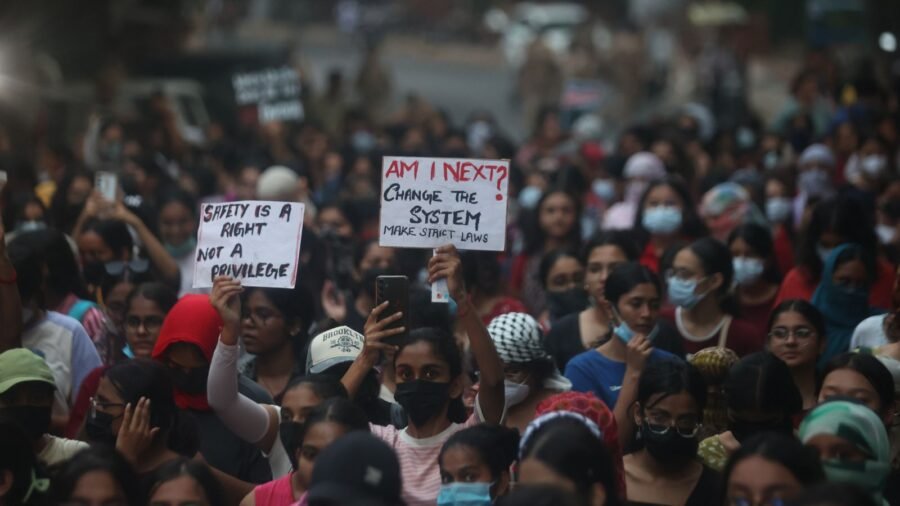
Eight thousand kilometres from Johannesburg, in Delhi’s Astha Kunj Park, three men posing as police officers accosted a 17-year-old girl and her friend, before gang-raping her. In Bihar’s Jamui, a teenage boy and girl returning from coaching classes were stopped by a group of men, questioned and subjected to assault and molestation, the incident recorded on a cellphone. Days later in Samastipur, another young couple were harassed and the woman allegedly molested when they stopped to take photographs. Different continents, different histories of violence, tied together by the fact of a woman doing something unremarkable — running, walking home with a friend, taking up space in public.
Unlike South Africa, the alleged perpetrators of all three incidents in India have been arrested. But these violations say something about how societies mistake legal equality for lived equality. South Africa’s 1996 constitution is among the most progressive in the world on gender equality, incorporating, among other rights, protection from private discrimination. Three decades on, however, its promise is still to be realised.
Since the horrific 2012 New Delhi gang rape, and more recently the rape and murder of a resident doctor in Kolkata’s RG Kar Medical College and Hospital, India’s constitutional guarantee of equality has been bolstered by a spate of further reforms — fast-track special courts, harsher sentences, a wave of new legislation — sit alongside a female workforce that has expanded exponentially. India is generations away from having tens of millions more women professionals, driven by legislation and ambition.
Advertisement
What doesn’t exist at anything like the same pace is the physical scaffolding necessary to safeguard this promise. In the aftermath of the December 16 tragedy, the Justice J S Verma committee report located the crime in deep-seated patriarchy and the state’s failure to keep women safe. It spoke of rape and sexual assault not as crimes of desire but expressions of power. Its recommendations suggested mandatory gender-sensitisation training for law enforcement officers, better public amenities for women and larger conversations around masculinity.
The crimes this September show, yet again, how prescient the suggestions were. From the anti-Romeo squads set up in Uttar Pradesh in 2017, to policemen routinely overstepping their mandate in the name of public safety, to vigilante groups and self-appointed moral guardians deciding on curfew hours and visiting rights, we have built an entire vocabulary of suspicion around the most ordinary interactions between men and women. A friendship, a first date, a walk home — sit one accusation away from being termed a transgression. It allows miscreants in a park to pretend to be policemen, to harass two classmates returning after tuitions; to show women their presence in public spaces is conditional.
In Why Loiter?: Women and Risk on Mumbai Streets (2011), Shilpa Phadke, Sameera Khan, and Shilpa Ranade argue that women are granted access to public space on proof of “respectability and purpose”. A woman running an errand is tolerated; a woman being somewhere with no purpose, is not. This paternalistic vision manages risk by managing women, not the space itself. But choice, they argue, is also a question of infrastructure. It provides women with alternatives, restores agency. It renders their presence unremarkable.
Truth is, nobody expects centuries of male entitlement to be dismantled overnight — the work of raising boys who don’t need policing themselves is generational and incremental. Women’s mobility and their safe access to spaces cannot wait for that. Infrastructure can be ensured on a much shorter timeline. Streetlights and regular patrols change the odds inside a park. Transport systems that don’t strand women change what an evening run or a walk home risks. Sensitising boys and men in schools, workplaces and homes changes the next generation’s baseline. All of it narrows the window in which toxic masculinity gets to do damage — and a narrower window, repeated across a million ordinary evenings, is not a small thing.
South Africa’s post-apartheid constitution promised gender equality three decades ago. Its women are still improvising their safety net. India’s women are moving into public life faster than the infrastructure meant to hold them. The gap will close only when equality is a promise women do not have to navigate at their own risk.
Stay well,
Paromita
Recommended Readings:
S Y Quraishi writes: Chief Election Commissioner is not the Election Commission of India
Surjit S Bhalla writes: I have voted for three decades. Why is my SIR incomplete?
Navya Jain writes: LSR is where I went to feel safe. I feel more unsafe in this city now
Kaushik Das Gupta writes: What does the IIT-Bombay suicide tell us? Don’t make learning a test of worth
Rohan Manoj writes: Real question in IIT-Bombay student suicide case: Was a crime committed?

The paradox of de-Sinification in global production
By Sohail Khan · 28 Sep
Letters to The Editor — September 28, 2026
By Sohail Khan · 28 Sep
Kashmir as India’s gateway to Eurasian opportunity
By Sohail Khan · 28 Sep
Leave a Reply