From a devadasi’s daughter to winning Bharat Ratna, MS Subbulakshmi dedicated her life to music
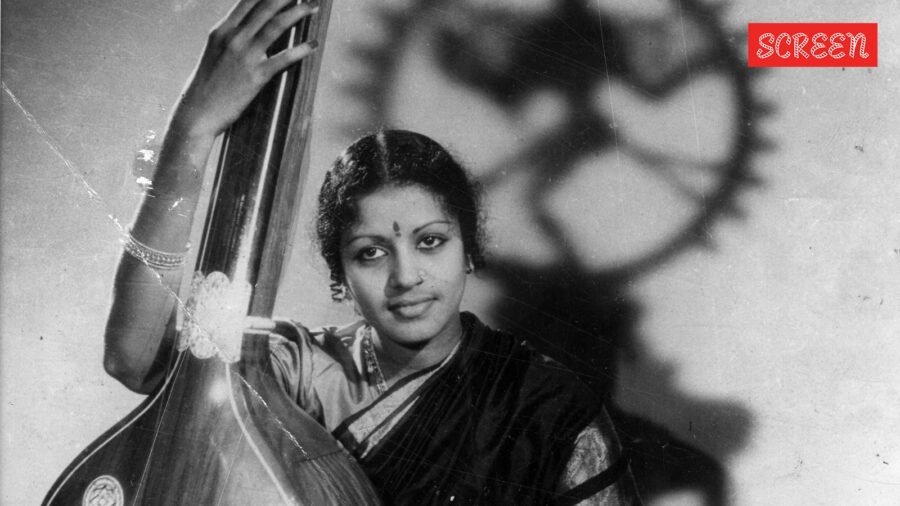
In 1916, a girl was born to a devadasi in Madurai. In 1998, the same girl received the Bharat Ratna. Everything between those two dates – the music, the films, the marriage that changed her social standing, the voice that filled the United Nations General Assembly, the charity concerts, the recordings that became the spiritual soundtrack of an entire nation – is the life of MS Subbulakshmi. On her 110th birth anniversary, a biopic starring Rashmika Mandanna was launched at the Music Academy in Chennai.
A devadasi’s daughter from Madurai
MS Subbulakshmi was born into the Isai Vellalar community, a hereditary group of musicians and dancers that included devadasis, women dedicated to temple service through dance and music.
Her mother, Madurai Shanmukhavadivu Ammal, was a respected veena player who performed in local temples, courts and private gatherings to support the family. Her grandmother, Akkammal, was a violinist. Her father, Subramania Iyer, was a lawyer from Madurai who was largely absent from her life. In keeping with devadasi practice, Subbulakshmi retained her mother’s name rather than her father’s, which is how the initials “MS” were formed: Madurai Shanmukhavadivu.
Story continues below.
Subscribe to see fewer ads.
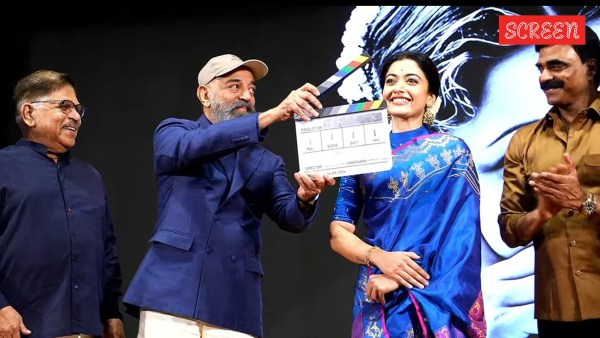 Kamal Haasan giving the ceremonial clap for the first shot of the MS Subbulakshmi biopic, with Rashmika Mandanna, at the Music Academy in Chennai
In early 20th-century India, devadasis had a complex social position. They were custodians of classical arts, the original practitioners of Bharatanatyam and Carnatic music in temple settings. But they were also stigmatised by a society that associated their tradition with moral laxity. To be born a devadasi’s daughter in 1916 was to be born with extraordinary musical access and extraordinary social disadvantage simultaneously.
First recording at 10, stage performance at 11
Subbulakshmi began learning Carnatic music from her mother before she could read. She was later trained formally under Semmangudi Srinivasa Iyer, one of the most revered Carnatic vocalists of the 20th century, and subsequently studied Hindustani classical music under Pandit Narayanrao Vyas. She also learned Sanskrit and Telugu under Dr Nedunuri Krishnamurthy.
At the age of 10, in 1926, she made her first recording for HMV, singing the Tamil song “Maragathavadivu” while her mother accompanied her on the veena. That same year, she made her stage debut at the Madurai Sethupati High School, singing a Marathi song at her mother’s request. At the age of 11, she gave her first major public performance at the 100-pillar hall of the Rockfort Temple in Tiruchirappalli. At 13, she performed at the Madras Music Academy, the most prestigious platform in Carnatic music. Her first major concert in Madras came on December 28, 1933, at Saundarya Mahal, organised by the Indian Fine Arts Society. She was 17.
Story continues below this ad
At the age of 24, Subbulakshmi married Tiruchengode Kalyanasundaram Sadasivam, a freedom fighter, journalist and founder of the Tamil magazine Kalki. Sadasivam was a nationalist and a man of considerable influence in cultural and political circles. Sadasivam became her manager, her career architect and the gatekeeper of her public image. He played a pivotal role in shaping her musical repertoire, broadening it beyond the traditional Carnatic canon to include devotional songs in Hindi, Sanskrit, Bengali, Gujarati and other languages. He pushed her to master the pronunciation and emotional nuances of every language she sang in, even those she did not speak natively. The result was a repertoire that could fill concert halls from Madurai to Moscow, from Chennai to Carnegie Hall.
Career as a film actor
Between 1938 and 1947, Subbulakshmi acted in six films, five in Tamil and one in Hindi. Her screen career was brief but culturally significant. Her debut was Sevasadanam, directed by K Subrahmanyam, based on Premchand’s novel Bazaar-e-Husn. The film addressed themes of women’s emancipation and the exploitation of women in the name of tradition. It was one of the first Tamil films to tackle social reform directly and made Subbulakshmi a recognisable face beyond the concert hall.
In 1940, she and Sadasivam produced Sakuntalai, based on Kalidasa’s Sanskrit play. The film was both a critical and commercial success. In 1941, she played the male character of Narada in the film Savitri, an unusual casting choice that she undertook partly to raise funds for Sadasivam’s Kalki magazine.
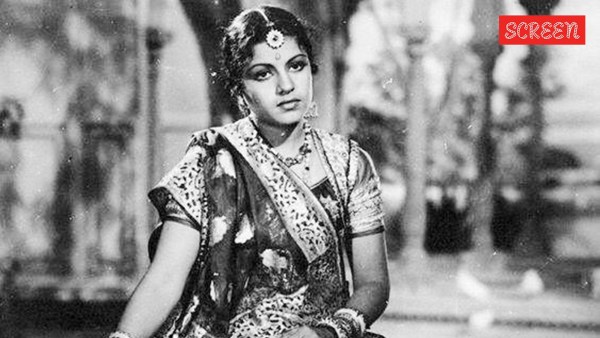 MS Subbulakshmi as Mirabai in the film Meera
Her most iconic film role came in 1945 with Meera, directed by American filmmaker Ellis R. Dungan and written by Kalki Krishnamurthy. She played Mirabai, the 16th-century saint-poet who devoted her life to Lord Krishna, defying her royal family and social convention. The Tamil version released in 1945, and subsequently a Hindi version followed in 1947, expanding her audience across North India. At the Delhi premiere of the Hindi version, poet and political activist Sarojini Naidu reportedly told Subbulakshmi: “You are the Nightingale of India.” Naidu, who had held that title herself, was effectively handing it over.
Story continues below this ad
After Meera, Subbulakshmi withdrew from cinema entirely to focus exclusively on music. She never acted again.
Subbulakshmi’s connection to the Indian independence movement was facilitated through Sadasivam, who was a close associate of C Rajagopalachari. In 1944, she gave a series of concerts for the Kasturba Gandhi National Memorial Trust, bringing her into close contact with Mahatma Gandhi and Jawaharlal Nehru.
Performance at UN General Assembly, Carnegie Hall, Royal Albert Hall
Subbulakshmi’s international career began in earnest in 1963, when she performed at the Edinburgh International Festival of Music and Drama. She was the first Carnatic musician to perform at a major Western festival. The concert received rave reviews across the British press.
The defining moment came in 1966, when she performed at the United Nations General Assembly in New York on UN Day. She sang “Maitreem Bhajata,” a Sanskrit composition by Chandrasekharendra Saraswati, the Sage of Kanchi. The song, a prayer for world peace and friendship among nations, was set to music by composer Vasant Desai, who was reportedly so moved by the assignment that when he was paid Rs 501 for his work, he refused to cash the cheque. He framed it instead and kept it for the rest of his life.
Story continues below this ad
Subbulakshmi became the first Indian musician to perform at the UN General Assembly. In 2016, the United Nations Postal Administration issued a commemorative stamp in her honour to mark the 50th anniversary of the performance.
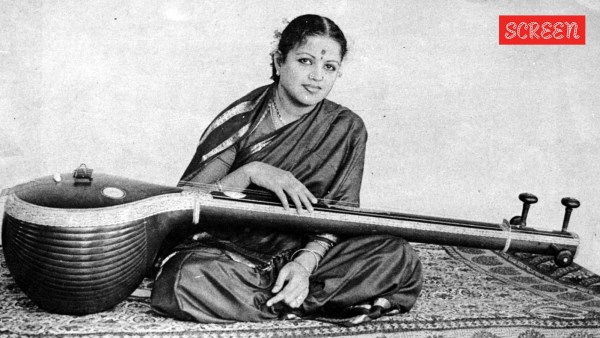 Vocalist MS Subbulakshmi during one of her performances she will also perform at the opening of UN General Assembly. Express archive photo
She went on to perform at Carnegie Hall in New York in 1977, the Royal Albert Hall in London in 1982, and the Festival of India in Moscow in 1987. Each performance expanded her international reputation and, through her, the reach of Carnatic music itself.
The ‘sruti alignment’ that made her stand out
Subbulakshmi’s technical mastery of Carnatic music is not in dispute. But what set her apart was something beyond technique. It was her voice. It had a quality that musicians describe as “sruti alignment,” a near-perfect synchronisation between her vocal pitch and the drone that accompanied her. When she sang, the voice and the sruti became one.
Her repertoire was vast and deliberately inclusive. She sang compositions by Tyagaraja, Muthuswami Dikshitar, Purandara Dasa, Annamacharya and Adi Shankaracharya from the Carnatic tradition. She sang Meera bhajans in Hindi, Tagore compositions in Bengali. She sang in Sanskrit, Tamil, Telugu, Kannada, Malayalam, Hindi, Bengali, Gujarati and Marathi. It was a deliberate project, guided by Sadasivam, to make Indian devotional music a unifying force rather than a regional art form.
Story continues below this ad
Her recordings of Bhaja Govindam, Kurai Onrum Illai, Suprabhatam and Vishnu Sahasranamam became the soundtrack of Indian spiritual life. They were played in homes, temples, hospitals and even government offices. For millions of Indians, her voice was the first sound of the morning and the last sound before sleep.
Subbulakshmi gave more than 200 benefit concerts over her career and raised over Rs 1 crore for social and religious causes, a figure that was enormous for its time. The beneficiaries included the Kasturba Gandhi National Memorial Trust, Sankara Nethralaya, the Cancer Institute in Chennai and numerous other institutions. She used her art not just to perform but to serve.
The list of her awards reads like a history of Indian institutional recognition: Padma Bhushan, Sangeetha Kalanidhi from the Madras Music Academy, the first woman to receive the title. Ramon Magsaysay Award, the first Indian musician to receive it, Padma Vibhushan, Bharat Ratna, the first musician ever to receive India’s highest civilian honour. She remains, to this day, the only Carnatic musician to have been awarded the Bharat Ratna. She was also known by several titles: the Queen of Carnatic Music, the Nightingale of India, the Eighth Note of Music and the Goddess of the Perfect Note.
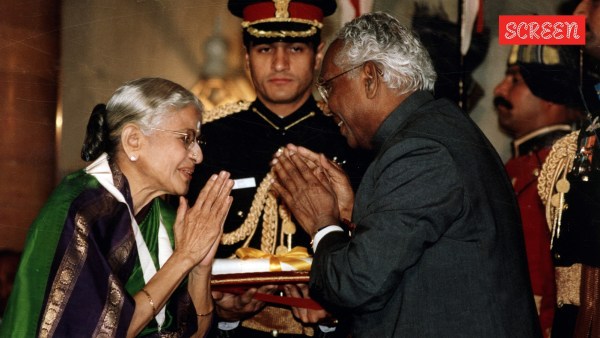 The President KR Narayanan conferring Nation’s Highest Honour “Bharat Ratna” on MS Subbulakshmi
Withdrew from music in 1997
Sadasivam died on October 16, 1997. Subbulakshmi, who had spent 57 years with him, withdrew from public life immediately. She stopped performing. She stopped recording. She stopped appearing at events. The woman whose voice had filled concert halls across the world went silent.
Story continues below this ad
She lived quietly in Chennai for her remaining years. On December 11, 2004, Madurai Shanmukhavadivu Subbulakshmi passed away at the age of 88. She was cremated with full state honours.
Her career had spanned over seven decades, from her first recording at the age of 10 to her final public concert in 1997. In that time, she had performed thousands of concerts, raised over Rs 1 crore for charity, acted in six films, sung at the United Nations, performed at four of the world’s most prestigious concert venues, and received every major honour India could give.
Lust Stories 3 review: Konkona, Radhika Apte liven up an uneven but enjoyable anthology
By Sohail Khan · 18 Sep


Leave a Reply