Fraying exchange of ideas, and a world torn by conflict
Today every country thinks about itself. As a result, the bonds of human fraternity that held societies together for centuries are weakening
Published on: Sep 28, 2026, 06:15:37 IST
Prefer HTon Google
Share via
Copy link
This week, we will be celebrating the 157th birth anniversary of Mahatma Gandhi. Don’t we feel his relevance more acutely today, when the world is lost in the fog of war?
More than 50 nations are embroiled in bloody conflicts. The US, along with its rich allies, is waging a war against a relatively smaller country such as Iran. While Iran’s effective resistance is bleeding American power, the US doesn’t have a credible excuse to wriggle out of this morass. The US has destroyed the very image of the global village which it so assiduously cultivated over the last three decades. There was a time when the US meant a melting pot of global talent. Whether it was Nobel laureate Har Gobind Khorana or Google CEO Sundar Pichai, writer Salman Rushdie, or actor Priyanka Chopra, whosoever moved to the US became a part of that country’s success story. Everyone has contributed to making America great.
Since the end of World War II, many western nations have followed the same policy. Rishi Sunak as UK prime minister, and Lakshmi Mittal and Anil Aggarwal as Indian-origin billionaire businessmen in the UK may be the outliers, but many of my Indian origin friends in France, Germany, Russia and other western countries arrived there as refugees and migrants. They contributed constructively to these societies. But why did former colonial powers adopt such liberal attitudes at the end of the colonial age?
It’s because equality and fraternity were the only balms that could have healed the wounds left by two World Wars. In those days, the appeals and ideas of giants such as Mahatma Gandhi, Albert Einstein or Jean Paul Sartre weren’t confined to their own geographies. Literacy was limited in the world, and yet, ideas would spread far and wide on their own. For decades, this system kept working. Progressives across the globe considered Martin Luther King’s Long March and Nelson Mandela’s struggles as their own. National governments would be positively impacted by them.
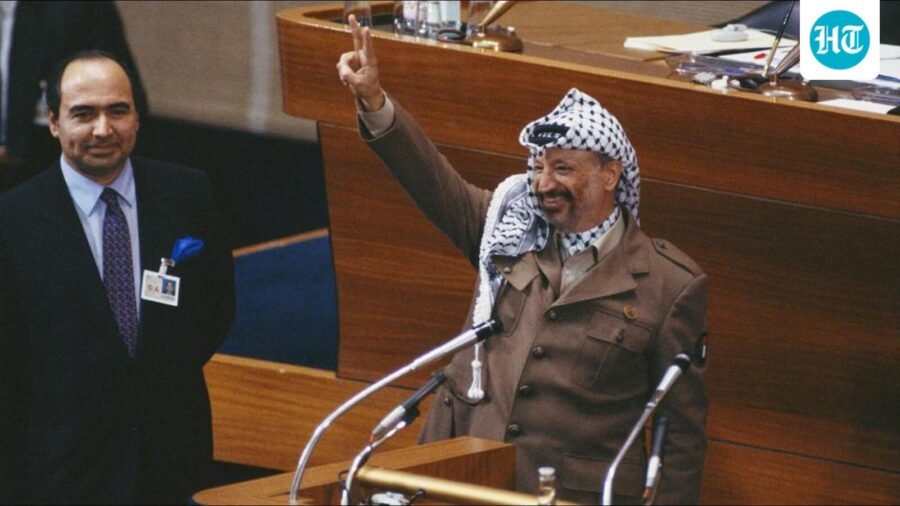
There was a time when Palestine Liberation Organisation’s (PLO) head Yasser Arafat was the most popular leader in the Muslim world. Times changed, and within a few years, Arafat was replaced by Osama. What was the reason for this decline? The answer reveals the reasons behind the present-day chaos.
The Cold War between the US and the erstwhile Soviet Union heated up even before the end of World War II. This was the time when both groups wanted to expand their ideological influence. There was another world away from these two blocks. It was the group of recently independent, developing nations where half of the world’s population lived. They had abundant natural resources and manpower. They were needed to maintain secure sea ways.
This was the reason the US and the Soviet Union created a string of institutions that worked to strengthen cultural and economic relations. One of its positive impacts was that my generation could buy books by world famous writers at a subsidised price. The Soviet bloc was far ahead of the West in this regard. The West attracted talent while the Soviets wanted to expand their ideological footprint. The Cold War promoted and supported people’s uprising. But after the fall of the Soviet Union, the silent tussle came to an end.
Now, the entire world was focussed on becoming rich. People were sold dreams. Labour was expensive in the US. So, China and other developing countries were targeted. Whatever labour laws prevailed in these countries were set aside and humans were turned into productivity machines. I am not against capitalism. It helped in reducing global poverty. But every glitter has a dark shadow. This is the very shadow that nurtured the Right wing globally. As it was an open field, opportunistic leaders had a field day. The Covid pandemic became the proverbial final nail in the coffin.
Today every country thinks about itself. As a result, the bonds of human fraternity that held societies together for centuries are weakening. Today, there’s no global institution or an idea that can rein in autocratic leaders. The world today doesn’t seem concerned about the poor countries and their citizens.
Another trend I have witnessed over the last many years is Nathuram Godse’s viral fiction trumping Gandhi’s appeal. I would like to ask those participating in strengthening this trend whether they would like to bring up their child to become a Gandhi or a Godse. The answer could carry the solutions to our deep-rooted concerns.
Shashi Shekhar is editor-in-chief, Hindustan. The views expressed are personal
Get Current Updates on India News, Elections 2024, Lok sabha election 2024 voting live , Karnataka election 2024 live in Bengaluru , Election 2024 Date along with Latest News and Top Headlines from India and around the world.
See Less
Between Trump’s US and Xi’s China, the trap India must avoid
By Sohail Khan · 28 Sep
Farmers need a share of the solar boom
By Sohail Khan · 28 Sep
India must stand on its own feet as great powers tango
By Sohail Khan · 28 Sep
Leave a Reply