Forget Homework! This 19-year-old is using ChatGPT to help build Dharavi’s future
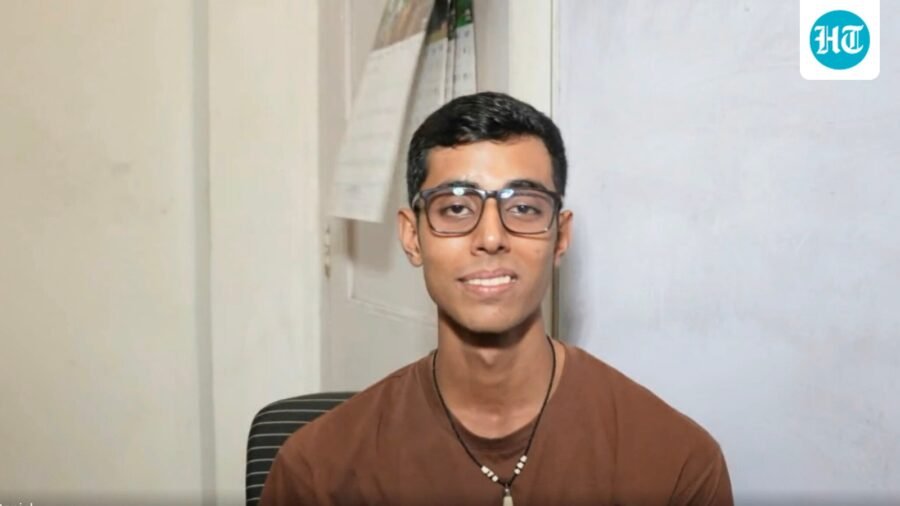
A 19-year-old, an ambitious mission and ChatGPT as a co-pilot. Meet Daniel, who is using AI to help raise ₹1.5 crore for a school in Dharavi.
Updated on: Sep 22, 2026, 14:00:36 IST
Prefer HTon Google
Share via
Copy link
From college assignments to fundraising strategies, ChatGPT has become an unlikely co-pilot for 19-year-old Daniel and his mission to secure the future of a 40-year-old school in Dharavi.
At 19, most of us are still trying to figure out which direction to take. A job? A startup? A master’s degree? Or perhaps simply making it through college without completely losing the plot.
Daniel Gupta, however, is already trying to raise ₹1.5 crore to secure the future of a school in Dharavi. Along the way, he has turned to an unlikely collaborator: ChatGPT.
His initiative, Dharavi Rising, began as an attempt to change how people perceive Dharavi, both from outside and within the community. Education sits at the heart of that mission.
His relationship with ChatGPT, however, began much earlier.
“I will say one thing: it was not a single specific moment, but rather an ongoing process throughout the journey of Dharavi Rising,” Daniel says, when asked when he realised ChatGPT could be more than a tool for homework and casual experimentation.
Before Dharavi Rising existed, Daniel was already testing its limits.
“First, as a student, I used it for college presentations, assignments, and personal questions that search engines couldn’t answer well.”
Then came Dharavi Rising.
“I had absolutely no prior experience in any of this, so I needed guidance. I realised there would genuinely be no better tool than ChatGPT.”
From Google searches to a fundraising co-pilot
The biggest problem ChatGPT solved for Daniel was perhaps the least glamorous one: research.
“To be plain about it: research,” he says. “Instead of visiting dozens of websites or spending excessive time looking up information, ChatGPT curated everything. I had everything I needed in one place. That significantly reduced the time spent.”
Focused and faster. That, in Daniel’s words, is what the tool ultimately gave him.
But its usefulness went beyond research. Some of his more interesting interactions with AI came from a decidedly human problem: dealing with humans.
“I work with people all the time, and interpersonal situations can get complex,” he says. “Having a resource with vast knowledge to get an objective perspective on a situation helped me tackle interpersonal challenges much better.”
For a 19-year-old navigating volunteers, collaborators, fundraising and community work, an objective sounding board can come in handy.
Why Dharavi Rising?
Dharavi Rising was started by Daniel and his friends with a straightforward but ambitious goal: change perceptions of Dharavi.
“That begins with education; it’s the foundational pillar,” he says. “Education changes lives because it empowers independent thinking.”
The initiative is currently working at the grassroots level with New Life School, a preschool that has been serving children in Dharavi for more than four decades.
Its previous campaign set out to raise ₹20 lakh to help the school lease two new spaces for expansion.
But once they got deeper into the project, they discovered a bigger concern.
“After that campaign, we realised the school has never owned land in its 40-year history.”
With the Dharavi Redevelopment Project underway, Dharavi Rising now wants to help secure the school’s future by enabling it to own its own land, ensuring that the children’s education isn’t disrupted by redevelopment.
And Daniel wants more people to know the school exists.
“This school has operated under the radar for decades; people are often shocked to learn how long it has existed without wider recognition,” he says. “As young Mumbaikars, we want to change that.”
The AI behind the campaign
So where exactly did ChatGPT enter the ₹20-lakh campaign?
Almost everywhere.
It even helped give the initiative its name.
“When we conceived the idea, I turned to ChatGPT for name suggestions,” Daniel says.
Among the suggestions were names such as “Dharavi Uprising” and “Dharavi One”. Daniel eventually combined the ideas of Dharavi and Rising.
From there, ChatGPT became something of an on-demand consultant.
It helped with campaign strategies, brochures, copy and even the essential documentation required for the non-profit’s website.
Daniel is quick to clarify that AI didn’t replace human expertise.
“I wouldn’t say it outright saved design costs, as I have a bit of informal design background,” he says. Instead, ChatGPT helped with “the structure, content flow, and copy for brochures and forms.”
In his words, it was primarily an “expert guide.”
₹20 lakh+ down. ₹1.5 crore to go
Crossing the ₹20-lakh mark wasn’t marked by a lavish celebration.
Instead, the volunteers and contributors came together for a small gathering and certificate distribution ceremony.
“Everyone’s contribution was valued equally, regardless of the scale of work they put in,” Daniel says.
Today, the core team is only around four people, supported by a wider volunteer base of around ten or fewer.
The ambition, however, is considerably larger.
“Booming,” Daniel says when asked where he sees Dharavi Rising by 2028.
“I don’t see this remaining just a small circle of friends. I envision youth from Mumbai and across India coming together.”
And Dharavi, he says, is only the beginning.
“We don’t plan to limit our work to Dharavi alone; Dharavi is simply where we started.”
The immediate challenge, though, is enormous. The new target is ₹1.5 crore, with a deadline of December 31, 2026.
“We aren’t querying it directly about the redevelopment itself,” Daniel says of ChatGPT. “But we are using it to strategise a campaign that needs to be far more aggressive than the last.”
The maths alone changes the nature of the operation: roughly ₹25 lakh a month needs to be raised to reach the target.
“That demands a completely different operational strategy.”
AI can advise. Humans still decide
Daniel’s approach to AI is notably pragmatic.
Even when AI is being used for something as consequential as campaign strategy, he doesn’t treat its output as gospel.
“Absolutely,” he says when asked whether he maintains human checks and balances. “AI only knows what you feed it.”
“While ChatGPT is exceptionally capable, human judgment is essential to evaluate whether a suggestion should be executed or set aside.”
That distinction becomes particularly important when technology moves from generating text to influencing real-world decisions.
And AI adoption isn’t limited to Dharavi Rising.
The children at New Life School are between three and five years old, so they’re not exactly writing prompts yet. But the adults around them are.
Daniel recently noticed a daily meal schedule poster at the school and realised it had been created using AI tools.
More broadly, he has seen AI access expand across the community.
“I know an educator living in Dharavi who actively teaches community members how to use AI tools,” he says. “Adoption is definitely growing across the area.”
Daniel’s ChatGPT tip for students
For students looking to get more out of ChatGPT, Daniel has a simple recommendation: role-play.
“If you’re struggling with a difficult subject, assign ChatGPT a persona,” he says.
His example?
“Imagine you are a mathematics professor…”
Defining the role and perspective, he says, can produce clearer and more targeted explanations.
It is a simple prompt, but perhaps a useful lesson in how Daniel approaches AI himself: don’t simply ask it for answers. Give it context, direction and a purpose.
The 4 AM life
For someone juggling college, a growing initiative and an ambitious fundraising campaign, Daniel’s day begins unusually early.
4:00 or 4:30 AM.
The idea is to keep the day structured. By around 9 AM, he starts work on Dharavi Rising. Then comes college, with calls and project coordination squeezed between classes. Once college is done, he returns to the project.
And when something needs to be done on the ground?
“I head there directly.”
Fitness, admittedly, has taken a back seat.
“Fitness is something I need to prioritise more.”
Hobbies aren’t much easier to find.
“This work is my hobby,” Daniel says. “I’m genuinely enjoying every bit of what I’m doing, so it doubles as my leisure.”
At 19, Daniel is still technically figuring things out, like everyone else.
The difference is that he’s already building something while he does it.
And somewhere between college, Dharavi, fundraising spreadsheets and 4 AM mornings, ChatGPT has become part researcher, part strategist and part sounding board.
But the bigger idea behind Dharavi Rising remains decidedly human: use technology to amplify a community, not replace it.
See Less


At Rs 1,299, these clip-on open-ear earbuds give your ears some much-needed rest
By Sohail Khan · 22 Sep
Googlebook launched in US and other countries: Full specs, Gemini AI features, pricing
By Sohail Khan · 22 Sep
Leave a Reply