Floating castle, a missing ceremonial kit, vacant seats: Japan welcomes 2026 Asian Games
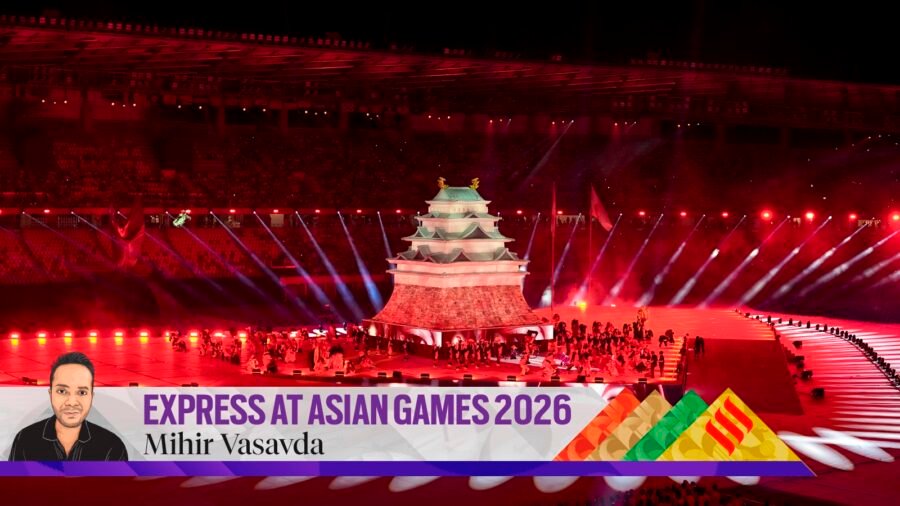
The Nagoya Castle began to float.
Slowly at first, the golden-roofed castle emerged above the stage, suspended in mid-air. Then Nakamura Kankuro, a Japanese actor, appeared alongside it, before the music exploded and he launched into Renjishi, the traditional Kabuki dance.
For a city that has spent generations making things — and last week, battling chaos — the Asian Games opening ceremony was an exercise in turning craftsmanship into theatre.
Story continues below.
Subscribe to see fewer ads.
Toyota, Lexus, Denso, Aisin, Mitsubishi Heavy Industries, Brother, Noritake: the names associated with Aichi stretch from automobiles and aerospace to machinery, electronics and traditional crafts. The Japanese idea of monozukuri — making things with precision, skill and obsessive attention to detail — runs deep here.
It was ironic, then, that this should be the epicentre of the logistical chaos that has marred the Games’ build-up. On Saturday, though, that instinct for precision was on display as Nagoya hosted the Asian Games opening ceremony, Japan’s third after Tokyo in 1958 and Hiroshima in 1994.
The ceremony was not gaudy. It was, in many ways, like Japan itself: restrained, meticulous and quietly theatrical. Geishas, Kabuki, traditional dance and Japanese folklore were folded into a modern production of lights, music and movement. The old and the futuristic shared the stage, without either trying to overwhelm the other.
And then there was the castle, hovering above it all. Perhaps that was the most fitting image for Nagoya.
Story continues below this ad
Long before Toyota transformed the region, Aichi was a land of craftsmen, castles and warlords. Oda Nobunaga, Toyotomi Hideyoshi and Tokugawa Ieyasu — three men most closely associated with the unification of Japan — all had deep connections to this part of the country.
The samurai are gone. The instinct to make things remains.
Then it was time for the athletes to walk in.
One by one, the flags of Asia moved around the track, the mood shifting from theatre to sport. And when India appeared, Olympic shooting medallist Manu Bhaker and kabaddi captain Pawan Sehrawat walked out together, jointly carrying the Indian flag.
Story continues below this ad
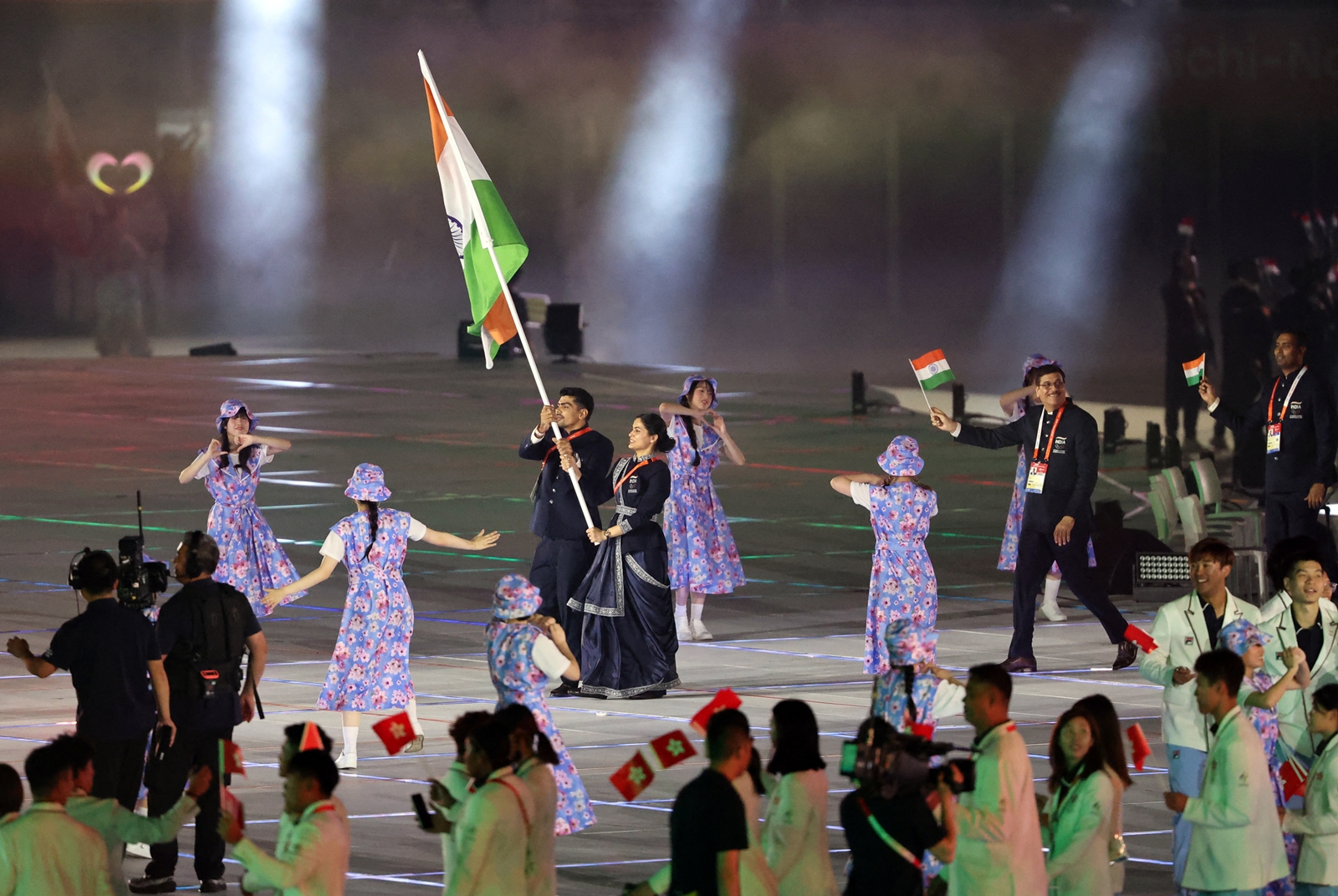 Manu Bhaker and Pawan Shehrawat led the Indian contingent during the athletes’ parade during the opening ceremony of the 2026 Asian Games.
Sehrawat was not supposed to be there. Tajinderpal Singh Toor, aiming for an Asian Games golden hat-trick, had been named alongside Manu. But the shot-putter’s ceremonial kit had not reached him. He was told it would arrive at Nagoya airport only at 3 pm, leaving him too little time to collect it and reach the stadium.
So Sehrawat took his place beside Manu. And behind them came an Indian contingent carrying expectations that have changed since Hangzhou Asiad three years ago. India won 106 medals then, including 28 gold — crossing 100 for the first time at an Asian Games. The challenge now is to sustain that scale of performance.
The ceremony, for a couple of hours, offered a welcome escape from the pressure of competition, which begins Sunday morning when India’s shooters will launch their medal hunt while teqball players remain in contention for two bronze medals.
But for all the beauty on the field, there was one eyesore that refused to disappear: the stands.
Story continues below this ad
Large sections of the stadium remained empty, with rows of vacant seats visible throughout the ceremony. It was difficult to ignore, particularly during moments designed to convey the scale and spectacle of the Asian Games.
And, in a way, the empty seats told their own story. The Games have spent much of the past week wrestling with problems that have little to do with sport.
Athletes and teams have faced delays in room allocations, long journeys to training venues and transport problems. India had to arrange additional hotel rooms after accommodation fell short, while athletes arriving on the cruise ship were left waiting for hours to check in. North Korea’s anthem was played during South Korea’s hockey match. It led to no national anthems being played on Saturday morning during South Korea’s women’s handball match against Hong Kong.
So the empty seats were more than an unfortunate backdrop. They were a reminder that beneath the polished production, these Games are still trying to find their rhythm.
Story continues below this ad
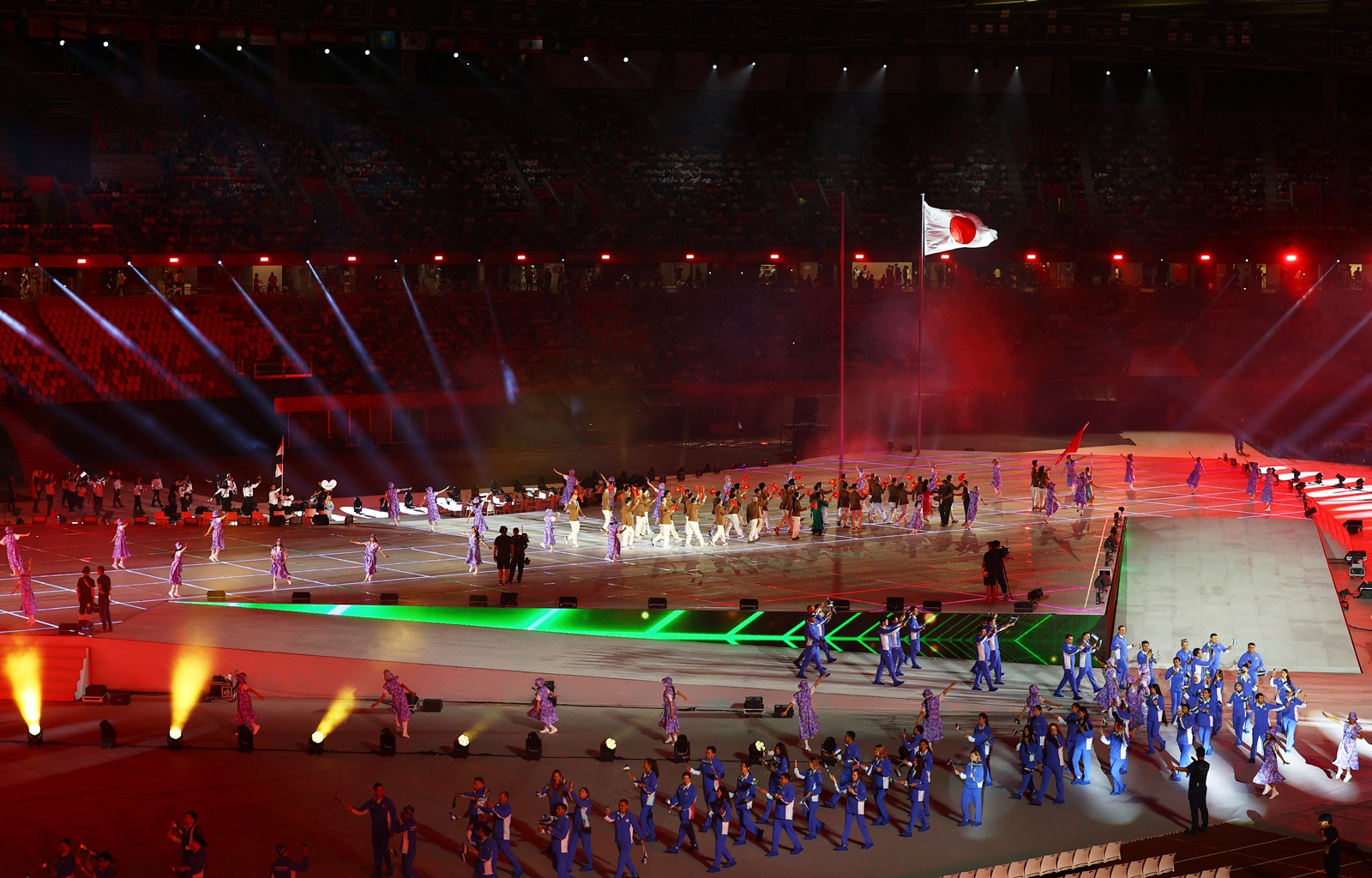 The empty seats were more than an unfortunate backdrop. They were a reminder that beneath the polished production, these Games are still trying to find their rhythm.
And yet, as the ceremony moved towards its final act, the stadium found its moment.
In a carefully choreographed sequence, Rio Olympics doubles badminton gold medallist Ayaka Takahashi carried the flame towards the cauldron before handing it to Koji Murofushi, Japan’s 2004 Olympic hammer throw champion. Then came the most poignant pairing of the evening: Koji with his father, Shigenobu.
Father and son have both shaped Japanese hammer throw across generations. Shigenobu held the national record for 23 years before Koji broke it; Koji would go on to become an Olympic champion himself.
Now they stood together, holding the flame. The stadium fell silent as they bent towards the cauldron. For a few seconds, there was no music, no spectacle, no attempt to overwhelm the senses. Just the two Murofushis, father and son, completing a circle that had begun decades ago in hammer throw.
Story continues below this ad
A smattering of applause spread through the stands, growing as the cauldron came alive, and for the first time in a troubled week for the Games, everything seemed to fall into place.