It rained the day after he died. For a farmer family in Yavatmal, it was too late, again
Story continues below.
Subscribe to see fewer ads.
Nima’s nephew Harish Choudhary says reasons for all three deaths, by hanging, were the same – recurring crop losses, inadequate rainfall and difficulties in securing an electricity connection to operate a borewell. The Malekars are not alone in this, as large parts of Maharashtra, including Yavatmal, again stare at drought. Last week, the state declared drought in 265 of its 358 tehsils – or about three-fourths of Maharashtra.
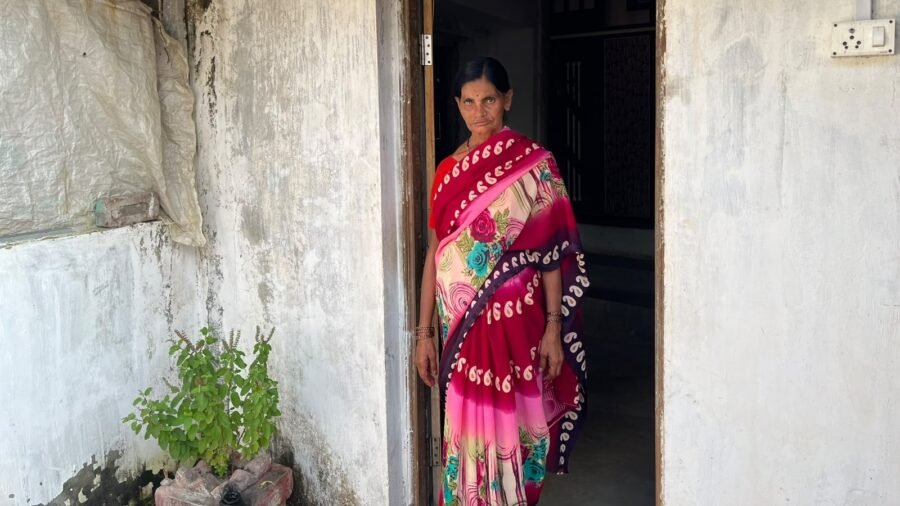
As per official figures, between January and June this year, even before this year’s drought cycle actually hit, Yavatmal had witnessed 128 farmer suicides. Nima and Dnyaneshwar had built their house only this year after getting funds under the Pradhan Mantri Awas Yojana. “Left all alone in it” now, Nima spends half her time at her brother’s home in Kosala village, as neighbours and family help look after her land.
She is just carrying on, she says. “I will live for as long as God chooses to keep me. The day He takes me, I will go.”
‘I am going mad’
Sarpanch Ravindra Choudhary, who is related to the family, says Nikhil, who worked on the family’s five-acre land, where they grow cotton, had been trying for long to get his application approved for an electricity connection to draw water from their borewell.
Story continues below this ad
“He would say, ‘I am going mad. I don’t understand how the crop will grow’,” Nima recalls. Then, in 2021, excess rain washed away their crops. When Nikhil was found hanging from a tree, it was just a month to go for his marriage. Villagers cut down the tree later.
Tapaveen was meant to take a different course, having finished BA and enrolled for post-graduation. But, after Nikhil’s death, he started helping on the land too, studying on the side and preparing for competitive examinations.
But then came 2024. It was a particularly bad year, the family recalls, and their crop failed in the absence of rains. “He too started saying, ‘What should I do? My mind is not working’,” Nima says. One day while she and her husband were away in the field, Tapaveen hanged himself from a rope at their home.
This year, they sowed three times, Nima says, putting in the seed, spending money on fertilizers. “But there was no rain for nearly two months after that. The crop dried up.”
Story continues below this ad
Her husband did not share his despair, Nima says, recalling how she slept before him that night. Sometime in the early hours, Dnyaneshwar went to the adjacent room and hanged himself. Nima discovered the body at about 5 am. Grampanchayat Adhikari of the village R R Dhage says farmers here are at the mercy of the weather. “During the elder son’s time, there was excess rain. During the younger son’s, there was a drought… It’s still the same.”
A family’s pride
Dnyaneshwar worked as a farm labourer on other people’s land for years before saving enough to buy the five acres he owned in 2018. It was all fallow land, Harish says. “Dnyaneshwar made it cultivable almost single-handedly.”
For a few years, the family thought their troubles were behind them. But the battles with the rain – and to get electricity – just dragged on.
The family says it first applied for an electricity connection in 2021, when the government came out with a scheme. The sarpanch says around 40 farmers in the village benefited, but not Dnyaneshwar.
Story continues below this ad
The Malekars tried again when the government came up with a solar-powered system in 2023. While Nima has written to the Tehsildar again now, Harish says solar is hardly the answer. Pointing out that the Malekar borewell is deep and requires a high-capacity pump to draw water, he says: “How can we run the pump on it? Solar starts dipping by around 4 pm (when the sun starts going down). It does not work at night.”
The family also says that, without any subsidy from the government, the cost of installing a solar system is beyond their means. Sarpanch Ravindra admits only three people in the village have gone for solar.
Promises and grants
After all three deaths, Nima was visited by representatives from political parties. “The BJP, the Congress, the Shiv Sena all came,” says the sarpanch. “But nothing was done.”
Recently, Nima was issued a certificate under the Niradhar Scheme and told she would receive Rs 1,500 a month. The payment is yet to start, family members say.
Story continues below this ad
A cheque of Rs 20,000 was also given by the tehsildar under the Rashtriya Kutumb Labh Yojana. Ralegaon Tehsildar Amit Bhoite says: “The scheme offers immediate financial support to bereaved BPL families who have lost their main bread winners. We have also sanctioned over Rs 1 lakh for her husband, under the aid for families in case of farmer suicides. The amount of Rs 1,500 has been sanctioned under the Sanjay Gandhi Niradhar Yojana.” Bhoite adds that he is trying to rope in some NGOs to provide additional financial assistance to Nima.
The only significant aid they ever received, the family says, was Rs 1 lakh after Nikhil’s death. It all went into paying their debts, Harish says.
Nima still goes to the farm when she can, he adds. “She just goes and sits.” Her eyes looking into the distance, her face blank, Nima says: “The day after he (Dnyaneshwar) died, it rained… But, since then again, there has been no water.”

Rahul Gandhi launches ‘Satyagraha’ digital platform
By Sohail Khan · 4 Oct


Leave a Reply