Expert Explains: What the fresh Houthi offensive in Yemen means for Saudi Arabia

On September 11, Houthi forces in Yemen seized the strategically vital port town of Mokha, about 60 km from the Bab-el-Mandeb Strait. They said they had also captured the Perim and Zuqar islands, both in the Red Sea, and now had control of the Bab-el-Mandeb Strait area.
Forces loyal to Yemen’s internationally recognized government (in exile) withdrew from these areas after days of escalated fighting which began on September 3. The principal government-aligned militia controlling Mokha was the National Resistance Force (NRF), led by Lt Gen Tareq Saleh.
Following the port’s capture, the Houthis asserted that they would not threaten international shipping but would continue targeting Saudi-linked vessels transiting the Strait — a position the Houthis had announced in July after a Saudi-backed Yemeni government strike on Sana’a airport. That strike also sparked Houthi attacks on Saudi Arabia’s Abha airport, Saudi oil tankers and oil refineries in Jizan, along with Saudi strikes on Hodeidah and other Houthi-controlled positions.
Story continues below.
Subscribe to see fewer ads.
By August, this renewed breakdown of a de facto UN-backed 2022 ceasefire meant that the other actors in Yemen’s civil war also clashed with the Houthis, especially in Taiz province. In these first two weeks of September, this fighting reached a crescendo with both the civil war elements within Yemen, as well as Saudi-Houthi strike exchanges, escalating most significantly in over 10 years, until the Houthi capture of Mokha. On the same day, Saudi Arabia also shut down its East-West oil pipeline after drone strikes which Riyadh said originated in Iraq.
The US-Iran context
The Yemeni Houthis always had the capability to control the Bab-el-Mandeb, as they proved during the shipping blockade they imposed in 2024 citing Israel’s war in Gaza. The control of Mokha only reinforces this capability, apart from strengthening their position in Yemen’s civil war.
While Iran has leveraged this threat to deter Saudi Arabia from upscaling its involvement in the US’s war on Iran, there has arguably been no novel threat to Iran arising from Saudi Arabia which would require immediate mitigation.
The last Iranian strike on Saudi Arabia was a single strike on Prince Sultan Air Base (a US military hub) in July, with the strike before that being in April. In any case, Iran has been negotiating with both Oman and Saudi Arabia vis-à-vis Hormuz while intermittent kinetic action with the US has been largely restricted to the Strait itself where both sides now focus on striking oil tankers and coastal infrastructure.
Story continues below this ad
Moreover, the Houthis’ specific commitment to not target international shipping (but only Saudi Arabia’s) differs from Iran’s strategy in Hormuz which requires coordination by all shipping with Iranian authorities. Iran’s preference is a blanket deterrent aimed at imposing international costs for US action.
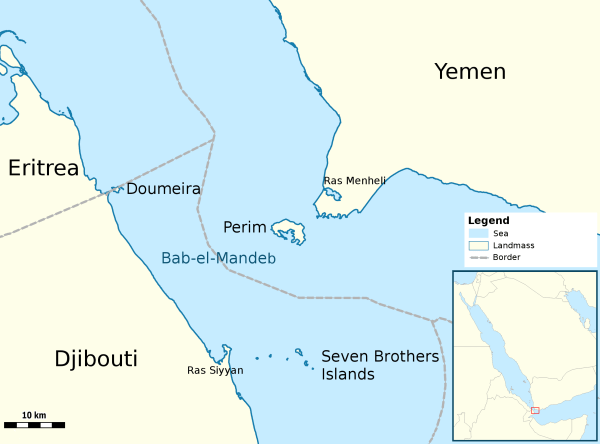 The Bab-el-Mandeb strait. (Wikimedia Commons)
The Houthis’ differing approach in the Red Sea proves that the developments in Yemen are linked principally to the dynamics of Yemen’s civil war. It further proves a peculiar characteristic of the Axis of Resistance (Iran-backed groups in Yemen, Iraq and Lebanon) — their “nexus” with Tehran has a significant degree of flexibility, with these actors also retaining their local agency even as Iran furnishes their capabilities (with Russian support).
While the first Houthi action in July was triggered by an incident with an Iranian-link (the Saudi-backed Yemeni government preventing an allegedly Iranian plane from landing in Sana’a), that development has long been overtaken by the fighting on the ground between the Houthis and other Saudi-backed Yemeni groups.
Hence, the Houthi action arguably occurs in a context that resembles 2018-19, when the group targeted Saudi (and then Emirati) oil facilities with unprecedented strikes while improving their positions on the ground in Yemen, and at a time when the Strait of Hormuz was open with no US-Iran kinetic action. Combined with the proven Houthi ability to hold Saudi energy facilities directly at risk, Riyadh’s imperative need for regional stability (for its large-scale vision 2030 projects) had pushed Saudi Arabia to explore alternative approaches to mitigate the Houthi threat to its Southern borders.
Saudi Arabia’s lens to view the Houthis
Story continues below this ad
In the months of the UN-backed ceasefire between April and October in 2022, the Saudi logic had shifted to containment and ensuring homeland defence. But even then, the Saudi route to ensuring stability on the Yemen front ran through Tehran, as it focused on a political settlement in Yemen during negotiations for its China-brokered rapprochement with Iran in 2023. In that year, Iran’s UN mission had also raised hopes for institutionalising the UN-backed ceasefire in Yemen.
Note that even in the 2023-July 2026 period, as regional instability became linked more to Israel’s wars than the Yemen conflict, Riyadh proved that it was not interested in any immediate redrawing of the lines where the war had frozen in 2022. In early 2024, Riyadh had also dissuaded the US from launching a maritime campaign against the Yemeni Houthis, due to their threats to Israel.
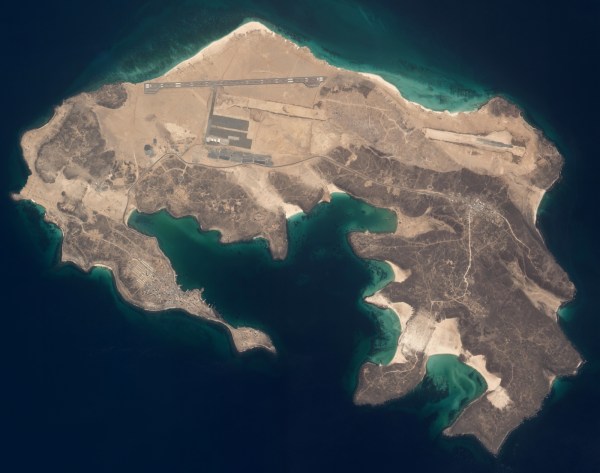 Mayun island, also known as Perim, one day after being taken by Iran-backed Houthi rebels in Yemen.
Moreover, reflecting fractures within the Gulf anti-Houthi coalition itself, Saudi Arabia also took unprecedented kinetic action against the UAE-backed Southern Transition Council in Yemen which attempted to leverage regional instability to improve their positions (even as Abu Dhabi remained theoretically aligned with Riyadh).
Since the Yemen civil war’s dynamics precede the US-Iran war’s context by a decade, they have involved motley non-state actors, each of whom have guarded their own interests, even within the larger coalitions they fight with.
Story continues below this ad
Take the NRF’s Gen Saleh’s — he is the nephew of Ali Abdullah Saleh, the Republic of Yemen’s first President (1990-2012) who oversaw the most significant military campaigns against the Houthis in Northern Yemen (the Sa’dah Wars). Ali Abdullah Saleh was forced to transfer power to his GCC-backed Vice President (Abdrabbuh Mansur Hadi) in 2012. He later allied with the Houthis, his former enemies, to topple the Hadi government in 2015. And then he broke this new alliance, prompting the Houthis to ambush and kill him in 2017.
His nephew’s NRF, while formally aligned with the Yemeni government exiled in Riyadh (led by Hadi as President until 2022), operates within a similar context — aligned against the Houthis but focused on maximising its own power.
Ultimately, it is the Houthi superiority in fighting tactics and a proven resilience across decades that has consistently yielded them military gains. Their abilities were proven beyond Yemen’s borders when the US declared a joint ceasefire with the Houthis in mid-2025 after a protracted campaign to weaken their ability to threaten Red Sea shipping.
The modern Saudi state’s ‘Black Swan’
Now, for Saudi Arabia, the older Houthi threat’s evolution has created a Black Swan that no Saudi state has ever faced historically — a loss of unimpeded access to both the sea routes of Hormuz and Mandeb, as well as its interceding land pipeline which allowed it to bypass the Hormuz blockade since March. During the US-Iran war, Iran’s targeting of Saudi Arabia was unprecedented, but its lesser focus on Saudi targets (compared to UAE, Bahrain, Kuwait and Israel) meant that the kingdom could continue pushing oil through its Western ports using its East-West pipeline; the Houthis near the Bab-el-Mandeb remained a threat-in-being.
Story continues below this ad
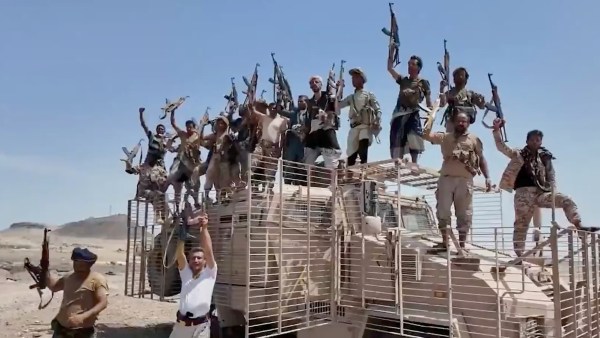 Houthi fighters atop a military vehicle in Dhubab district, Taiz province, Yemen.
In any case, even as Iran retained plausible deniability vis-à-vis the Houthis, it refrained from leveraging the Houthis directly during the war, which some also attributed to Tehran’s need to respect the sensitivities of the Saudi-Pakistan defence pact signed in September 2025.
Now, given the fact that the Houthi action against Saudi Arabia has escalated alongside an expansion of that pact to include Turkey, it also proves that that pact cannot (or will not) act against a longstanding non-state threat to Saudi Arabia.
Hence, even as Houthi actions seemingly generate strategic dividends for Tehran in the context of the US-Iran war, the Yemen war’s own dynamics mean that these developments would arguably have occurred even without this specific US-Iran context. For Saudi Arabia, the double blockade of Straits to its East and West (even if each have their own distinct dynamics), forces it to act kinetically against at least the Houthis through targeted strikes.
However, in the long term, the increased Saudi need for regional stability (especially as Vision 2030 projects struggle financially), will likely push it towards freezing negotiated tactical lines in Yemen, rather than grand military efforts (beyond targeted strikes) to displace the now-further-strengthened Houthis.


US leverage, India’s limited options: Why is the trade deal taking so long?
By Sohail Khan · 2 Oct
10 weekend getaways from Delhi within 300 km that are perfect for a bike ride
By Sohail Khan · 2 Oct