Don’t upload documents on ChatGPT and Gemini, Madhya Pradesh Police told
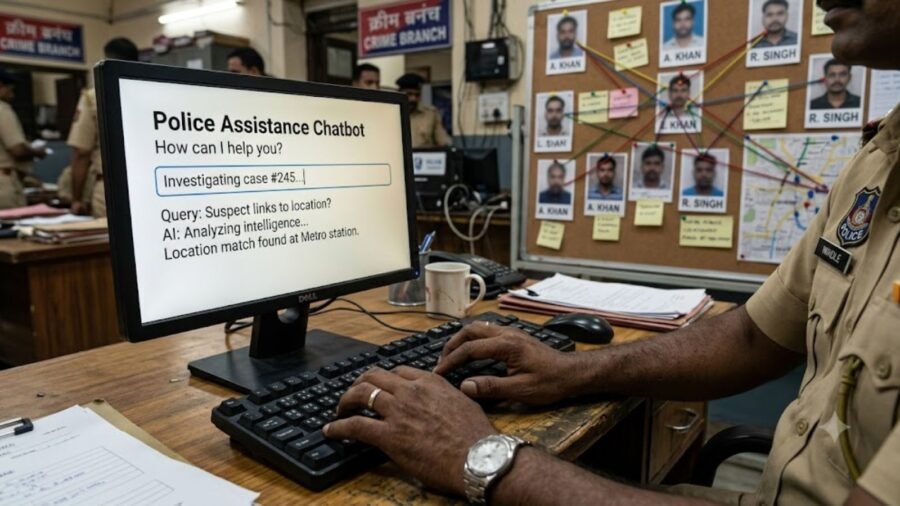
The Madhya Pradesh Police has tightened its rules governing social media use by its personnel, explicitly barring officers and employees from uploading confidential government documents on artificial intelligence tools such as ChatGPT and Gemini, while also restricting reels, monetisation, political symbols, and disclosure of sensitive police operations.
The 24-point “M.P. Police Social Media Guideline-2026”, issued by Director General of Police Kailash Makwana on Monday, lays down rules covering Facebook, WhatsApp, X, Instagram, YouTube and other social media platforms.
The instructions specifically address the growing use of AI tools by police personnel. One of the guidelines states: “Government documents shall not be scanned, screenshotted or shared on social media in any other manner if they contain any information that is required to be kept confidential under government rules or is sensitive from a security perspective. Besides this, such documents/information shall not be uploaded on AI tools such as ChatGPT, Gemini, etc.”
Story continues below.
Subscribe to see fewer ads.
‘Switch off geo-tagging during sensitive ops’
The restriction extends beyond social media posting. Personnel have also been told not to disclose the nature of sensitive assignments or their locations online, and to keep location and geo-tagging options switched off while using social media at “sensitive” workplaces.
The guidelines also cover the use of police uniforms and official identity for social-media content. Police personnel have been directed not to upload reels, photographs, videos or audio clips while on or after duty in uniform or in “any other indecent attire”.
The order directs that such inappropriate content already uploaded should be removed immediately and that the instructions be strictly followed in future.
Photographs or videos of weapons training, drills, firing practice, raids and other sensitive operations cannot be posted or livestreamed, the guidelines state.
Story continues below this ad
In addition, the guidelines put restrictions on police personnel using social media for personal publicity or income. Without prior government approval, personnel cannot create profiles in their own names, their dependants’ or relatives’ names, or under pseudonyms for paid promotions or monetisation.
Promotion of a personal business, company, product or service through government or personal social-media platforms is also prohibited.
The order says such conduct would constitute a violation of Rule 16 of the M P Civil Services Conduct Rules. If personnel or their dependents/relatives have received income through social-media platforms, they have been directed to submit complete details to the department within 30 days of the guidelines being issued.
The guidelines also draw a line between departmental achievements and individual publicity. They state: “The achievements of the department should be presented as achievements of the police force and not as the personal efforts or achievements of any individual officer.”
Story continues below this ad
Police personnel have also been barred from making comments on government or personal social-media platforms relating to government decisions and policies, the functioning of the department, or comments against senior officers or colleagues that are contrary to the dignity of their posts.
Another provision prohibits the use of symbols associated with “any form of symbolic protest” in profile pictures or display pictures. Logos or symbols of organisations or political parties cannot be used in profile pictures or DPs either.
Personnel cannot participate in online voting or polls from government social-media accounts without permission, the guidelines state.
The guidelines are to be communicated to personnel across police stations, armed police companies, training institutions, Police Headquarters and other police units.


Accused who molested teen boy, girl in Bihar’s Jamui shot in leg by police
By Sohail Khan · 22 Sep

Leave a Reply