CISF jawan kills colleagues: Inside the high-stress life of paramilitary forces
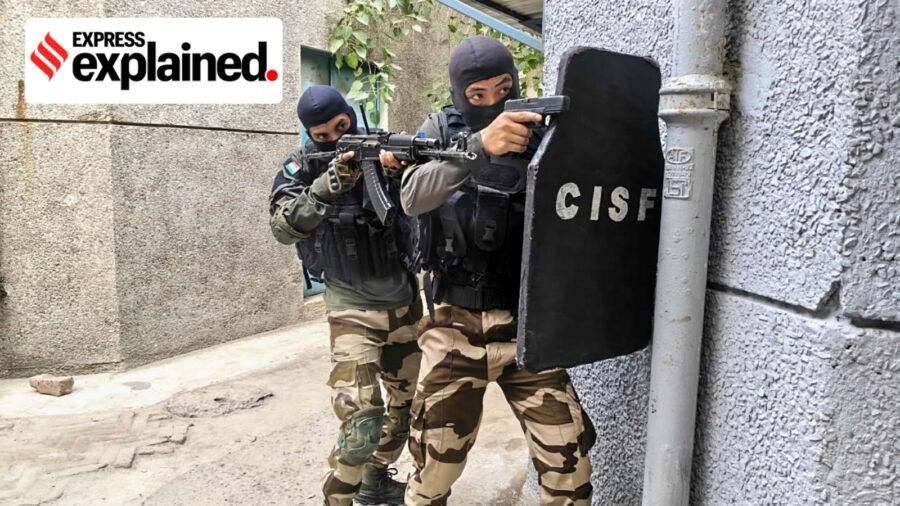
Tuesday’s incident has once again brought the spotlight back on suicides and fratricides in the Central Armed Police Forces (CAPFs). We explain why such incidents occur in the paramilitary forces, what a government-constituted task force found, and what steps have been taken to help mitigate these incidents.
Story continues below.
Subscribe to see fewer ads.
Why is stress considered a recurring concern in the CAPFs?
The CAPFs, which fall under the administrative control of the Union Ministry of Home Affairs (MHA), comprise the CISF, the Assam Rifles, the Border Security Force, the Central Reserve Police Force, the Indo Tibetan Border Police, the National Security Guard, and the Sashastra Seema Bal.
In the nine years between 2017 and 2025, 64 CAPF personnel were killed in fratricidal incidents and 1,126 personnel died by suicide, according to official data and government records.
A key concern repeatedly flagged in official and internal reviews is that many personnel work for long periods in difficult conditions. These include prolonged deployment in high-risk areas, separation from families, harsh terrain and climate, long duty hours, and limited opportunities for rest and recreation.
What did the task force find?
A task force constituted by the MHA in 2022 to study suicides and fratricides in the forces found that personnel may turn violent when they feel their problems are not being addressed.
Story continues below this ad
The task force identified three broad factors behind suicides and fratricides: service conditions, working conditions, and personal or individual issues.
Under service conditions, it found that leave-related problems were a major trigger across the CAPFs. It also flagged discrimination among sub-groups, workplace bullying, abuse, fear of disciplinary or legal action, and poor communication between company commanders and jawans.
Under working conditions, it pointed to extended working hours, inadequate rest and recreation, lack of job satisfaction, isolation, weak social and family support, and the absence of a robust grievance redressal mechanism.
Why is leave such a sensitive issue?
Leave is among the most frequently cited stress points, because CAPF personnel often serve far from home for long stretches. The task force found that denial or delay of leave, especially during family emergencies, can aggravate stress.
Story continues below this ad
In fratricide cases, the task force found that personnel may turn violent when they believe their grievances are not being resolved. It also noted that not getting leave when a family member is critically ill, or in the event of a death in the family, can become a serious provocation.
What were the personal factors cited?
The task force also listed several personal and social factors. These included mental health issues, feelings of hopelessness or depression, stigma around certain diseases, substance abuse, financial problems, marital or family-related problems, groupism, casteism, instigation by others over petty disputes, and the impact of frequent transfers on children’s education. The report also flagged broader morale-related issues such as slow promotions, dissatisfaction over the New Pension Scheme, continuous posting in conflict theatres, limited growth opportunities, and the absence of adequately trained professionals to deal with trauma among personnel.
What has Parliament said on the issue?
The Parliamentary Standing Committee on Home Affairs had noted that CAPF personnel function under considerable duress because of the nature of their duties and postings in harsh climatic conditions. It observed that leave at appropriate intervals is necessary to help personnel spend time with their families and reduce stress. This aligns with the task force’s finding that leave-related stress is one of the major triggers in suicide and fratricide cases.
What steps have been taken for welfare and mental-health support?
Story continues below this ad
The CISF has taken force-specific steps. Earlier this month, it signed a three-year memorandum of understanding with the Institute of Human Behaviour and Allied Sciences (IHBAS), adding a clinical and psychiatric layer to its mental-health support system.
The agreement brings a specialist mental-health institution into the CISF’s welfare framework. IHBAS will provide specialised psychometric assessments for CISF personnel posted in highly sensitive units, including those proposed for deployment at the Parliament House Complex.
Praveer Ranjan, Director General – CISF, said CISF personnel work in exceptionally demanding and high-responsibility environments. “This partnership with IHBAS will significantly strengthen our efforts toward early identification, professional counselling, and timely clinical treatment of mental health concerns. Our absolute focus is to create an organisational culture where seeking professional support is actively encouraged and entirely free from stigma,” he told .
What are the challenges going forward?
The findings show that suicides and fratricides in the CAPFs cannot be explained by a single trigger. They occur owing to multiple factors such as stressful deployment, leave pressures, weak communication, workplace grievances, family separation, mental-health concerns and career-related dissatisfaction.
Story continues below this ad
For both the government and the forces, the challenge is to move beyond reactive responses. Going forward, the task is to build systems that identify distress early, improve access to leave and counselling, strengthen grievance redressal, reduce avoidable humiliation or isolation within units, and make professional help easier to seek without stigma.

‘Frontal lobe breakup’: Why your late 20s can make you rethink your relationship
By Sohail Khan · 30 Sep
Women are asked to shrink so that the streets can stay unreformed
By Sohail Khan · 30 Sep
Cloud cover over pedagogy and academic culture in IITs
By Sohail Khan · 30 Sep
Leave a Reply