Chinese overcapacity is a problem for the world
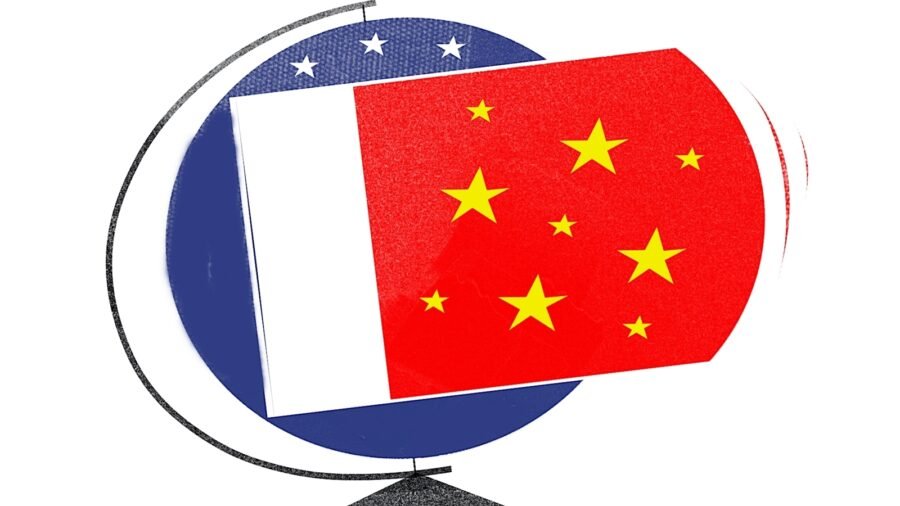
The world bemoans Chinese overcapacity as a global structural challenge. China is, after all, the world’s largest trade-surplus economy, with a value of $1.2 trillion, and accounts for roughly 30 per cent of global manufacturing output. Its rise in global manufacturing is largely driven by government subsidies and a state-directed financial system that provides cheap credit. State-backed industrial subsidies have enabled Chinese firms to expand without being concerned about profits and returns vis-à-vis their international competitors. The consequence is a self-defeating race to the bottom, with razor-thin or negative margins as Chinese firms engage in zero-sum price wars at home and abroad to expand market share.
China’s rise has created a form of “absolute advantage” in manufacturing. Its success reflects not only low-cost production but also scale, supplier networks, infrastructure, technological capabilities, and state-supported industrial ecosystems. This allows it to manufacture goods ranging from textiles and machinery to electronics, solar PV, batteries, and EVs at competitive prices. This has far-reaching implications.
Advertisement
First, China’s rise has produced significant economic gains for both developed and developing countries. Low-cost Chinese manufactured goods reduce the prices of consumer goods, machinery, clean technology products and intermediate inputs, thereby supporting industrial transformation and infrastructure development in developing economies.
Second, China’s low-cost mass manufacturing advantage creates asymmetric pressures on developing countries to build domestic manufacturing capabilities. Producers in developing countries face challenges in competing with Chinese producers, creating a “late industrialisation dilemma”. However, this gradually weakens incentives and capabilities to foster domestic upstream industries. The key question is not whether Chinese imports are efficient and competitive, but whether import dependence thwarts capability building and upgradation in manufacturing value chains.
Third, China’s absolute advantage in both low-cost and high-end manufacturing is transforming the geography of global value chain networks. Today, it occupies a dominant and critical position across multiple stages of the manufacturing value chain networks. In the EV sector, it controls critical nodes — 65 per cent of lithium refining, 70 per cent of cobalt refining, and over 80 per cent of battery manufacturing. This creates a peculiar paradox in the globalisation of production, where China is the most competitive and its sheer dominance generates significant strategic vulnerabilities for countries that rely excessively on a single supplier.
Advertisement
Fourth, China’s excess industrial capacity poses challenges for India in its quest for self-reliance. Chinese imports have impacted MSME-led domestic manufacturing, undermining India’s manufacturing imperatives. China accounts for roughly 17 per cent of India’s imports, with dependence on solar PV modules, telecom components, electronics and APIs. India’s electronics industry faces a shortage of printed circuit boards due geopolitical headwinds and supply-chain impediments, impacting downstream manufacturing. India also faces a pincer dilemma. Chinese export curbs could restrict access to key inputs such as solar wafers, cells and batteries, while its PLI scheme for solar and EV is challenged in the WTO for violating local content rules aimed at augmenting domestic manufacturing capabilities.
A global dialogue is needed on gradually rebalancing the Chinese economy in partnership with the US and other major economies. Given the scale of the challenge and the Chinese economy’s size and broader international ramifications, a globally coordinated approach, similar to the 1985 Plaza Accord, could be considered.
The writer is associate professor, O.P. Jindal Global University, Sonipat. Views are personal

Corn hair is being called a kidney remedy: What science actually says
By Sohail Khan · 29 Sep

Don’t buy a lab-grown diamond before checking these 7 things
By Sohail Khan · 29 Sep