Can John Ternus match Tim Cook’s 2,700% Apple stock gain amid AI concerns?
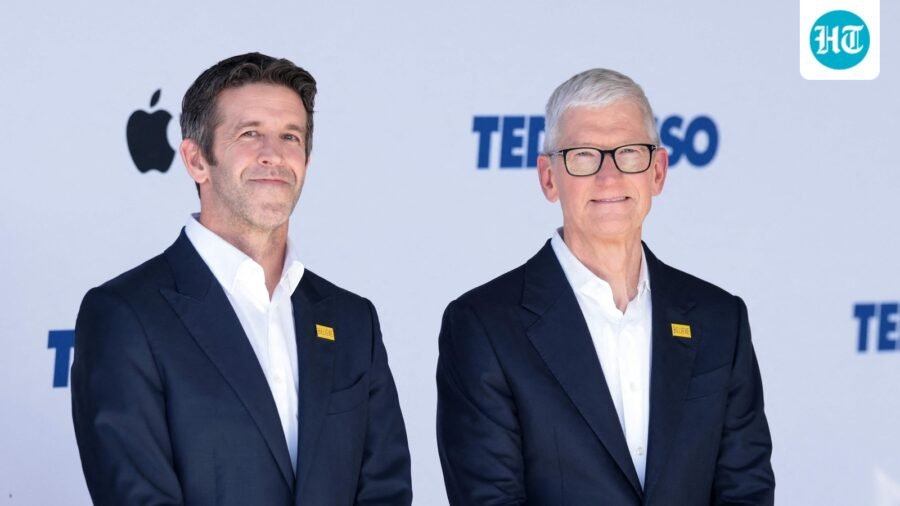
John Ternus takes over as Apple CEO after Tim Cook’s 2,700% stock gain. Wall Street now watches Apple’s AI strategy, valuation and growth prospects.
Updated on: Sep 1, 2026, 17:21:44 IST
Prefer HTon Google
Share via
Copy link
John Ternus officially took over as Apple CEO on Tuesday, replacing Tim Cook after nearly 15 years at the top. Cook became CEO on August 24, 2011, taking over from Apple co-founder Steve Jobs. Ternus is now taking charge of a company that has grown into one of the world’s biggest and most valuable businesses under Cook.
Cook leaves behind a huge stock-market legacy
Apple shares have risen about 2,275% since Cook became CEO in August 2011. When Cook took over, Apple had a market value of less than $350 billion. Today, Apple is valued at around $4.6 trillion, according to Bloomberg. The company has also expanded beyond the iPhone and Mac into products such as the Apple Watch and AirPods, as well as financial services.
Apple’s stock gained a massive 2,736% on a total-return basis during Cook’s time as CEO, meaning the calculation also includes dividends. Over the same period, the S&P 500 gained 769%, including dividends. The tech-heavy Nasdaq 100 rose 1,512% during the same period. This means Apple significantly outperformed both major US stock indexes during Cook’s tenure.
Apple’s gains put it among the 40 best-performing stocks in the S&P 500 during Cook’s tenure. However, it was far behind Nvidia, which gained more than 72,000% over the same period. Other major technology companies, including Tesla and Broadcom, also delivered bigger gains than Apple.
Analysts say Cook’s biggest strength was his ability to provide stability while the technology industry went through major changes. Allen Bond, managing director and portfolio manager at Jensen Investment Management, which owns Apple shares, described Cook as a “steady hand on the wheel” during a period of major changes in technology, according to Bloomberg.
Chris Brigati, chief investment officer at SWBC, said Cook did an exceptional job and Apple shareholders benefited more than many investors probably expected when he became CEO, as per Bloomberg report.
Ternus now has to prove he can continue that success
The big question for investors is whether Ternus can maintain Apple’s growth and stock-market performance. Ternus is coming from an engineering and product background rather than Cook’s operations-focused leadership style.
Brigati said the ideal approach for Ternus would be to combine some of the best qualities of both Jobs and Cook, according to Bloomberg. That would mean bringing more innovation and product excitement while keeping the steady growth and operational discipline that defined Cook’s tenure.
Ternus faces an immediate product test
Ternus will face an early test next week at a major Apple event. He is expected to unveil a foldable iPhone, along with other product updates. The event could give investors an early indication of how Ternus plans to lead Apple and whether the company can create excitement around new products.
Apple’s sales increased from $157 billion in fiscal 2012, Cook’s first full fiscal year as CEO, to $416 billion in the latest period. Revenue is expected to reach about $477 billion when Apple’s fiscal 2026 year ends in September, according to Bloomberg estimates. The numbers show how much Apple’s business expanded during Cook’s leadership.
Services became one of Apple’s biggest growth engines
Apple Services has been one of the biggest reasons behind the company’s revenue growth. The Services business generated more than $109 billion in fiscal 2025, making up more than a quarter of Apple’s total sales, according to Bloomberg data.
In fiscal 2013, Services generated only about $16 billion, or 9.4% of Apple’s total revenue. The shift helped Apple build a business that brings in recurring, high-margin revenue beyond hardware sales.
Cook’s tenure was not only about financial growth. Apple also launched successful products such as the Apple Watch and AirPods during his time as CEO. These products helped Apple expand its ecosystem and create additional sources of revenue.
Not every product bet under Cook worked. The Vision Pro headset failed to become a major commercial success. Apple also abandoned its effort to develop a self-driving car. These setbacks added to criticism that Apple had lost some of the innovation that defined the Steve Jobs era.
AI is now seen as Cook’s biggest weakness
Apple’s performance in artificial intelligence has become one of the biggest concerns for investors. Some investors believe Apple missed an important opportunity as companies such as Nvidia, Microsoft and other technology giants raced ahead in AI.
Bond said Cook’s biggest weakness was probably AI and pointed to Ternus’ engineering and product background as an important reason for the leadership change, according to Bloomberg. This means Ternus inherits an Apple that needs to show Wall Street it can catch up in AI.
Interestingly, Apple’s lack of a major AI story has sometimes helped its shares. During periods when investors became worried about excessive AI spending and valuations, Apple benefited from being viewed as less exposed to the AI trade.
Apple’s 40-day correlation with the S&P 500 recently turned negative for the first time in more than a decade, according to Bloomberg. This shows that Apple’s stock has recently behaved differently from the broader market.
Bank of America analyst Wamsi Mohan estimated that Apple created market-cap growth of roughly $32 million every hour throughout Cook’s nearly 15-year tenure, according to Bloomberg. Apple became the first company to cross a $3 trillion market value. It has also repeatedly held the position of the world’s largest company. Apple’s weight in the S&P 500 has increased sharply as its market value grew.
Apple now has a much bigger influence on the S&P 500
Apple currently represents around 7.1% of the S&P 500. When Cook became CEO in 2011, Apple represented less than 3.3% of the index. Its weighting reached almost 7.9% last month. This means what happens to Apple shares can have a major impact on the broader US stock market.
Apple spent more than $840 billion on buybacks
One of Cook’s biggest financial decisions was Apple's aggressive use of stock buybacks. Apple has reduced its outstanding share count by nearly 45% from its 2012 peak. The company’s share count is now at its lowest level since 1998, according to Bloomberg. Fewer shares outstanding can increase earnings per share and support shareholder returns.
Apple has spent more than $840 billion on stock buybacks since fiscal 2012, based on company data through the first quarter of fiscal 2026. Billionaire activist investor Carl Icahn pushed Apple to increase its buybacks in 2014, arguing that the stock was undervalued. The huge scale of Apple's buybacks became a defining part of Cook’s financial strategy.
Bank of America’s Mohan believes Ternus could lead Apple into a period of higher spending, according to Bloomberg. Apple has moved away from its previous goal of keeping its net cash position neutral. Mohan said this could point to higher investment in research and development, capital spending and larger acquisitions. AI could force Apple to move faster and invest more heavily than it did during Cook’s tenure.
Apple’s valuation is another major concern
A growing number of investors are taking a bearish view of Apple because of its expensive valuation. Apple is trading at around 33 times expected earnings for the next 12 months.
Its 10-year average price-to-earnings multiple is around 23 times. When Cook became CEO, Apple traded at only about 12 times earnings. This means investors are now paying a much higher valuation for Apple than they did when Cook took over.
The big question for Ternus: Can he repeat Cook’s success?
Cook leaves Apple after delivering extraordinary shareholder returns, massive revenue growth and a much larger ecosystem. But Ternus enters the job at a different moment, with AI, valuation and innovation becoming major concerns. His challenge will be to keep Apple’s strong financial performance while convincing investors that the company can compete in the next phase of the AI race.
If Ternus can combine Cook’s operational discipline with stronger product innovation and AI investment, Wall Street may see a new growth phase for Apple. But matching Cook’s 2,700%-plus total shareholder return will be a very high bar for the new CEO.
See Less

Melinda Gates’ $12.5 billion bet on women’s health
By Sohail Khan · 1 Sep
Gurugram housing gets another big ticket bet
By Sohail Khan · 1 Sep
Leave a Reply