Beyond a monolithic Gen Z youth
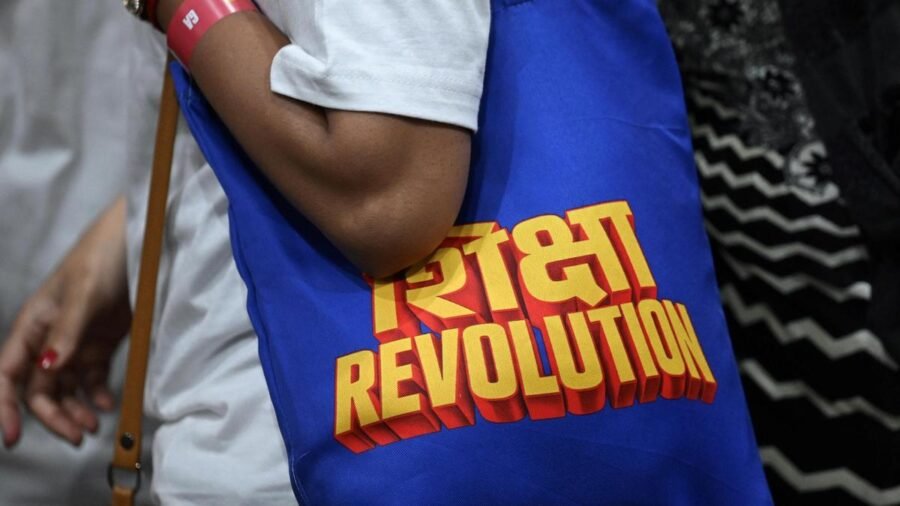
The Cockroach Janta Party (CJP) protests were a momentous breakthrough in Indian politics. Through them, the appellation “Gen Z” has entered the everyday lexicon. Yet most of the sympathetic commentary on the movement has placed the Gen Z youth in a mythical, monolithic space. Instead of homogenising an entire generation, cautious empirical assessments are the need of the hour. After all, Gen Z youth are a staggering 400 million in India alone.
While this generation is now seen as a vehicle of anti-ruling party/ establishment sentiments, in the 2024 Lok Sabha elections, the Bharatiya Janata Party (BJP) received 39% and 37% of the votes from those aged 18 to 25 years and 26-35 years respectively (CSDS-Lokniti post-poll survey). Crucially, these were more than the 35% votes obtained from those aged 56 and above. Similarly, the National Democratic Alliance had a 46% vote share among 18-25 year-olds, but only 41% among those aged above 56.
Thus, rather than seeing Gen Z youth as only a uniform entity, it is important to understand the divisions within, and, also, the commonalities with other generations. After all, the central actors of the anti-CAA (Citizenship (Amendment) Act) and farmer protests were the older generations.
Fractures within
Even as the Gen Z youth have played a critical role in social justice movements globally, such as Black Lives Matter, survey data and studies suggest important fractures within the generation, especially regarding gender, class, race, and political ideology.
A Financial Times report shows that American and German women (aged 18-30) are 30 percentage points more liberal than their male counterparts, while it is 25% in the U.K. Similar serious gender rifts have developed in South Korea, China, Tunisia, etc., triggered by movements such as #MeToo. The advancing feminist movement has led to young men feeling embattled, leading to nearly half of the American male youth complaining of reverse discrimination.
In a scholarly study of 32 European countries, it was found that there was no gender gap in political ideology amongst young people in 14 nations; a stable gender gap in 7; and in the remaining 11 nations, there was a widening, where women were either moving left and men, right, or women were moving to the left faster than men.
Attitudes towards democracy also differ within Gen Z. In the U.S., only half of the eligible Gen Z voters voted in the 2024 presidential elections: the lowest turnout amongst age groups. Contrary to popular notions, the youth vote shifted substantially to U.S. President Donald Trump.
There are still significant ideological divergences within Gen Z. While 43% of Gen Z Republicans say that African Americans face discrimination compared to only 20% of Gen X (1965-1980), Boomer (1946-1964), and Silent Generation (1928-1945) Republicans, it is 82% amongst Gen Z Democrats, and that number is only marginally less for older generation Democrats (Pew Research 2018).
Moreover, even as the commentariat euphoria has focused on the uniqueness of Gen Z, there are areas where Gen Z attitudes have matched other generations. In the U.S., this is especially true regarding the millennial generation (1981-1996) who align with Gen Z on many issues. Social media usage and polarisation percentage amongst Gen Z was like those of other generations (Stanford University student survey), and there was almost near conformity across generations about the positives of more women in politics.
There is also a remarkable split developing within the Gen Z youth; there are now divergences between Gen Z 1.0 (Ages 23-29) and Gen Z 2.0 (Ages 13-22). A Yale University youth poll showed that ages 22-29 preferred Democratic candidates while ages 18-21 preferred Republican candidates in the 2026 congressional elections.
While these global characteristics do not exactly map onto India’s reality, in India, too, not only questions of gender, but attitudes of ‘upper caste’ Gen Z on caste equality and reservation, and Hindu Gen Z on religious majoritarianism would be critical.
George Orwell had once written that “Each generation imagines itself to be more intelligent than the one that went before it, and wiser than the one that comes after it,” which he termed as an illusion. To avoid such illusions, we need more fine-grained studies on Indian Gen Z to understand its composition in all its social complexity.
Nissim Mannathukkaren is with Dalhousie University, Canada

Jyotika praises her mother-in-law, says ‘only a queen can raise a prince’
By Sohail Khan · 1 Oct
Can a police confession justify NSA detention? What Supreme Court said in Sambhal case
By Sohail Khan · 1 Oct
How is HbA1c calculated? Expert explains what your blood sugar test really means
By Sohail Khan · 1 Oct