Best of Both Sides | BRICS is a bridge for India, a broad tent for Global South
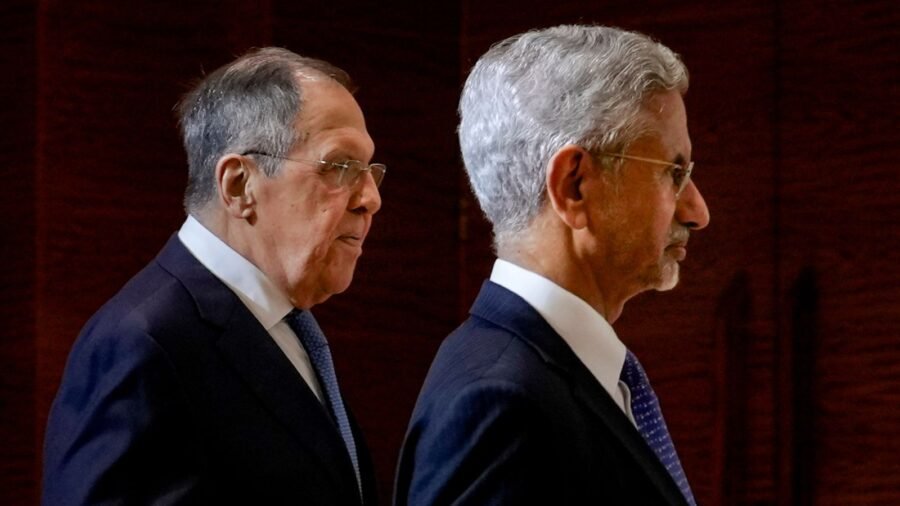
Over two decades, BRICS has transformed itself from a loose grouping of five emerging economies to the most formidable organisation of the Global South. It has benefitted from the sustained commitment of key global leaders such as Xi Jinping, Vladimir Putin and Narendra Modi. However, its growing appeal in the Global South stands in sharp contrast to the dominant Western portrayal of BRICS as a divided house and a talk shop.
The world has entered an unprecedented phase of transition. Traditional global governance institutions are faltering in fulfilling their responsibilities. The United Nations has proven increasingly incapable of shielding sovereign states from the hegemonic ambitions of powerful countries; the WTO is becoming dysfunctional, and the World Bank and International Monetary Fund remain inadequate to the expectations of emerging states. Against this backdrop, BRICS offers states of the Global South a platform to socialise with peers, voice concerns, and chart a common strategy.
Advertisement
BRICS is a heterogeneous organisation. It encompasses diverse political systems: Democracy, authoritarianism, monarchy, theocracy. Similarly, BRICS economies are highly diverse. China’s economy, at about $20 trillion in 2025 in nominal GDP terms, was larger than the combined GDP of the other 10 BRICS states at about $14 trillion. Further, the BRICS states do not share a common historical, linguistic and cultural heritage. To evaluate BRICS through a Western prism is analytically limiting and futile. The more pertinent questions are: What strategic interests and shared motivations glue them together despite these differences? To what extent has BRICS succeeded in articulating, advancing, and shaping the Global South agenda?
BRICS does not seek to create a new world order. It is reformist in character, and pluralist in its orientation. It identifies itself as a non-Western, not an anti-Western organisation. Its normative appeal lies in its transformative politics, which calls for democratisation of international institutions, multipolarisation of global order and multilateralisation of the Global South. It espouses norms of respecting sovereignty, non-interference in domestic affairs, civilisational and non-militaristic political cooperation.
The creation of two financial institutions — the New Development Bank (NDB) and the Contingent Reserve Arrangement (CRA) — turned out to be a game changer for BRICS. The NDB has financed 120 sustainable infrastructure projects costing around $39 billion. The Bank has expanded its membership and includes non-BRICS countries. Further, the NDB committed 30 per cent of its financing in local currencies in the last few years. One of the biggest advantages of the NDB loan is that, unlike loans from the IMF and WB, it is not accompanied by political conditionalities. The aggregate amount of NDB funding is small compared to the WB funding, but it serves as an additional source of funding for the Global South.
Advertisement
The relevance of BRICS for the Global South can be measured from the exponential growth in intra-BRICS trade. BRICS accounts for over 20 per cent of global trade, amounting to about $10 trillion. But according to a UNCTAD report, intra-BRICS trade has grown 13 times, from $84 billion in 2003 to $1.17 trillion in 2024. This growth is a function of lower tariffs, resource complementarity and the removal of supply chain constraints by BRICS states.
Another significant contribution of BRICS lies in developing mechanisms for trade in local currencies to reduce dependence on the US dollar. Russia-China, China-Brazil, India-Russia and India-UAE trade is increasingly settled in local currencies. Other countries have also initiated this process. This mechanism reduces countries’ exposure to dollar liquidity crunches and US monetary policy shocks. This has fuelled the debate on de-dollarisation and the possibility of a BRICS currency. BRICS is unlikely to develop a common currency in the near-term.
Finally, the BRICS summit offers a unique opportunity for India to position itself as a leading voice of the Global South, working as a bridge between the West and developing economies. New Delhi has managed to ensure the participation of all key leaders; getting a joint declaration would be the next big step. The Summit appears focused on advancing developmental and technological cooperation, but its real achievement rests in its ability to develop mechanisms for resolving the conflicts in Ukraine and Iran. BRICS has the requisite capacity, but its intent remains uncertain.
The writer is professor, School of International Studies, Jawaharlal Nehru University and co-editor of Locating BRICS in the Global Order: Perspectives from the Global South

10 weekend getaways from Delhi within 300 km that are perfect for a bike ride
By Sohail Khan · 2 Oct
Flydubai flight: How tighter post-9/11 rules could have impacted cockpit access
By Sohail Khan · 2 Oct
From Varanasi to Tashkent, how Mahatma Gandhi influenced Lal Bahadur Shastri
By Sohail Khan · 2 Oct