Bengali, Gujarati or Sindhi, let’s not reduce hilsa to its pedigree
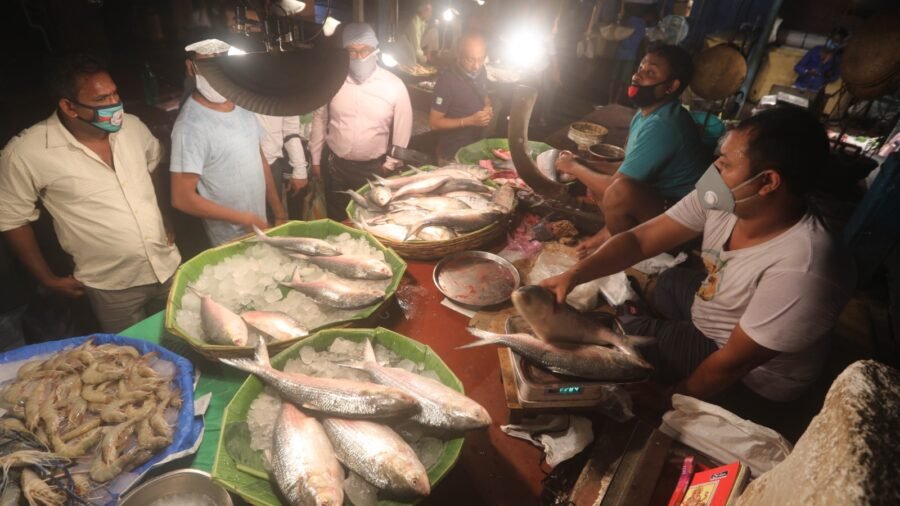
Among Bengalis, who can obsess indefinitely about gastronomy, few subjects evoke as much passion as ilish. The Padma loyalist swears that the fish from Bangladesh is fattier and more fragrant, its flesh yielding to the touch and its oil carrying a sweetness that its supposedly lesser cousins can only aspire to. The Ganga partisan will insist that the fish from the river has a sharper flavour, a more elusive aroma and a pedigree that an imported fish cannot quite match.
But an upstart seems to be complicating the argument. Over the past two months, around 500 tonnes of hilsa have crossed into Bangladesh, much of it from Gujarat. Supplies seem to be shorter in the country’s eastern neighbour. The Gujarati fish is reportedly attractive to Bangladeshi buyers because of its high roe content; some of the roe is being processed separately, while the remaining will be dried for domestic consumption.
Advertisement
The ilish could perhaps be having the last laugh. It has crossed rivers, borders and culinary loyalties with considerably less fuss than the people who make it a cultural totem. Behind all the talk of the hilsa’s pedigree, there is a rather more quotidian truth: People eat what is readily available. And, trade is an enabler.
The hilsa is a fish of the wider Indian Ocean. Its range stretches from the Bay of Bengal to the coasts and estuaries of the Arabian Sea. Travel south and west from Bengal, and the ilish acquires other names and other cultural lives. On the Godavari it is the pulasa; on the Indus, the fish becomes palla. The fish moves between the sea and rivers, entering different river systems to spawn.
The colonial rulers discovered the hilsa’s itinerant ways in the 19th century. The Scottish polymath Francis Buchanan Hamilton’s tryst with the hilsa is part of the fish’s folklore. The explorer and diplomat Alexander Burnes wrote vividly about hilsa fishing in Travels into Bokhara: Together with a Narrative of a Voyage on the Indus (1834). Each fisherman, he wrote, was provided with a large earthen jar on which he placed himself before launching into the river, “swimming or pushing forward like a frog”. The fishing season, he noted, was welcomed because it provided food while it lasted and “an abundant supply of dry fish for the remaining part of the year”, as well as fish for export.
Advertisement
By 1886, the fish had become sufficiently familiar to the British that Henry Yule and A C Burnell’s Hobson-Jobson: A Glossary of Colloquial Anglo-Indian Words and Phrases could describe hilsa, under the name palla, as “the special fish of Sind”. It went further, saying that the Indus moniker “monopolises the name of fish, just as salmon does on the Scotch rivers”.
Today, the Sindhi claim on the silver-scaled fish is perhaps less written about. But the Indus hilsa too is a delicacy, a livelihood and a marker of regional identity. Jhulelal, the revered Sindhi river deity, is traditionally depicted riding upon a fish. According to one legend, the palla’s journey is a pilgrimage of sorts to the shrine revered by both Hindus and Muslims. Once it pays its respects to the Zinda Pir, the supposedly ordinary-looking fish acquires its silver hue and its distinctive sweet and salty taste. Yet another story associates the fish with Varuna, the god of the waters.
Just as Bengalis have their bhapa and shorshe ilish, Sindhis revel in kok palla — the fish generously stuffed with a tart mixture of tomatoes, onions, tamarind and spices — and palla chawal, in which the fish is fried and served with rice and a rich onion-tomato masala. Then there is aani, the prized roe of the female fish, which is cooked either inside the fillets or separately. Perhaps the most evocative of these preparations is wadi-ji-machhi, in which the fish is stuffed with green masala and chillies, wrapped and roasted in the hot sand — a dish born of the arid landscape of the nomadic communities.
In both the eastern and western parts of the Indian Ocean, people have turned ecology into flavour. Their stories are a reminder that, long before hilsa became a cultural totem and a gastronomy brand, the fish was a matter of nourishment. Hilsa is a delicate fish, but it gives generously. In Bengal, even the parts that invite less ceremony have a lip-smacking presence. Its head, cooked with brinjal, pumpkin, potato and pui or kochu shaak in mustard oil, makes a meal in itself. The tail, painstakingly separated from its bones, can be mashed with green chillies and mustard oil into ilish bharta, a delicacy born of the instinct to waste nothing. On both sides of the Radcliffe line, flakes of the fish come together with fermented rice, pungent mustard oil and green chillies to make the intensely flavourful and nourishing ilish pantha. And when the fresh catch is gone, ilish is salted and dried, its pungency heightened into an almost elemental taste of the river, preserved for leaner days.
It is this question of sustenance, rather than the celebrated boneless hilsa of restaurants or the cultural battles over the relative virtues of Padma and Ganga hilsa, that Bangladesh’s imports of hilsa from Gujarat bring into focus. Perhaps the fish has always been less about prestige than about putting food on the table and the joy of eating.
The writer is senior associate editor, . kaushik.dasgupta@expressindia.com

Gurugram crash case reveals a legislative defect
By Sohail Khan · 16 Sep
5 heaviest birds in the world — and one weighs 156 Kg
By Sohail Khan · 16 Sep
Leave a Reply