Asian Games recall: When Dingko Singh went from dejection to elation
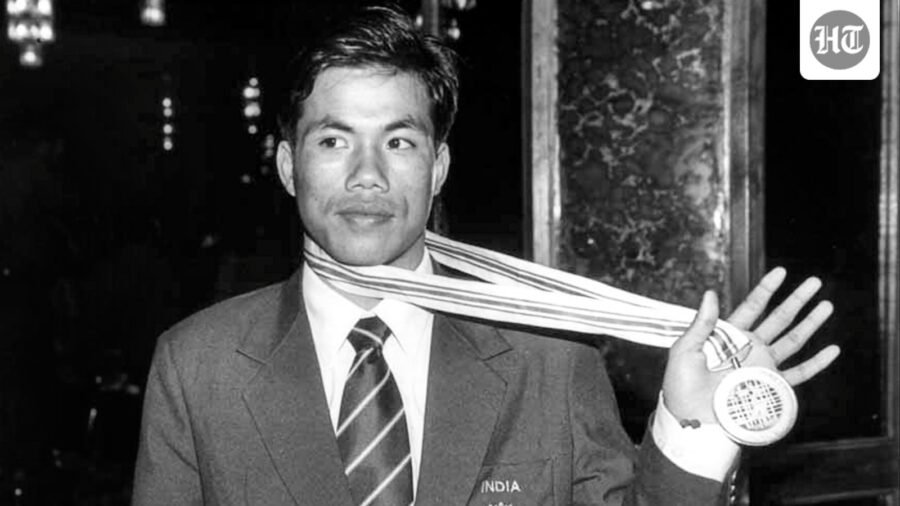
Selected, controversially dropped and then retained, the boxer ended India’s 16-year wait for gold in the ring
Published on: Sep 21, 2026, 12:56:29 IST
Prefer HTon Google
Share via
Copy link
Building up for the 1998 Bangkok Asian Games, the big question and focus for India was whether the men’s hockey team can end a 32-year wait to crown themselves champions. There was South Korea, and Pakistan standing in their way, although the previous victory had come at the Thai capital, in the 1966 Games.
However, the sheer human drama surrounding bantamweight boxer Dingko Singh took over days before the squad was scheduled to leave for Bangkok. For the low he experienced, the Manipur boxer soared at the Games, writing his own dream script by winning gold, India’s first for 16 years—since heavyweight Kaur Singh emerged victorious in the 1982 New Delhi Asian Games.
Few had doubts about Dingko’s hand speed and punching skills. The boxer from Sekta in Imphal East district was 11 years old when he was spotted under the Sports Authority of India’s Special Area Games project in 1990. The boy initially trained under the respected Imphal-based coach Ibomcha Singh, who has guided many young talents from the state.
Deep Dive
Powered ByAsk
As he made a mark in junior national tournaments as a teenager, he was seen as a big future prospect. Dingko gave notice of his abilities at international level first up when he won the title at the 1997 Kings Cup tournament in Bangkok.
It was natural progression when he became a regular in the national camp, and it was, as expected, included in the squad for the Bangkok Asian Games a year later. A familiar city with a huge following for martial arts and other contact sports seemed to beckon the youngster.
With lightheavy Gurcharan Singh and middleweight Jitender Singh, India held high hopes of medals. Maybe a gold even. However, controversy broke as Dingko, still in the camp at the National Institute of Sports, Patiala, was left shattered after the selectors decided to cut the relatively inexperienced boxer from the squad. The decision seemed to have been taken as they felt India may not fare well in the lower divisions.
Thailand did have the 1996 Atlanta featherweight gold medallist Somluck Kamsing, a lock in for victory in the weight class. But removing Dingko’s name from the list didn’t make sense.
News filtered in that a distraught Dingko, after a heavy drinking session, was found lying in the NIS premises. With the issue grabbing unwanted media attention, the selectors realised it was one unanticipated controversy that will have to be quickly doused. Dingko was back in the squad!
Two days later, at the send-off function for the squad at a Delhi five-star hotel, the media made a beeline to interview Dingko. Dressed in black, Dingko was seated at a table and boxers from the heavier categories had thrown a protective ring, forbidding the media to keep off. Chief coach Gurbux Singh Sandhu, from an era when the job of manager went with the territory, requested the media not to talk to Dingko as he had been calmed down with difficulty.
At Bangkok, his bright, aggressive boxing style earned appreciation. After a first round bye, he beat China’s Wei Hongto on points, and the quarter-final against Cambodia’s Svay Vireak was stopped by the referee (RSC-Outclassed). The real test awaited in the semi-finals when he took on the talented Thai Sontaya Wongprates, also an aggressive boxer who had traded codes after starting as a Muay Thai fighter.
The fight was too close to call and both traded rapid punches. The Indian fans erupted in celebration and the Thai hearts sank as the judges awarded the fight 18-14 on points to Dingko.
With silver assured, the Indian camp could soon dream of gold after his opponent, Timur Tulyakov of Uzbekistan, suffered a hand fracture during his semi-final win over Kazakhstan’s Marat Mazimbayev.
Tulyakov, with his hand in plaster, still entered the ring for the final. He threw a few feeble punches with his healthy hand which Dingko adroitly avoided as instructed by his corner. The Uzbek coaches accepted the inevitable and threw in the towel, ending the bout as an emotional Dingko threw up his hands beaming in triumph.
A 16-year wait for an Indian boxing gold at the Asian Games was over. One that did not even start.
The Navy boxer, who was only 42 when he died in 2021 after battling liver cancer, was dealt another unkind cut a year after the Bangkok Games. He fractured his hand during a demonstration bout with Andhra’s Sriramulu at the 1999 National Games in Imphal—it was organised to let Manipur fans cheer for their boxing hero at home after his scheduled opponent Birju Sah withdrew. Some boxing officials and coaches got him to remove the plaster prematurely to attend a government cash award distribution function, perhaps anxious that an upcoming training trip would be cancelled if the star attraction was not going.
The fracture had not properly set and the problem hurt Dingko’s career from there.
The Bangkok high made possible by the nimble boxer though will remain as one of India’s Asian Games highs. The men’s hockey team too delivered on their mission, claiming gold after 32 years with a shootout win over South Korea in the final.
See Less

‘Didn’t agree with the decision’: Suchika Tariyal explains her controversial MMA semifinal
By Sohail Khan · 21 Sep
‘I think we should let Sanju Samson be’: Anjum Chopra
By Sohail Khan · 21 Sep
Asian Games: Savita Punia becomes India’s most-capped women’s hockey player
By Sohail Khan · 21 Sep
Leave a Reply