As festivities end, Mumbai’s discarded footwear gets a second life
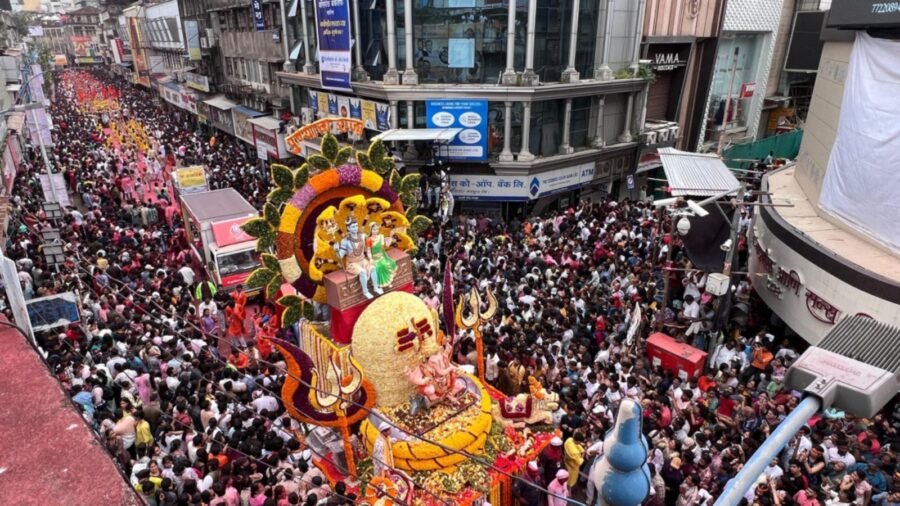
When Mumbai’s Ganeshotsav crowds disperse, they leave behind an unusual part of the festival’s aftermath: footwear abandoned around pandals and along crowded procession routes.
This year, BMC’s waste management and sanitation teams collected nearly eight tonnes of shoes, sandals and slippers across the festival, including nearly four tonnes from Ganesh idol arrival processions on August 29. Instead of being sent to landfills, the footwear is being sent to GreenSole Foundation for upcycling and distribution to children in BMC schools and the tribal belt across Maharashtra.
The collection followed concerns within the civic administration over the quantity of footwear left behind during the festival each year.
Story continues below.
Subscribe to see fewer ads.
“Much of this footwear is eventually dumped in landfills. Through this initiative, it can instead be upcycled and distributed to the underprivileged, while reducing waste,” said Vrushali Ingule, Assistant Municipal Commissioner of BMC’s F South ward.
The first major collection was carried out after the Chinchpokli Cha Chintamani Ganpati aagman procession on August 29. BMC sanitation workers collected footwear from areas including Bharatmata Junction, Jijabai Lane and the stretch near Chinchpokli railway station. The material was initially stored at a vacant plot at Saibaba Municipal School in Parel before being sent for processing.
At GreenSole’s Bhiwandi facility, the footwear is manually sorted, washed and sanitised before being dismantled. Uppers, soles, laces and other components are separated and assessed for reuse.
Usable soles are cut to size and reassembled with recovered uppers to make refurbished footwear. The components are put together using a repurposed heater machine and pressure sealed before the edges are cleaned and straps attached.
The process does not end with footwear. Material that cannot be used for shoes or slippers can be converted into products such as school bags and sitting mats.
Story continues below this ad
The footwear collected by BMC will be distributed through schools and NGOs to children from Classes I to VIII, including students in BMC schools and children in the tribal belt across Maharashtra.
Not everything can be salvaged. GreenSole estimates that around 15 per cent of the material becomes residual waste or offcuts. Thermoplastic rubber and thermoplastic polyurethane recovered from discarded soles are ground into granules and sold to the automotive and furniture industries and waste management agencies.
GreenSole has been working on footwear upcycling for more than a decade and says it has processed more than one million pairs. It collects footwear through corporate drives, individual donations and surplus inventory from manufacturers. Its Thane facility receives between 500 and 3,000 pairs of acceptable footwear at a time.
“We don’t want to expend unnecessary fuel while trying to reduce carbon emissions through upcycling,” said GreenSole co-founder Ramesh Dhami, explaining the importance of collecting footwear in concentrated quantities.
Story continues below this ad
Dhami said the initiative began after he found that the sole of a damaged running shoe could still be used even when its upper had worn out.
“Both Shriyans and I discarded nearly four pairs of running shoes yearly. At the same time, coming from a background with meagre earnings, I was aware that while shoes were a necessity, not everyone could afford them,” he said.
The Ganeshotsav collection gives the organisation a large, concentrated stream of footwear to process while allowing the BMC to divert part of the festival waste from landfills.
GreenSole estimates that its broader upcycling work since 2016 has helped reduce nearly 4,374 tonnes of carbon dioxide emissions.


Leave a Reply