Six decades, 88 deaths: The dangers that come with a police uniform
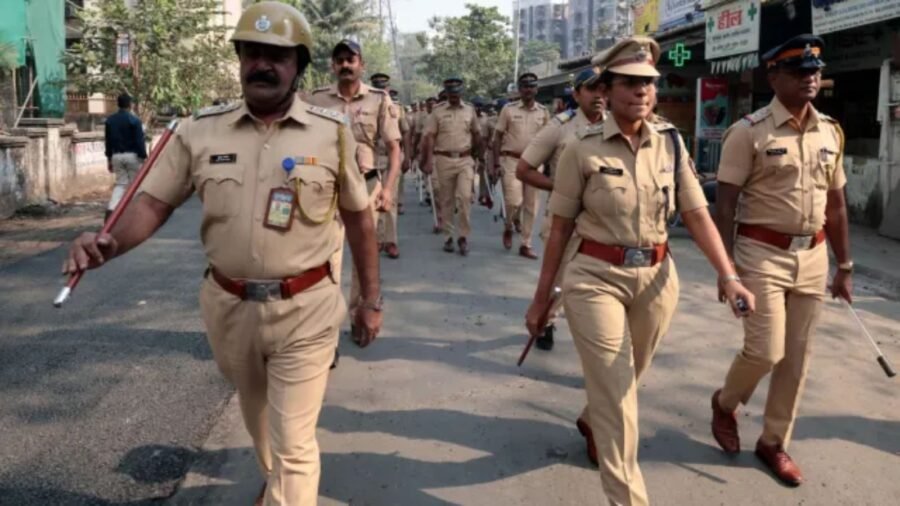
But the numbers tell only part of the story. The circumstances in which these policemen died have changed dramatically over the decades — from communal violence and encounters with armed criminals to terrorism, crowd-control operations, rescue missions, traffic enforcement and, in Bhoir’s case, an apparently routine intervention during Ganpati security duty.
Story continues below.
Subscribe to see fewer ads.
The deadliest year in the Mumbai-related memorial records was 2008, when 12 Mumbai Police personnel were killed. When Mumbai Railway Police and ATS personnel included in the Mumbai-linked records are added, the number rises to 14.
Most of those deaths occurred on the night of November 26, 2008, when 10 Pakistani terrorists carried out coordinated attacks at multiple locations in Mumbai.
The 26/11 attack therefore accounts for the single largest concentration of police deaths in the Mumbai-linked records.
However, this was not the first time that policemen were targeted by terrorists. In 1990, Sub-Inspector Lakhmersingh Sardar, who was on traffic duty, was shot at by Sikh terrorists in Ghatkopar and later succumbed to his injuries.
Story continues below this ad
The other major spike came during 1992 and 1993, when Mumbai was engulfed in communal violence.
The Mumbai Police memorial records list 10 personnel who died in 1992 and one in 1993. Six of these deaths occurred after policemen were targeted during the 1992-93 riots.
When mobs turned on the police
Apart from terrorists and armed criminals, the police have also faced the threat of large crowds, with several incidents in which policemen were specifically targeted.
One of the earliest such cases was in 1972, when Police Constable R M Rane was lynched by criminal elements during a factory workers’ protest in Vikhroli.
Story continues below this ad
Nandkumar Gokhale, a 28-year-old Sub-Inspector of the Mumbai Police, was brutally lynched in Kamathipura’s Fifth Lane.
On May 18, 1984, a rampaging mob, amid communal riots that had engulfed parts of erstwhile Bombay, Thane and Bhiwandi, inflicted 38 wounds on the officer. Despite being off duty and dressed in civilian clothes, Gokhale had decided to help his fellow policemen control the mob.
Known as a dashing officer who suffered from an extreme fear of heights, Gokhale was killed when his attackers, many of them allegedly affiliated with the Mumbai underworld, took him to the terrace of a building and threw him from the top. His body was subsequently hidden inside a sewer and covered with a lid. It was discovered after an extensive search.
On the same day, his colleague, Police Constable Shaikh Gula Shaikh Amir, was also lynched in Peru Lane, under the jurisdiction of Dongri police station.
Story continues below this ad
The Thane region has its own history of policemen being killed during communal violence.
On July 5 and 6, 2006, Police Naik Balu Sukhadev Gangurde and Head Constable Ramesh Yashwant Jagtap, both attached to Thane Police, were lynched while deployed for bandobast duty in Bhiwandi amid rioting and arson.
The incident unfolded on July 5, 2006, when hundreds gathered near the proposed Nizampura police station site in Bhiwandi amid opposition to its construction. As tensions escalated, the mob attacked the structure and clashed with police, who opened fire, killing two youths. News of the firing triggered further violence elsewhere in the city, where two policemen, Ramesh Jagtap and Balasaheb Gangurde, encountered a mob near the Baug-E-Firdous mosque while trying to prevent attacks on state transport buses. The two were overpowered, beaten and stabbed, and their bodies were subsequently mutilated and an attempt made to burn them before other policemen reached the spot.




Leave a Reply