After Nepal disaster, Sikkim faces flood risk; 40-high risk glacial lakes identified
A total of 40 high-risk glacial lakes have been identified in Sikkim, including 16 at the highest-risk Category A level, amid growing concern over glacial lake outburst flood (GLOF) risk in the Himalayas. The state is building a mitigation plan monitoring and possible flood measures, with Shako Chho lake flagged as the most vulnerable lake of all.
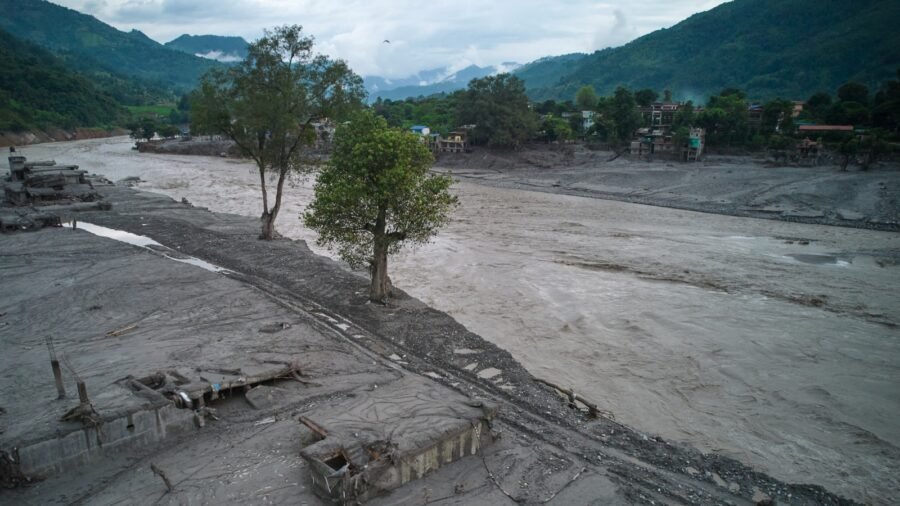
The assessment comes close on the heels of the flash flood in Nepal on August 26, which killed more than 1200 people. Although the Nepal disaster was caused by a collapse of ice and rock and was not a GLOF, it has renewed concerns over the growing vulnerability of Himalayan communities to climate-related hazards as well.
At a media sensitisation workshop on GLOF risk mitigation, Sikkim Principal Secretary Sandeep Tambe said satellite images and remote sensing were being used to track changes in glacial lakes.
Of the 40 high-hazard lakes identified by the state, 16 are in Category A, classified as the highest risk, 2 are in Category B, or high risk and 9 are in Category C, classified as moderate to low risk. The remaining 13 lakes are yet to be classified, Tambe said.
Glacial lakes form when glaciers melt and water accumulates in depressions around them. If these lakes suddenly burst due to excess water, landslides or earthquakes, they can send large amounts of water, mud and debris downstream.
Sikkim has already experienced the destructive potential of such an event. A GLOF in October 2023 killed at least 60 people, damaged infrastructure across Mangan, Gangtok, Pakyong and Namchi districts and destroyed the Chungthang dam, PTI reported
The state government has identified Shako Chho Lake as the most vulnerable to a GLOF. A detailed project report for mitigation measures at the lake has been submitted to the National Disaster Management Authority, while a preliminary project report has been sent to the Jal Shakti Ministry.
Story continues below this ad
For the Lhonak Complex, the Central Water Commission and Sikkim government are preparing a DPR for a flood-retention structure at Dolma Sampa near Muguthang, as per PTI. At the Gurudongmar Complex, authorities have proposed a moraine plug wall at the lake outlet, with the plan also taking into account the area’s cultural and religious.
Officials said there was no one-size-fits-all solution for the lakes. Measures being examined include draining and pumping water out, improving or building drainage channels, cutting mass of rocks with safety walls and constructing tunnels to lower lake levels.
Sikkim’s Department of Science and Technology was designated the nodal agency for GLOF hazard assesssments and mitigation studies in February 2025. The state is also working on what officials described as potentially India’s first dedicated GLOF Risk Mitigation Protocol, which would establish a standardised framework for assessing, preparing for and mitigating glacial flood risks.
The proposed protocol could serve as a model for other Himalayan regions, according to the state government.
Story continues below this ad
Field examinations suchsas monitoring lake water levels and discharge, geophysical surveys, bathymetry, flood modelling and hazard assessments, besides studying the practicality of lowering lake levels and building flood-retention structures.
Officials also stressed the need to strengthen early-warning systems. Additional sensors have been proposed in Sikkim after tge discussions with Union Home Secretary Govind Mohan, who gave a positive assurance on the proposal.
Mohan reviewed the preparedness of Himalayan states and Union Territories for GLOFs and snow avalanches. Senior officials from Sikkim, Uttarakhand, Himachal Pradesh, Arunachal Pradesh and Jammu and Kashmir, along with representatives of the Ministry of Home Affairs, NDMA, Central Water Commission, IMD and Defence Geoinformatics Research Establishment, attended the meeting.

Former Kerala police chief resigns as councillor months after mayor snub
By Sohail Khan · 3 Oct
Uttarakhand’s SIR final roll is out — but the voter enrolment exercise isn’t over yet
By Sohail Khan · 3 Oct
Chhattisgarh tiger reserve finds 2,500 trees girdled. Satellite images show scale
By Sohail Khan · 3 Oct