A milestone at Kuno: Cheetah born to South African feline now has four cubs of its own
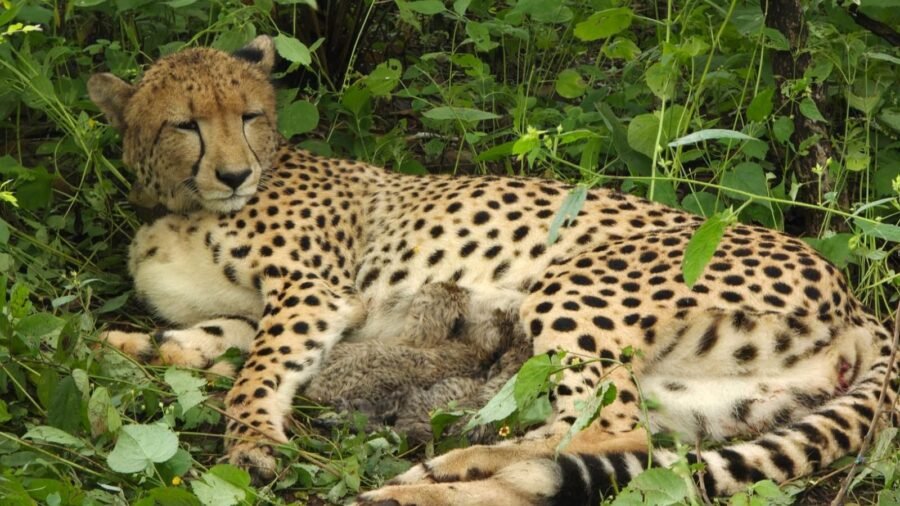
A day after Project Cheetah completed four years in India, an Indian-born cheetah has given birth to four cubs at Kuno National Park, marking a milestone for a programme that began with the translocation of animals from Africa and is now seeing successive generations born in India.
KGP12, an Indian-born female and daughter of the South African cheetah Gamini, gave birth to the four cubs in Kuno, Union Environment, Forest and Climate Change Minister Bhupender Yadav said.
“A truly historic and joyous moment for Project Cheetah! A day after India’s Cheetah Project completed four years, KGP12, an Indian-born female cheetah, has given birth to four cubs in Kuno,” he said. “Four years, four new lives – a beautiful symbol of hope, resilience and the growing success of cheetah conservation in India.”
A truly historic and joyous moment for Project Cheetah!
A day after India’s Cheetah Project completed four years, KGP12, an Indian-born female cheetah, has given birth to four cubs in Kuno.
Four years, four new lives—a beautiful symbol of hope, resilience and the growing… pic.twitter.com/f1zbqSvx1b
— Bhupender Yadav (@byadavbjp) September 18, 2026
The latest births take India’s cheetah population to 56, including 36 cheetahs born in the country. Kuno now has 53 cheetahs, while another three are at Gandhi Sagar Sanctuary.
Story continues below.
Subscribe to see fewer ads.
The birth is particularly significant because KGP12 is itself a product of the reintroduction programme. It was born in India to Gamini, one of the cheetahs brought from South Africa. The births mean animals born after the return of cheetahs to India are now themselves producing offspring.
Project Cheetah began on September 17, 2022, with eight cheetahs brought from Namibia. A further 12 were brought from South Africa in February 2023, followed by nine from Botswana this year. Over four years, the programme has shifted from the initial translocation of adult animals to breeding and establishing India-born generations.
For the programme, KGP12’s litter matters beyond the numbers. The project’s longer-term objective is to establish a viable population that can survive and breed under natural conditions.

Madhya Pradesh HC judge’s farewell speech: Body to science, Rs 1 crore to PM CARES
By Sohail Khan · 18 Sep
Bones behind the bungalow: How the Nithari serial killing case unravelled
By Sohail Khan · 18 Sep
Sister killed while pregnant, brother waits months – then hacks her husband to death
By Sohail Khan · 18 Sep
Leave a Reply