80 chefs from 25 nations, 120 items on menu: Inside the Asian Games kitchen
Sixty thousand bananas. A tonne of rice. Two tonnes of chicken. Up to 35,000 pieces of bread and 30 kg of almonds. A total of 450 menu items. Every single day.
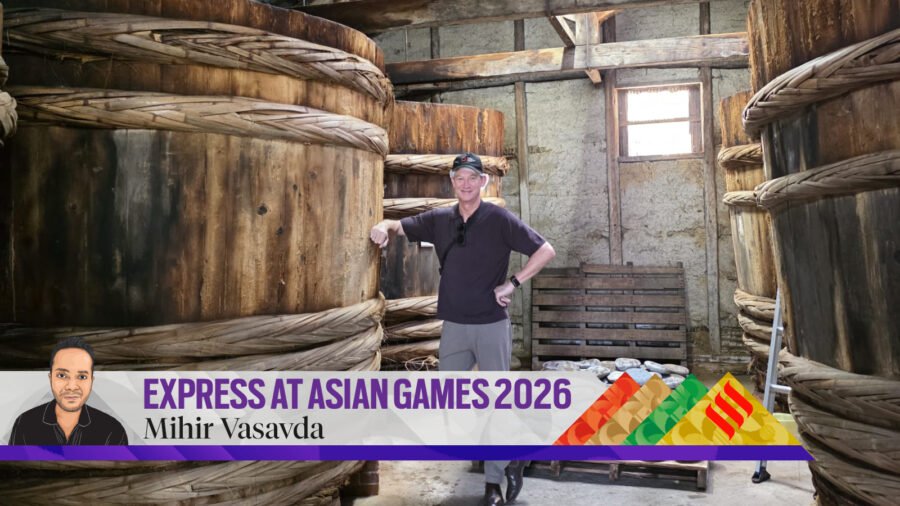
For Peter Wright, the founder of Global Hospitality Group, feeding an Asian Games is less about putting food on a plate than running a small international food system. It begins before dawn, caters to athletes from across continents and keeps serving until 1am. “It’s slow madness at the start,” Wright says. “By the end, it’s damn crazy.”
At the Aichi-Nagoya Asian Games, Wright and his team have 80 chefs from 25 countries working in the kitchen, with around 200 staff involved in the operation. The menu changes four times a day: Breakfast, lunch, dinner and supper, with the first food going out at 5am.
Story continues below.
Subscribe to see fewer ads.
The scale is enormous, but the philosophy is simple: Make a 17-year-old athlete feel at home. “I’m a young athlete, pretend. It’s my first trip overseas,” says Wright. “I’m going to Japan… But when I get here, all that I’ve eaten in the past is things from my village or my community or what my coach tells me to eat, what my mother cooks for me. So I’m looking for something to be familiar with.”
That means the Japanese setting does not translate into a dining hall dominated by sushi and sashimi. There are Chinese, Korean, Thai, Malaysian, Middle Eastern and Indian offerings, including rogan josh, dal, curries, chutneys, naan and biryani. The vastness of the Asian Games means there are also different religious sensitivities to negotiate.
Even soy sauce is not quite as simple as it sounds.
“The Korean chef wants Korean soy sauce, the Japanese chef Japanese soy sauce and the Chinese chef Chinese soy sauce,” says Wright, who has spent more than 40 years in hospitality and worked on catering at the Sydney, Beijing and Rio Olympics, the Vancouver Winter Olympics and two Commonwealth Games. “You can’t put one soy sauce and go, right, you all have to use it. The chefs will fight you.”
Story continues below this ad
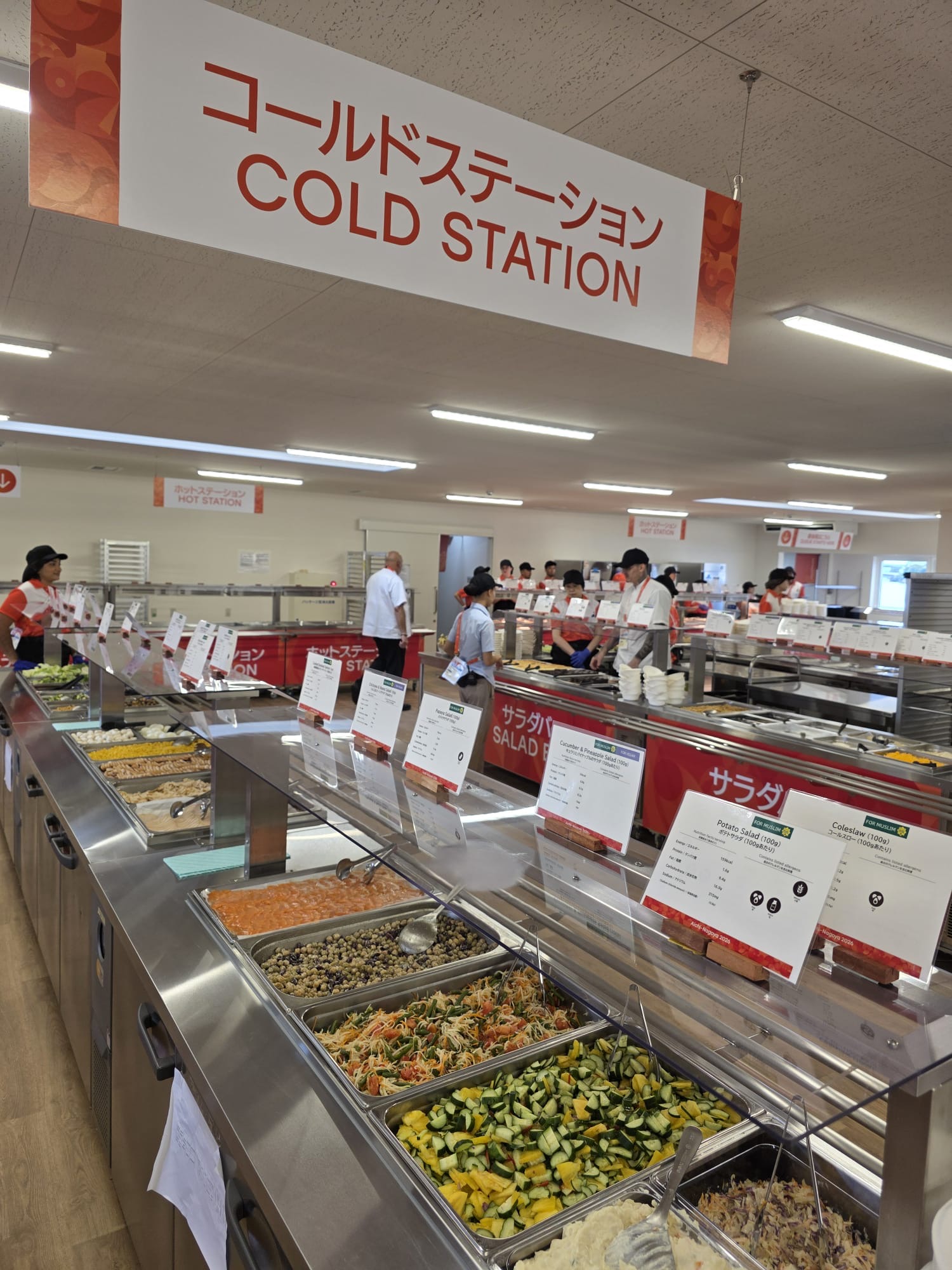 Photos of the cold station of the dining hall at the Asian Games.
1992, Pakistan and biryani
The same goes for biryani. Wright learnt that lesson in 1992, when Pakistan played England in the World Cup final at the Melbourne Cricket Ground. The Pakistan team manager asked for biryani as a match-day meal. “He asked me, ‘Do you know what it is? I replied, ‘Yeah, yeah, I know what it is, no problem’. Because I’m a young chef with a big ego. I never heard of biryani in my life.”
There was no internet to rescue him, so Wright turned to an Indian member of his kitchen staff, whose mother came to the MCG and taught the chefs how to make the dish. They served it to the Pakistan team.
Later, Wright asked the manager how it was. “He said, ‘Oh, it was okay. It wasn’t Pakistani biryani, it was Indian biryani’. I went, ‘What are you talking about? It’s the same thing’. And he said, ‘no, it’s not the same thing’.”
It was an important lesson. “I didn’t know there was a difference, but I learned something — authenticity,” Wright says.
That obsession with authenticity now sits alongside an equally important concern: Control.
Story continues below this ad
The athletes can choose from roughly 110-120 items in each meal period. Much of the food is kept as individual ingredients rather than being combined in advance. The salad bar, for instance, can have 40 or 50 components — tomatoes, corn, chillies, carrots, cucumbers, kimchi — allowing athletes to build their own plates.
For someone counting every calorie, the difference matters. Grilled chicken can come without the sauce; rice can be portioned precisely; nuts such as almonds and sunflower seeds provide another source of nutrients.
“The elite athlete, you’re the favourite for the gold medal, you will eat anything. You know what you want to eat,” Wright says. “They’re looking for macronutrients. They’re looking for allergens.”
Others arrive at the dining hall with a different strategy. Wright has watched newly arrived athletes pull out their cameras, film the buffet and fill their plates as though they have never seen food before. “That only lasts for one or two days,” he says. “And then they get into athlete mode, and then it comes back down to basic food.”
Basic, perhaps. Small, certainly not.
Story continues below this ad
Chicken is the biggest protein source, at roughly two tonnes a day, with around 800 kg each of beef and fish. Rice approaches a tonne on a peak day. Bananas are consumed at a rate of about 60,000 a day across the venues. Bread — sliced bread, rolls, flatbreads, naan and tortillas — adds up to roughly 35,000 pieces.
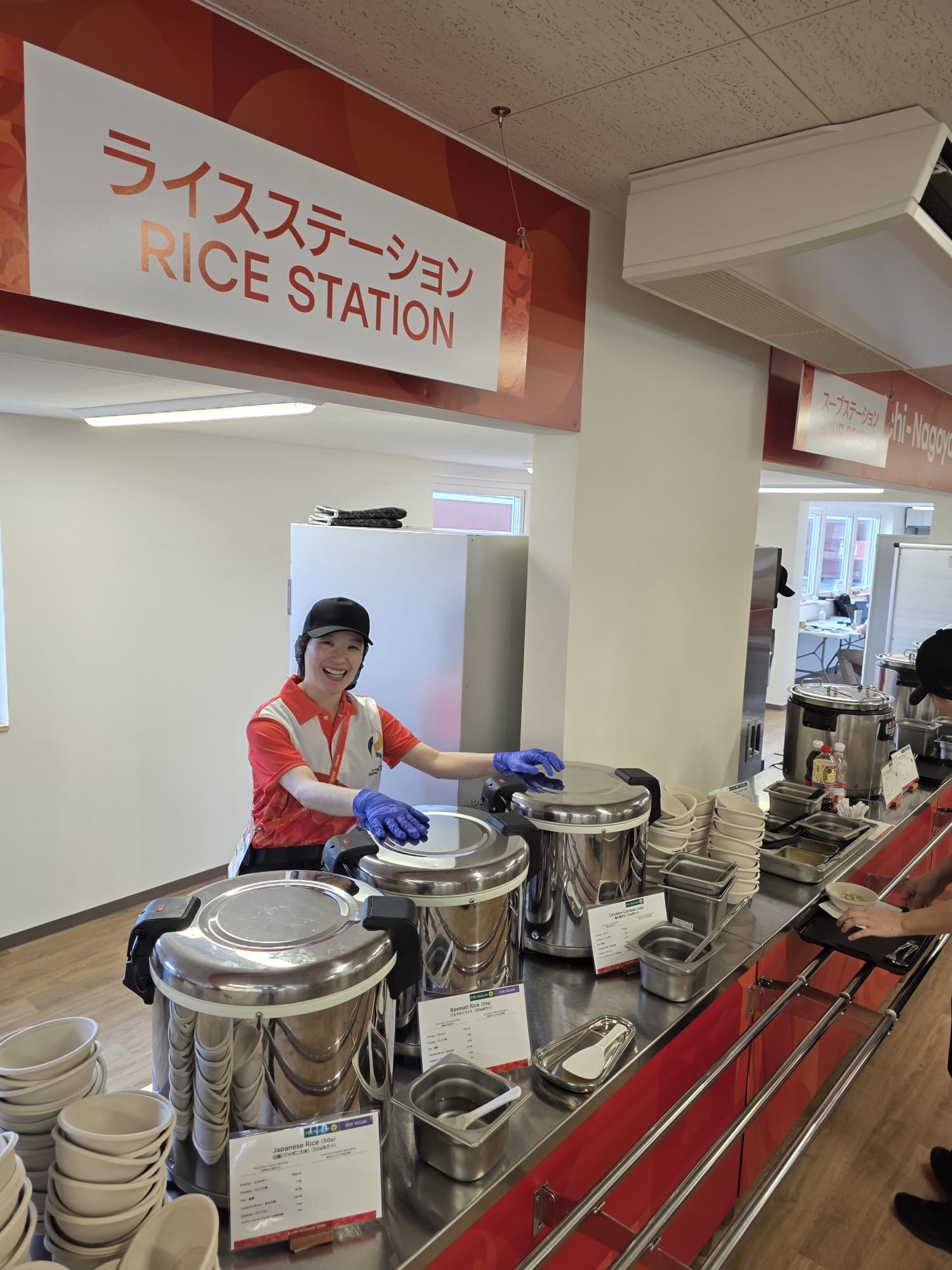 On a peak day, a tonne of rice is consumed, according to Wright. The variety includes basmati, jasmine, Japanese, glutinous (sticky) and black. “We have five rice cookers, and in the kitchen, we have two walls of big machines, and nine individual bowl cookers,” Wright says.
Fruit is among the biggest overall categories, with athletes consuming seven or eight pieces each a day.
The sourcing behind those numbers is another operation altogether. Suppliers need certification, there are backup sources for key products and purchases are made several days in advance so that quality can be checked before food reaches the athletes.
“We can’t use a supplier that doesn’t have proper certification because if you have food poisoning in the village, could you imagine?” Wright says. “I would be running for the hills.”
Story continues below this ad
The local flavour comes through the supply chain as much as the menu. Wright’s chefs, for instance, visited Nagoya’s miso producers and countryside restaurants, speaking to local cooks about rice, herbs, ginger and garlic before working with suppliers to bring those ingredients into the Games kitchen.
Japanese rice is even purchased pre-rinsed, a small detail that becomes significant when you are cooking nearly a tonne of it.
Then there are the details that can be invisible to diners but matter enormously to the kitchen. At one point, the team discovered that pastry brushes were made with raccoon hair. “It’s soft hair, but raccoons are carnivorous animals, not halal. If you brush the pie with a raccoon brush, it’s not halal anymore. So, we have to chuck all the brushes out and buy synthetic pastry brushes,” Wright says.
After all that precision, there is still one problem: Nobody wants to eat the same thing 21 times in a week. So, the kitchen introduces what Wright calls “surprise and delight” — a live burger station, shawarmas, grilled prawns, pasta or ice cream.
Story continues below this ad
And when competition is over, the rules change again. Athletes who have spent years training for these Games, Wright says, often make a beeline for the things they have spent years avoiding. “Not really Olympic food,” he says, laughing. “But when you finish competing, you just eat… cakes and cheeses and far too much food.”

India vs South Korea: Hyeon Chung and a blast from the past
By Sohail Khan · 18 Sep
MCA asks BCCI for U-17 girls tournament, more international matches at Wankhede
By Sohail Khan · 18 Sep
Why Typhoon 25 – Dujuan has Nagoya with fingers crossed for Sept 21
By Sohail Khan · 18 Sep
Leave a Reply