5 animals accidentally discovered in India
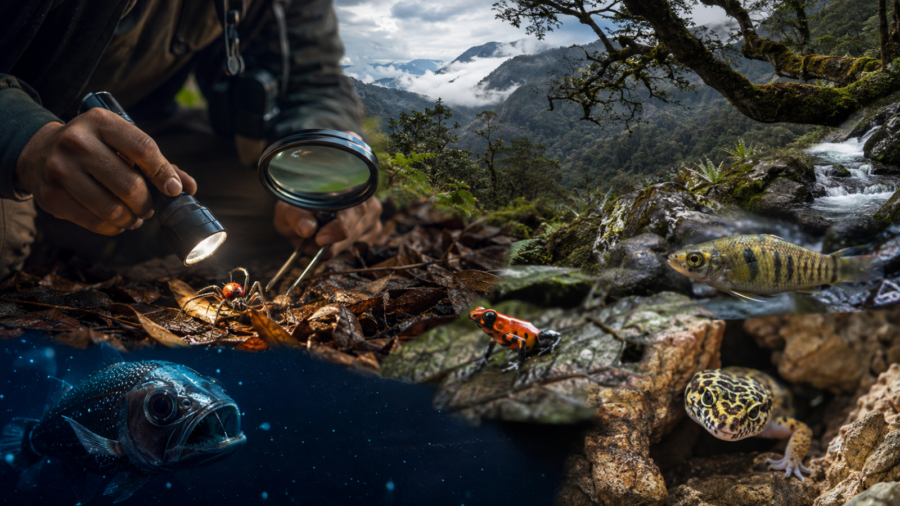
Not every new animal discovery begins with scientists setting out to find a new species. Sometimes, researchers are looking for something else, stumble across an unusual creature, or realise that an animal they thought they knew is actually something entirely different. India has had several fascinating discoveries like this.
Here are some such animals that were discovered accidentally!
1. A spider found during an ant survey
View this post on Instagram
A post shared by Bichitra Prakashani (@rayandmartinpublications)
In 2026, researchers in Uttarakhand were surveying ants when they accidentally came across a tiny spider with a striking red, smile-like marking on its back.
The researchers realised they were looking at a species new to science. It was named Theridion himalayana, or the Himalayan happy-face spider.
The discovery is particularly interesting because the spider belongs to a group famous for its distinctive “smiling” pattern, previously associated with spiders from Hawaii. The Indian species was found in the montane forests of Uttarakhand.
The researchers themselves described the discovery as accidental—the survey had originally been about ants.
2. A tiny frog spotted on a night walk
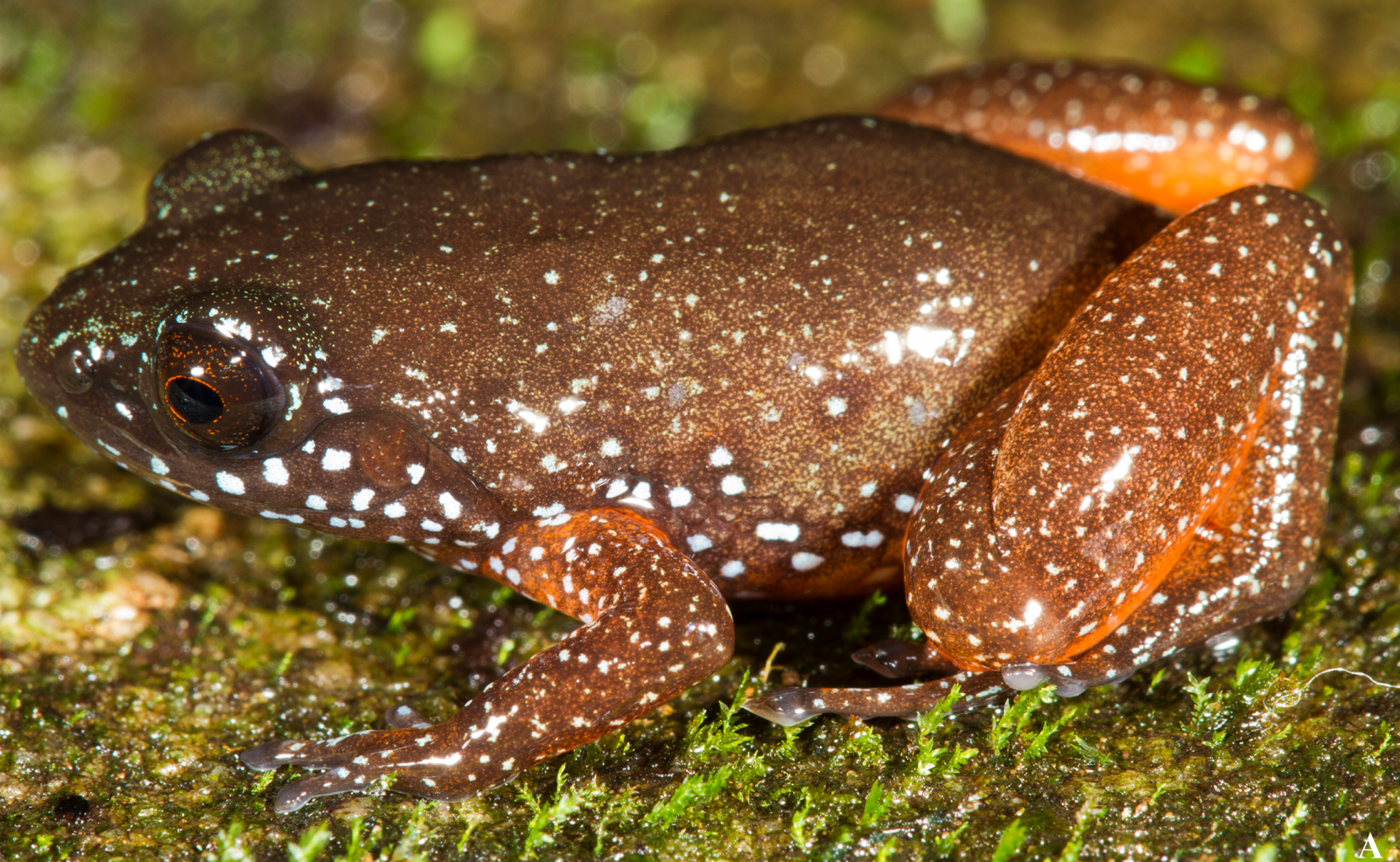 This frog is small-bodied and thumbnail-sized, with adults measuring roughly 20 to 29 mm in length
Sometimes, simply taking a closer look can lead to a major discovery.
In 2019, researchers walking through a shola forest in Kerala’s Western Ghats spotted a tiny frog sitting beside leaf litter. At first glance it was easy to miss—the frog was only about the size of a thumbnail and quickly disappeared into the leaves when disturbed.
But its bright orange belly, blue star-like markings and unusual fingers suggested that it was not an ordinary frog.
Story continues below this ad
Further study confirmed it as a new species, Astrobatrachus kurichiyana. The researchers named it after the Kurichiyan community of Wayanad, where it was found.
3. A “known” fish that turned out to be new
Eechathalakenda incognita – a new cyprinid fish from the Western Ghats, and the first phylogenetic analysis incorporating genus Eechathalakenda! Check out the paper on this enigmatic cyprinid published today in ‘Systematics and Biodiversity ‘ @FishInTheNews @Meenkaran1 pic.twitter.com/cN1lgRYsdd
— Rajeev Raghavan (@LabRajeev) June 5, 2026
This one is less about stumbling across an unknown animal and more about discovering that scientists had been mistaking one animal for another.
Researchers studying freshwater fish in Kerala’s Periyar Tiger Reserve found that a population believed to belong to a known barb species was actually distinct.
Detailed examination showed that it represented a previously undescribed species, now named Eechathalakenda incognita.
In other words, the fish had been there all along. The discovery came from looking more closely at animals scientists thought they already understood.
4. A new leopard gecko hiding among ancient rocks
View this post on Instagram
A post shared by Research Matters (@researchmatters)
The rocky scrublands of Bihar’s Kaimur Plateau produced another surprise in 2026, when scientists discovered a new species of leopard gecko.
Story continues below this ad
Named Eublepharis jhuma, the gecko belongs to a group of ground-dwelling reptiles known for their movable eyelids and nocturnal habits. It also represented the first confirmed record of the genus Eublepharis in Bihar.
5. A deep-sea fish found in fishing landings
What was long believed to be an already known species has now been identified as an entirely new one.
ICAR-CMFRI scientists have discovered Cyttopsis indica (Indian dory), a new deep-sea fish species from the Arabian Sea. @icarindia#CyttopsisIndica #ICARCMFRI pic.twitter.com/KcRTuyKqzT
— CMFRI -Central Marine Fisheries Research Institute (@ICAR_CMFRI) July 3, 2026
Some discoveries happen in places humans rarely see directly.
In 2026, scientists from ICAR-CMFRI identified a new deep-sea fish from the Arabian Sea called the Indian dory. The fish, scientifically named Cyttopsis indica, was identified from six specimens collected from deep-sea trawl landings at Sakthikulangara fishing harbour in Kollam.
The specimens had been collected from depths of around 350 to 500 metres. Scientists combined traditional examination with DNA analysis and found that the fish was genetically distinct from other known species.
Story continues below this ad
So this new species wasn’t found during an expedition to photograph unknown creatures—it came to scientists through fishing landings and was identified after detailed investigation.

Good foundation: on India’s strong industrial growth performance
By Sohail Khan · 1 Oct
Bitter pills: on Court’s intervention, drug pricing
By Sohail Khan · 1 Oct
Household debt, financing today against tomorrow
By Sohail Khan · 1 Oct