RSS leader Sunil Ambekar flags demographic changes, calls for scrutiny of population policies
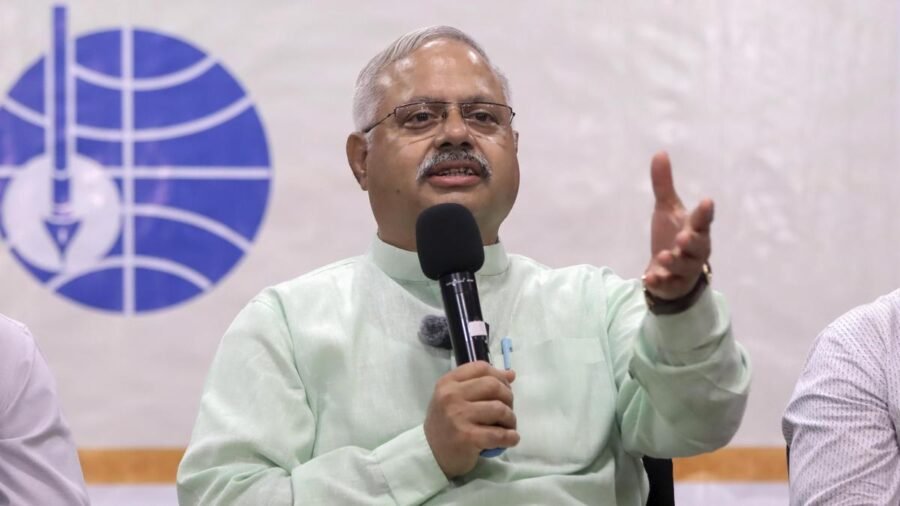
Rashtriya Swayamsevak Sangh’s (RSS) national publicity in-charge Sunil Ambekar on Tuesday (September 28, 2026) said that marriage laws framed post-Independence allowed certain communities to have more than one spouse while penalising Hindus from doing so, and that this contributed to demographic disparities.
Speaking at the Indira Gandhi Centre for Arts at the launch of a book titled Secularvaad aur Badalti Jansankhya ke Aankde (Secularism and Changing Population Figures), Mr. Ambekar said that population implications should have been weighed when such laws were framed.
“After 1947, after the Constitution was framed, laws in our country were formulated in such a way that a difference can be seen between the period before and after independence. For example, some people were allowed to have four marriages, whereas Hindus were told that having more than one marriage would be punishable. The law should be the same for everyone. But if a law is created under which one group is legally given an exemption while another is punished for the same conduct, that creates an imbalance,” he said, in his speech in Hindi.
His statement came days after Home Minister Amit Shah had announced that BJP-led NDA will implement Uniform Civil Code (UCC) in 21 States by 2029, ensuring equal rights and justice for all.
According to Mr. Ambekar, the education system created for minorities post Independence had also created imbalance.
“If you go to several States, including Kerala, you will find a large number of minority institutions or educational institutions. As a result, many sections of society have effectively been made to feel that they should go to these particular institutions,” he said, claiming that this had become one route for religious conversions.
He also criticised panchayat rules on family size. “Population control should certainly be considered. But how were these laws introduced? It was said that if you had more than a certain number of children, you could no longer contest a panchayat election,” he said, adding that the rule was not applied equally to all.
He said India lacked a concrete population policy after Independence, and that the first population commission was set up in 2000 under the Vajpayee government.
Backing the National Register of Citizens (NRC) and the Citizenship Amendment Act (CAA), the RSS leader said they were needed to identify illegal entrants and grant citizenship to persecuted minorities from neighbouring countries. He said grievances should go through legal channels, but that recognising a non-citizen as a citizen for ‘political reasons’ would be wrong.
“If people have entered the voter list incorrectly, they need to be identified.” he added.
He urged the audience to view the subject of demographic imbalance after “removing the ‘secular’ and ‘communal’ lenses.”




Leave a Reply