35 years, 2 absconders and a trail gone cold: How 1991 Jammu blast case was rebuilt
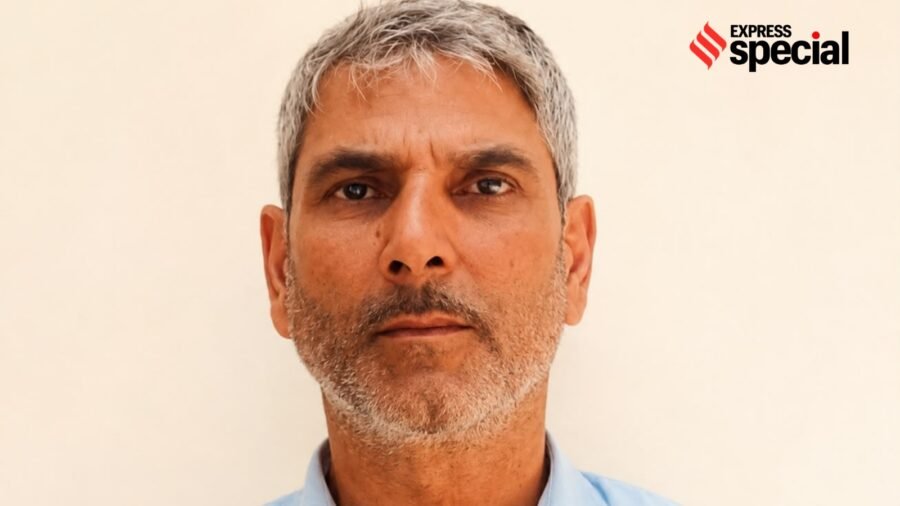
Nothing about Altaf Hussain Sheikh suggested anything out of the ordinary. He came from a well-respected family in Anantnag’s Bijbehara, was an established businessman and, neighbours say, lived a perfectly ordinary family life with a wife and three children – a son and two daughters.
It was a shock, therefore, when the 56-year-old Sheikh was arrested in the second week of August for the 1991 bomb blast at Jammu Railway Station.
Advertisement
“I don’t understand why this is happening now. Where were they for all these years?” his 21-year-old daughter told .
Over the last two weeks, Government Railway Police sources claim to have made one more arrest in the April 2, 1991, Jammu Railway Station blast, along with Sheikh. The blast killed three people — two paramilitary personnel and a civilian — and injured 18 others. For the police, the two arrests mark a breakthrough in a case that has been in abeyance for over 35 years and came on the back of what investigators claim was a two-year-long verification of public records.
Says one investigator: “His lawyers appeared before the police officers with a long list of documents to prove that we have the wrong person. But everybody became silent when we got his identity established through the lambardar [village headman] and chowkidar of Marhama village, where he lived before the blast”.
Advertisement
But the family and neighbours insist that this is a case of mistaken identity. “He would have been in Class 11 at the time of the blasts,” his daughter says. “How is it possible that he participated in a bombing and came back to live a normal life? That he went to college and started a business.”
The police arrested Sheikh from his home in Bijbehara’s Baba Colony on August 13. This was the second arrest in the case — the police had previously arrested Aman Ullah Khan hours after the blast at Jammu Railway Station’s Platform No. 1. A week later, the police arrested one more absconding suspect, Showkat Khan, from Anantnag.
All three were booked under various sections of the Ranbir Penal Code and India’s former anti-terrorism law, the Terrorist and Disruptive Activities (Prevention) Act.
According to investigators, both Sheikh and Showkat were in their early 20s at the time of the explosion, and Aman Ullah’s questioning at the time led them to believe that both went into hiding, frequently changing places. But the trail went cold and, eventually, the case took a backseat.
“Not much is known yet of Showkat Khan except that he eventually returned to Anantnag,” one investigator said. “But Altaf switched from place to place, and finally, instead of returning to his Marhama village, settled in Bijbehara’s Baba Colony, where his family had ancestral property.”
In Baba Colony, Sheikh allegedly established himself as a businessman, first becoming a soft drink distributor and eventually opening a medical shop. He also married and had three children.
“He was also president of the medical union here,” a neighbour, Bashir Ahmad, says.
The arrest
The case was revived when Shailendra Singh, a senior superintendent of police who was transferred to GRP, Jammu, in January 2024, reopened cold cases. Singh, according to officials, had a record of tracking down more than 400 absconding offenders in his 30-odd years of policing.
Under him, the police began to probe the Jammu blast case. Given the challenges in identifying suspects over such a vast period of time, the police began to look at the next best course: documents.
“A special GRP team was formed to track down the absconding suspects,” one official said. “We focused on verifying their records instead of looking for likeness.”
The starting point was Marhama — Sheikh’s last known address. According to sources in the GRP, his parents had moved from Bawa Colony and settled in Marhama after purchasing land there.
But the Bawa Colony address wasn’t known, say officials.
“Even the arrest warrant that the police team executed had his residential address as Marhama,” they added.
Since Sheikh was not known to have returned to Marhama, police began to work on other leads: they hunted down all the places he was believed to have stayed after leaving Marhama, and ultimately went to his family home in Bijbehara’s Bawa Colony.
While the police have announced only the arrest of Altaf Hussain Sheikh so far, an official told that a special court in Jammu had issued separate warrants against the two absconding suspects. “We have executed both the long-pending warrants,” he added.
The denial
But back in Baba Colony, the family rejects the allegations. “I’m a patriot. We have been raised to respect our country. How is it possible that my father is a militant?” his daughter asked.
Sheikh, the family said, established a business soon after he graduated from the Government Degree College for Boys, Anantnag. When contacted, the local police said Sheikh “did not feature in any absconders list because this was a railway police case”.
Neighbours too insist that the allegations were wrong. “He has been living under exactly this name that the police claim he has changed. He was raised in this house. He works here. He has identity documents to this effect,” his neighbour, Bashir Ahmad, said.
But they have a bigger question: how does one stay hidden for this long?
“Kashmir mein kaise mumkin hai kisi ka 35 saal gayab rehna? (How is it possible for someone in Kashmir to be absconding for this long?)” another neighbour asked.

Belgian Prime Minister takes a dig at ‘arbitrary’ tariffs, praises FTA
By Sohail Khan · 5 Sep
275 Indians missing, 166 others rescued: MEA on Nepal floods
By Sohail Khan · 5 Sep
13 years later, Modi returns to SRCC as PM for centenary celebrations today
By Sohail Khan · 5 Sep
Leave a Reply