10 differences are hiding in this living room—find them in 60 seconds

Its that time of the week and we are back with yet another challenge to test your wits! This week’s spot-the-difference puzzle is set in a cozy living room. There’s also a surprise.
Instead of five, this week we have 10 hard-to-find differences in the pictures. Wanna make it even more adventurous? You have just 60 seconds to spot them!
And like we always say, don’t just look at the obvious stuff. Don’t just look at the obvious stuff. Scan the bookshelves, artwork, chair, lamp, side table and even the objects in the foreground.
Some differences are staring you in the face; others are the kind that make you think, “Wait… was that there before?”
Spoiler alert 👨💻: If you find yourself going back to the same spot three times, congratulations — the puzzle is doing its job.
Ready? Start the clock. ⏲️
3…
2…
1…
go!
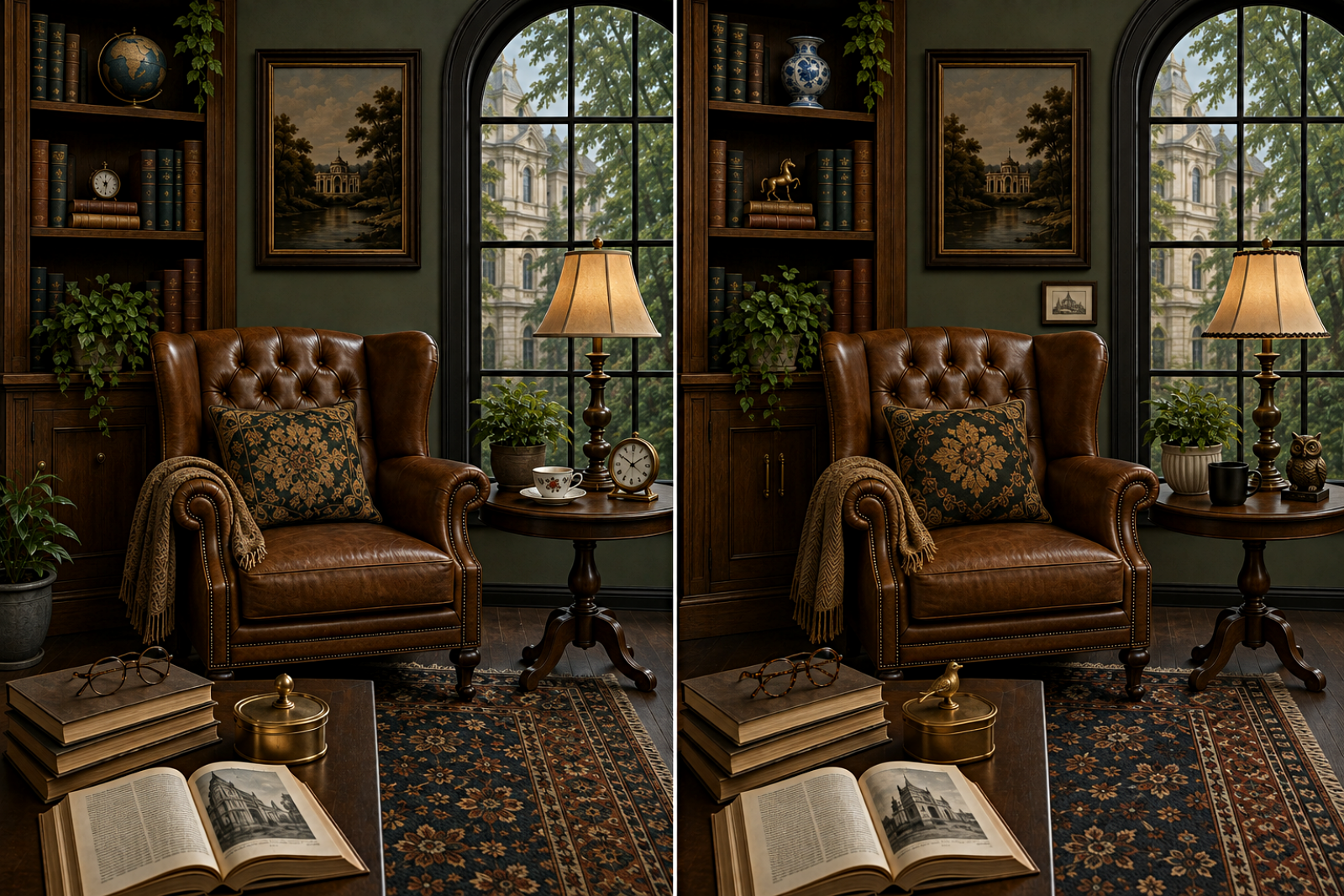 Get, set, go! (Ai generated challenge)
Think its a child’s play? Well, think again!
If you have already solved the puzzle, you might be already familiar with the kind of adrenaline rush they bring along. While people often assume that spot-the-differences puzzles are just good for the kids, it couldn’t be farther from the truth. And this isn’t just us claiming so to get you hooked on our series. Psychologists agree with us!
As Prerna Pant, Psychologist, ISIC Multispeciality Hospital, Delhi explains, eal value lies not in the puzzle itself but in the mental processes involved in solving it.
Story continues below this ad
“Spot-the-difference puzzles may look like simple childhood activities, but adults can also benefit from engaging with them… When an adult looks closely at two similar images and tries to identify small changes, the brain has to pay attention, compare information and ignore unnecessary distractions.”
That might explain why this seemingly innocent puzzle can suddenly have you staring intensely at a lampshade as though your life depends on it.
In everyday life, our attention is constantly being pulled in different directions — emails, messages, social media, work, notifications and everything else competing for a slice of our brainpower. And to top it all, the gripping addiction of doomscrolling!
“A simple puzzle gives the mind one clear task to focus on. This can encourage focused attention, because the person has to deliberately observe details rather than quickly moving from one piece of information to another,” Pant explains.
Story continues below this ad
In other words, unlike scrolling through your phone while half-watching television, this activity actually asks you to stay with one thing. Your eyes are scanning. Your brain is comparing.
“These puzzles also involve visual scanning and comparison. The brain is continuously checking one part of an image against another and remembering what it has already observed. This makes the activity more mentally engaging than simply looking at a picture passively,” Pant notes.
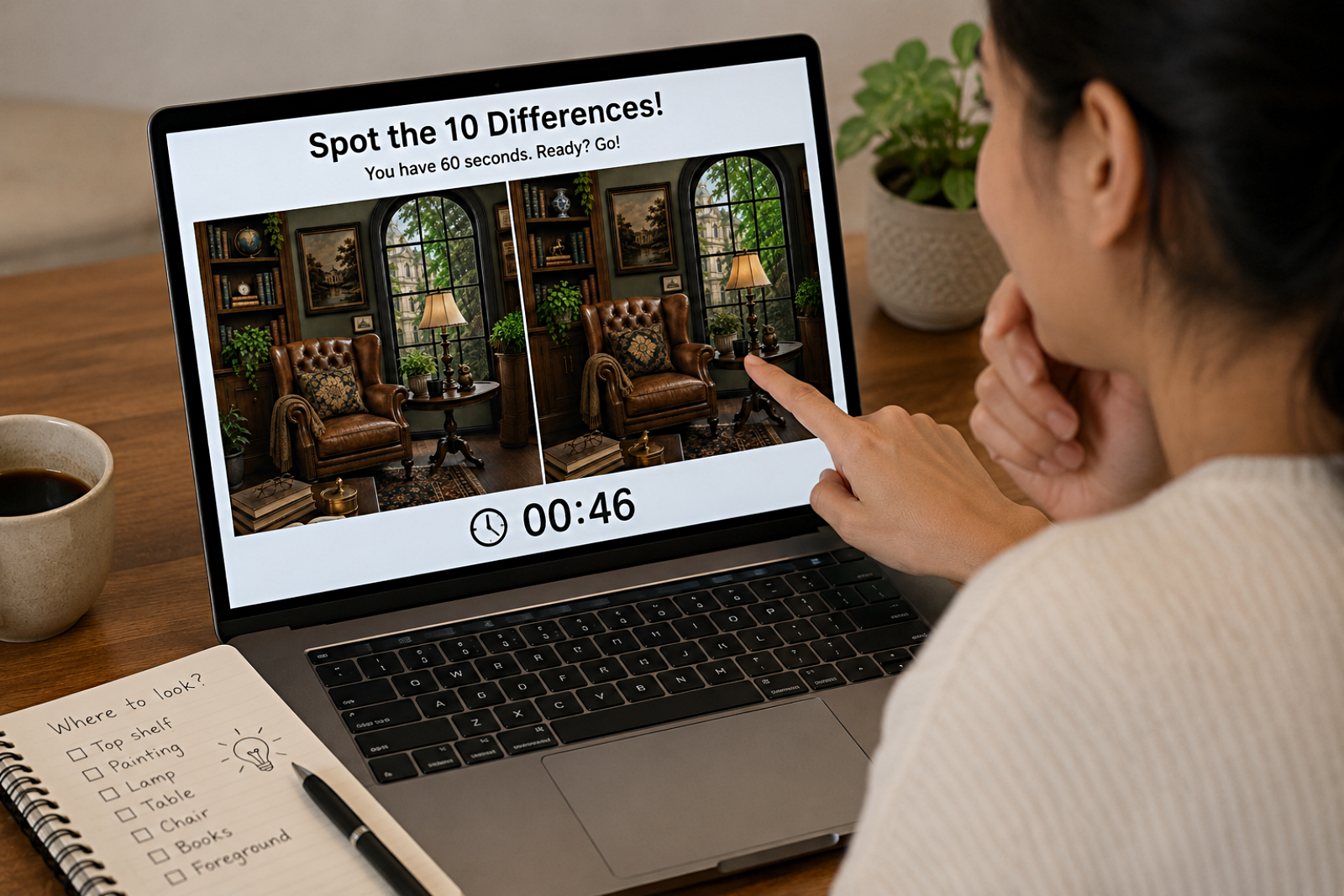 Even spending a few minutes carefully observing, comparing and solving can provide a refreshing change from routine activities
However, like everything else, these puzzles are not a magic pill. It’s a puzzle, not a cognitive health prescription.
“Solving these puzzles should not be considered a treatment for memory problems or a guaranteed way to prevent cognitive decline. They are better viewed as one enjoyable form of mental engagement.”
Story continues below this ad
Cognitive health is influenced by a much wider range of factors, including regular physical activity, adequate sleep, social interaction, learning new skills and managing stress.
So, no — finding all 10 differences in 90 seconds does not mean you’ve unlocked a secret level of brain fitness. What it does mean is that you spent a few minutes observing, comparing, concentrating and sticking with a task.
As Pant put it, “Adults can therefore treat these puzzles as a small, enjoyable brain activity rather than a serious mental workout. Even spending a few minutes carefully observing, comparing and solving can provide a refreshing change from routine activities.”
And perhaps that’s the best reason to play. Even a simple spot the difference puzzle will make you pause and pay attention.
Story continues below this ad
“In a world where our attention is constantly being pulled in different directions, doing something simple that requires concentration can be surprisingly valuable. The goal is not to prove how quickly you can solve the puzzle, but to enjoy the process of observing, thinking and staying engaged,” the psychologist concludes.
solution to puzzle:
Solution
- The coffee mug changes colour — The mug on the side table is light-coloured in one image and dark in the other.
- The plant pot is different — Look closely at the pot near the window; the change is easy to miss if you’re focused on the plant.
- The book changes colour — The top book on the coffee table has a dark cover in one image and a reddish-brown one in the other.
- The man’s wristwatch changes — Check his wrist carefully; the watch is noticeably different between the two images.
- The plant leaves change — The arrangement of the leaves near the window is subtly different in the two pictures.
Think you’ve cracked it? Don’t miss the answer. Come back next Thursday for the next edition of our Spot the Difference brain teaser, where we’ll reveal all three hidden differences from today’s puzzle and challenge you with a brand-new visual mystery.


A tennis table in the kitchen and Salman Khan’s artwork: Inside Sania Mirza’s Dubai home
By Sohail Khan · 4 Sep
Why this 3-step meal sequence is a secret game changer for your blood sugar
By Sohail Khan · 4 Sep
Leave a Reply