Why India took 16 years to acquire Javelin ‘fire-and-forget’ missiles
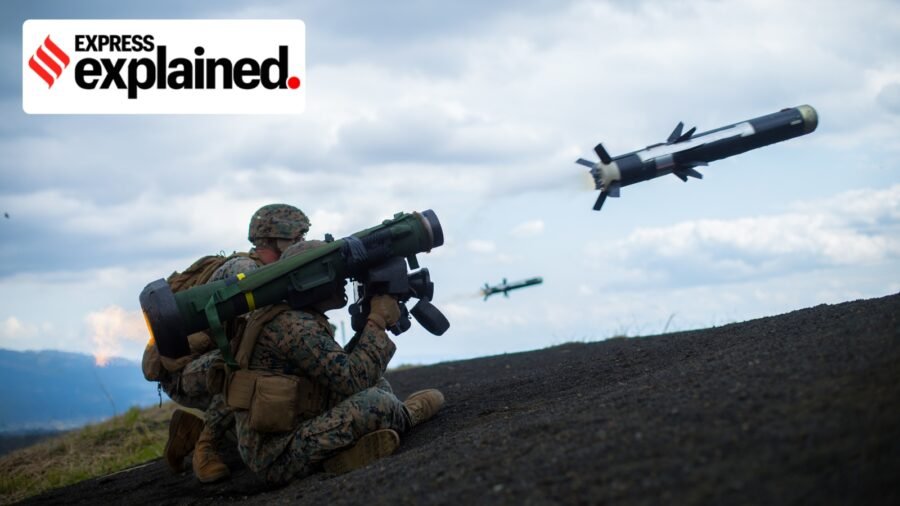
After years of deliberation, India has finalised a deal to purchase the Javelin anti-tank guided missile (ATGM) system from the US. On Friday (August 28), the Indian Army signed a Letter of Offer and Acceptance to acquire the ordnance through the US Foreign Military Sales (FMS) process.
The journey to procure the Javelin system, which began in 2010 and has now culminated after several paused attempts, highlights the lengthy and complicated nature of major defence acquisitions in India. In recent years, the Ministry of Defence has worked to streamline this process and place greater emphasis on procuring indigenous defence systems through a series of policy and regulatory changes.
We explain why India’s quest to procure the Javelin took 16 years, the switch to Israel’s Spike ATGMs, and how India renewed its interest amid India-US discussions over a bilateral trade agreement.
Story continues below this ad
Initial attempts to procure Javelin
In August 2010, India publicly announced its plans to acquire Javelin missiles. In a written response to Parliament, then Defence Minister A K Antony stated that the government intended to issue a Letter of Request to the US for the procurement of the third-generation Javelin ATGMs through the FMS route, which would also include a transfer of technology (TOT).
The move was fuelled by a shortage of ATGMs in the Army’s inventory and also due to a delay in the original timelines of indigenous ATGM systems, developed by the Defence Research and Development Organisation (DRDO). The idea was to replace the ageing Milan-2T and the Konkurs missile systems in use with the Army.
Javelin was highlighted as the choice to immediately fill up the ATGM gaps, after the US forces actively showcased them in 2009 during the bilateral exercise, Yudh Abhyas.
Despite the urgent operational push, the 2010 Javelin acquisition was eventually shelved due to stringent technology transfer restrictions imposed by Washington. The US refused to share the missile’s core seeker technology under a 100% TOT model, causing India to drop the Request for Proposal and subsequently pivot to Israel’s Spike missile system — manufactured by Rafael Advanced Defense Systems Ltd — in 2014.
Story continues below this ad
A US Congressional Research Service report in 2012 subsequently recorded that India turned down a proposed Javelin purchase that included a co-production offer, with issues surrounding US end-use monitoring and technology transfer being among the complications.
In 2014, India decided to go ahead with the Spike ATGMs as against the Javelin, after it was understood that it could offer greater flexibility in terms of technology transfer and local production. The Defence Acquisition Council cleared the purchase of over 8,000 Spike ATGMs.
Deal for Spike
The procurement of the Spike ATGMs from Israel also ran into long contract negotiations. But concerns over their performance in trials, technology transfer, and progress in the indigenous man-portable ATGM programme led to a cancellation of the $500 million order in 2017.
The deal was revived in 2018 following Israeli Prime Minister Benjamin Netanyahu’s visit, but was subsequently shelved again.
Story continues below this ad
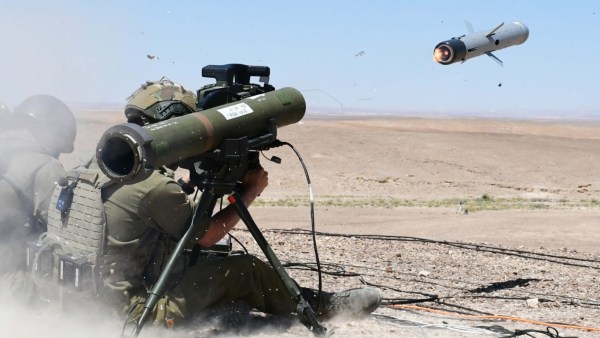 India underwent an emergency purchase of a limited quantity of the fourth-generation Spike-LR ATGMs in 2019. Photo: Rafael
India, however, did undergo an emergency purchase of a limited quantity of the fourth-generation Spike-Long Range (LR) ATGMs in 2019 to meet an immediate operational gap, the government told Parliament.
In August 2023, Kalyani Rafael Advanced Systems Pvt Ltd — a joint venture between Indian conglomerate Kalyani Group and Rafael — said it had bagged a Rs 287.51 crore order from the Defence Ministry for the supply of the missile systems.
Back to Javelin
Considering the Army’s greater necessity for ATGMs, the limited quantities of Spike-LR ATGMs and the indigenous programme was unable to close the capability gap.
The Javelin reappeared in India-US strategic discussions at a time when the defence cooperation between the two countries had deepened, with both no longer discussing just purchases but also co-production and defence industrial partnerships.
Story continues below this ad
A US Congressional Research Service report, updated in 2025, specifically noted that co-production discussions involving Javelin were ongoing.
In February 2025, the Javelin Joint Venture — a partnership between US defence majors Lockheed Martin and Raytheon — said it is exploring future co-assembly and co-production opportunities of the Javelin anti-tank weapon system in India through a competitive source selection process with potential Indian partners. It also signed a Memorandum of Understanding (MoU) with Bharat Dynamics Limited.
The discussion gained pace after Operation Sindoor last year, amid discussions on the India-US bilateral trade agreement. By July 2025, it was confirmed that India was negotiating to get the Javelin systems, both as an emergency procurement and through a long-term contract — the latter likely involving co-production of the weapon systems. Washington officially cleared the sale in November 2025.
Indigenous programme
Aside from the legacy systems in use with the Army, the indigenous programme has progressed substantially in recent years.
Story continues below this ad
Earlier this year, the DRDO had flight-tested the Man-Portable ATGM (MPATGM) in a top-attack profile against a moving target at the KK Ranges in Maharashtra.
The indigenously developed MPATGM consists of state-of-the-art indigenous technologies such as an imaging infrared homing seeker (advanced missile guidance system that presents a visual thermal picture of a target), an all-electric control actuation system (a guidance system for unmanned flying objects), a fire control system (helps a gunner hit targets faster and more accurately), a tandem warhead (a weapon with two sequential explosive charges designed to defeat modern defensive armour), a propulsion system, and a high-performance sighting system. It can be launched from a tripod or a military vehicle launcher.

Systemic institutional dysfunction delaying roll-out of key defence equipment
By Sohail Khan · 30 Aug
Sun exposure vs smoking: Which ages your skin faster? Dermatologist explains
By Sohail Khan · 30 Aug

Leave a Reply