We can’t talk about Jason Arday without talking about racism
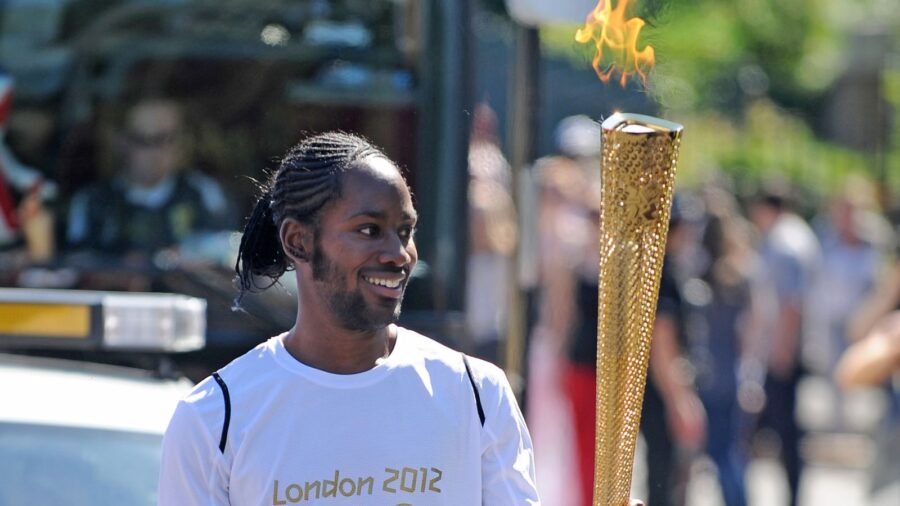
The summer months of late July and August are the “silly season” in the UK newsrooms as journalists chase frivolous stories to fill in for a slow news period when the Parliament and the higher courts are in recess. So, when Nathan Cofnas, a former University of Cambridge academic and a self-avowed white supremacist, put up a Substack post alleging plagiarism in the PhD thesis of Jason Arday, the youngest Black professor in the university’s 800-year-old history, newsrooms saw in it a sure-shot clickbait. On August 14, 41-year-old Arday, the son of working-class Ghanaian immigrants and a father to two children, was found dead in his home in south London.
“Cambridge’s diversity poster boy in plagiarism row”, said an article in the right-leaning The Telegraph in late July, months after Arday was cleared of any such charges by the university that awarded him his PhD in 2015. This was the start of a media frenzy that rode the politically expedient wave of white grievance directed at racially minoritised British nationals and migrants. Anti-Blackness, a particularly virulent strain of racism, fuelled the schadenfreude of the right-wing press while the liberal and left media cloaked it as objectivity as they went after his academic work, his life story, and his autism. As recently as two days before his death, The Guardian sought out four of Arday’s primary school classmates for a page-and-a-half three-person byline story: “Doubts raised over Jason Arday’s claim he was non-verbal at primary school”; a misleading headline, for half the respondents backed Arday’s claims.
Advertisement
Giving in to the media-created clamour, a group of senior Cambridge academics demanded that the university conduct an independent investigation into how an “early career researcher” was appointed to such a prestigious post and voiced concerns about reputational damage to the institution. Arday had already proven his worth as a professor at the University of Glasgow, though that did not shield him from the all-too-familiar question of his deservedness to set foot on the hallowed grounds of Cambridge. If the right-wing media and academics went after Arday to bolster their myth of DEI policies-gone-too far (Diversity, Equity, and Inclusion), its seemingly progressive counterparts subjected Arday to a disproportionate scrutiny that no other white academics have had to contend with. Questions have since been raised about how various white professors have thrived in UK academia despite a far worse proven record of malpractice, from plagiarising from their own PhD students to sexual harassment; none have been treated with a fraction of the newsworthiness.
Unlike the US and India, which have some semblance of affirmative action to address the historical wrongs done to communities marginalised by race and caste respectively, the UK has, till date, no comparable DEI policy. The Black Lives Matter movement, following the 2020 Minneapolis police killing of George Floyd, forced elite UK universities into some soul-searching. These institutions, built on the backs of the transatlantic slave trade and colonialism, fleetingly took to tokenistic measures instead of addressing the systemic inequalities in their curriculum, recruitment, and funding. Cambridge University going to great lengths to publicise Arday’s appointment in early 2023 must be understood within such a context. The same context should inform our understanding of the university’s December 2025 statement on Cofnas’s “right to freedom of speech” — following investigations prompted by student protests over his blog post about how, in a true meritocracy, there would be zero Black professors at Harvard.
As for all the talk of accountability and academic integrity, much remains to be sought from institutions rather than from racially minoritised individuals. Of the total 26,110 professors across all UK universities, a mere one per cent, that is, 270, are Black, according to the data from the Higher Education Statistics Agency. Another latest dataset from the national research funding body, UK Research and Innovation (UKRI), shows that over half of its principal investigator awards in 2023-24 went to white male applicants, while its funding panels were three-quarters white. White applicants had the highest rate of success with 34 per cent receiving the award, compared to only 25 per cent of Asian applicants and 13 per cent of Black applicants. Arday’s own scholarly work was on the structural barriers faced by racially minoritised, disabled people in UK universities.
Advertisement
In light of all of this, the article published in on August 20 (‘Cambridge professor’s death is a life lesson’) does a disservice to the issue by not centring or even addressing the question of race. This moment of reckoning is not just for the UK media and academia. Individualising narratives on mental health and vulnerability serves to obfuscate the systemic violence of race and caste that underpins the institutional murder of Jason Arday within UK academia and in India that of Rohith Vemula, Darshan Solanki, Anitha Shanmugam, Payal Tadvi, and countless other Bahujan students and academics. The recent “general category” Savarna moral panic over the University Grants Commission (UGC) Equity Regulations, 2026, and their long-standing vitriol against reservation is, after all, no different from the West’s DEI-gone-too-far gripe.
The writer is an academic at the University of Glasgow and a former journalist

This is what happens to the body if you consume chia with sabja seeds every morning
By Sohail Khan · 22 Sep

C Raja Mohan: AI is now a great-power game. That poses a test for India
By Sohail Khan · 22 Sep