VB-G RAM G funds for Jal Jeevan Mission 2.0: Two secretaries stress on ‘integrated planning’
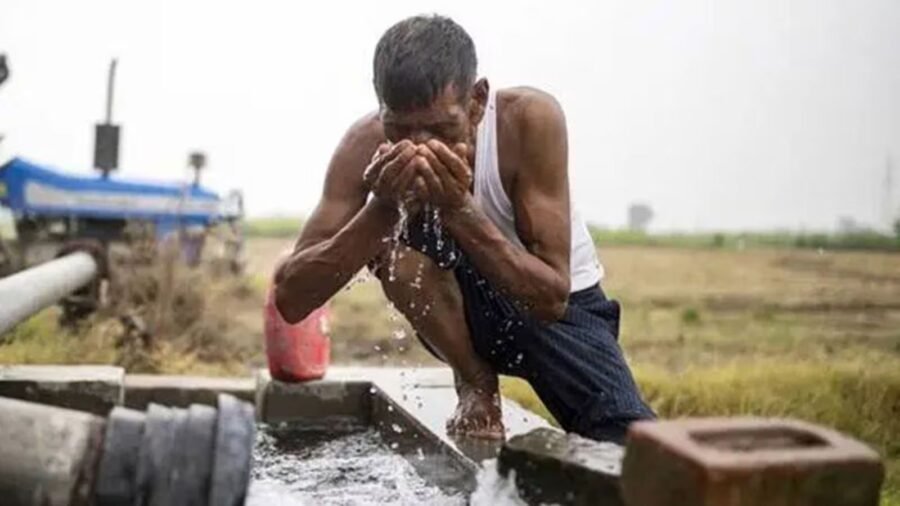
THE CENTRE has asked states to tap VB-G RAM G funds for drinking water source sustainability works under the Jal Jeevan Mission 2.0 by converging both schemes.
This was emphasised by two Central Secretaries — Ashok K.K. Meena, Secretary, Department of Drinking Water and Sanitation, Ministry of Jal Shakti, and Rohit Kansal, Secretary, Department of Rural Development — in a joint letter sent to Principal Secretaries/Commissioners (in-charge of VB-G RAM G) of states. In their letter, the secretaries stressed on integrated planning.
“Drinking water source sustainability works under JJM 2.0, greywater management interventions and sanitation and Solid & Liquid Waste Management (SLWM) works under SBM(G) 2.0 shall be integrated into the Viksit Gram Panchayat Plans (VGPPs) under the appropriate thematic categories of the VB-G RAM G Act, ensuring that the implementations are guided by water budgeting, local resource assessment and water security plans,” read the joint letter.
Story continues below this ad
The secretaries highlighted that the Viksit Bharat – Guarantee for Rozgar and Ajeevika Mission (Gramin) (VB-G RAM G) Act, 2025, which came into effect from July 1 and replaced the MGNREGA, provides a comprehensive statutory framework for creating durable rural assets through community-led planning and convergence.
“Water security has been identified as one of the four thematic focus areas under the Act, recognising its central role in ensuring sustainable livelihoods, agricultural productivity, climate resilience and long-term rural development,” they wrote.
They said that JJM 2.0 also places drinking water source sustainability, groundwater recharge and greywater management at the core of its strategy for ensuring reliable and resilient rural drinking water services.
“These objectives are complementary to the provisions of the VB-G RAM G Act and provide a unique opportunity for convergence through integrated planning and implementation,” they said.
Story continues below this ad
The secretaries asked the states to attach priority to water security.
“Planning under the VGPP shall give due priority to groundwater recharge, rainwater harvesting, rejuvenation of waterbodies, watershed development, check dams, recharge structures, spring shed management and other decentralised water conservation measures, particularly in water-stressed areas, in accordance with the Joint Advisory dated 18 June, 2026 and the provisions of the Act,” they wrote.
The secretaries asked the states to ensure that all drinking water source sustainability works, sanitation assets, greywater management structures and other convergent assets are registered and geo-tagged on the Viksit Bharat National Rural Infrastructure Stack to facilitate integrated monitoring, transparency and evidence-based decision-making.
“These convergence arrangements may be institutionalised during the ongoing VGPP planning cycle to ensure that investments under VB-G RAM G, JJM 2.0 and SBM (G) 2.0 collectively contribute to sustainable drinking water security, groundwater recharge, climate resilience and improved rural livelihoods,” they wrote.
Jammu and Kashmir gets new intel chief — in officer who supervised Vyapam probe
By Sohail Khan · 28 Aug
Hydel plant in Nepal feeding power to India among several units hit by flash floods
By Sohail Khan · 28 Aug

Leave a Reply