‘Brothers weren’t there for us’: Abandoned by family, Marathwada women found sisterhood in each other
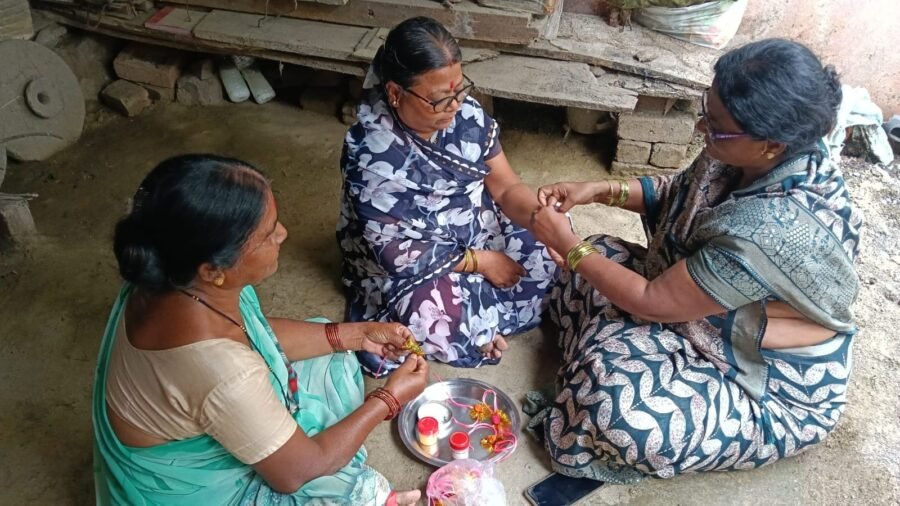
In parts of Maharashtra’s Marathwada region, Raksha Bandhan can be a difficult festival for women who are widowed, abandoned or separated from their husbands. Considered “inauspicious” by some, these women have faced social restrictions around participating in festivities, including Raksha Bandhan.
Since 2023, however, single women have been challenging this practice by tying rakhis to one another. This year, women across 40 villages in Beed, Dharashiv, Latur and Nanded are celebrating the festival together.
For them, rakhi is a symbol of relationships they have built with women who stand by them when families do not.
Story continues below this ad
The initiative was led by seven grassroots organisations — Samata Pratishthan, Committee of Resource Organisation (CORO), Lokprabodhan Sanstha, Swavalambi Social Welfare Foundation, Aadhar Samajik Sanstha, Gramin Vikas Sanstha and Vanchit Hakk Andolan.
It began with a handful of women questioning the need for such a celebration. Now, it’s a network of 300 women.
The group includes widows, separated, divorced and unmarried women. Some live separately from their husbands — a situation locally described as paritakta.
‘Why tie rakhi if your brother is not there for you?’
Story continues below this ad
For some women, the decision to celebrate Raksha Bandhan differently comes from years of feeling excluded from the festival itself.
Ashalata Abasaheb Pande, 45, associated with the single women’s organisation in Marathwada, has questioned why women should tie rakhis to brothers who do not keep in touch or check on them through the year.
She stopped celebrating the festival with her brother after questioning the idea that women need male protection. She said she is older than her brother and has looked after her parents and in-laws.
For these women, the question is whether their relationships with their brothers exist beyond the festival, and Chitra Balasaheb Patil’s story reflects it.
Story continues below this ad
She was married off at 12 to a man in his mid-20s. Abused by her husband, she left him and returned to her mother and brother. But they did not accept her either.
With a son to support and struggling to survive, Patil took up odd jobs. A Mahila Mandal later helped her with Rs 1,000, which she used to rent a room. Then she started to rebuild her life. Today, she ties rakhi to other women.
From surviving to standing on her own
Manisha Shivaji Khakre, 36, from Beed, was married at 16. Her husband would drink, beat her and lock her out of the house.
When she finally left him, her mother and brothers refused to support her and asked her to return to her husband, fearing they would lose respect in society.
Story continues below this ad
Khakre never went back. She rented a small room, worked to make ends meet, and later joined a women’s rights movement. She completed her education, began working, and eventually became a supervisor.
Yet, she said, economic independence did not end the scrutiny that single women face.
“Even after becoming independent, being a single woman is not easy. Society constantly questions you,” she said, recalling instances when her landlord would knock on her door late at night.
For Khakre, the other women in the group have filled the gap left by her family.
Story continues below this ad
“We have all gone through similar pain….It is not about replacing a brother; it is about having someone who stands with you genuinely when you have no one else,” she said.
From widowhood to helping other women
Archana Sambhaji Nagargoje, who was abandoned by her family when her husband died, now helps women access government schemes for single women and their children and assists those who have been thrown out of their homes and are struggling to find work. Even renting a room can be difficult for these women.
“If a single woman doesn’t get a room, she is not allowed to stay. She is asked to bring someone she knows. I have used my Aadhaar card and asked them to give these women a room, but they have not agreed,” she said.
When the women began tying rakhis to each other, men in the villages mocked them.
Story continues below this ad
“They would pass comments saying, ‘These women do anything just like that. They are senseless. Who ties rakhi to women?’ We told them, ‘Are you worthy of our rakhi? You don’t care about us, then why do you care about what we do?’ After that, they shut up. My brothers also mocked me,” she said.
The relationships forged through the initiative have also translated into practical help.
Ram Shelke, founder-director of Swavalambi Social Welfare Foundation, said women accompany one another when someone has to travel alone, help each other find accommodation and employment, and step in when someone is forced out of her marital home.
The network is largely self-sustaining. Women meet every month and contribute small amounts towards their activities. They buy rakhis themselves and organise the celebrations. Shelke said the women have now taken ownership of the initiative.
Pune: 16 Years After Hinjawadi Woman Was Strangled To Death, Accused Gets Life Imprisonment
By Sohail Khan · 28 Sep