The high cost of a free bus ride: A lesson from Kerala
By Muhammed Riyas
Kerala’s decision to offer free bus travel for women is rooted in a commendable objective. Mobility is more than transportation; it is access to work, education, healthcare and public life. For many women, especially from low-income households, transport costs can be a barrier to economic participation. By reducing that burden, the state seeks to promote inclusion and women’s mobility. These are worthy goals.
Advertisement
But the success of a welfare programme depends not only on its intention but also on its design. Kerala’s experience is already exposing a dilemma: While free travel expands affordable mobility, it is simultaneously reshaping the economics of the state’s passenger transport market, with implications for competition, livelihoods and fiscal sustainability.
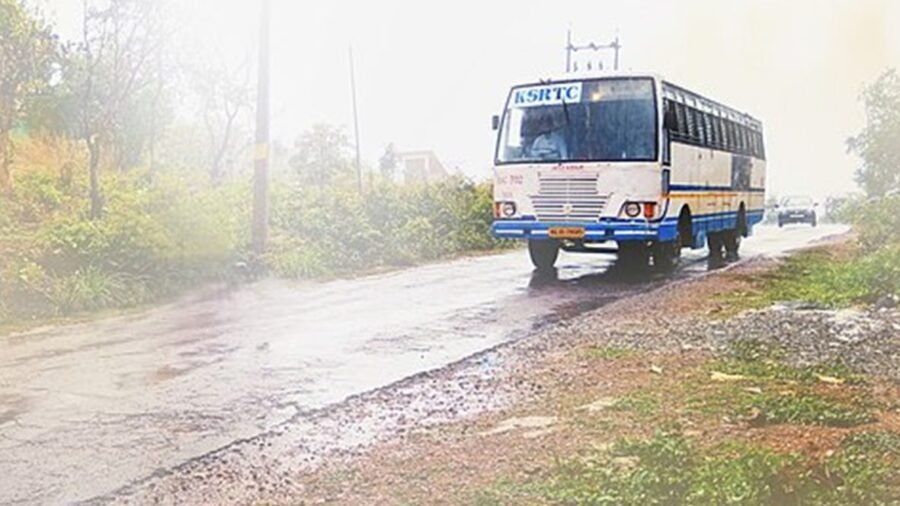
Kerala’s transport system is not built exclusively around the Kerala State Road Transport Corporation (KSRTC). A substantial private bus sector has long complemented state services, particularly on intra-district and rural routes. Thousands of buses operated by small entrepreneurs support drivers, conductors, mechanics and other ancillary workers. Together, public and private operators constitute an integrated transport ecosystem.
Free travel exclusively through KSRTC fundamentally alters this ecosystem. Economics teaches us that price is a powerful determinant of consumer choice. When one operator offers the same service at zero cost while another continues to charge fares, passengers predictably migrate towards the cheaper option. This is not competition based on efficiency or service quality; it is a policy-induced change in relative prices. The result is a classic case of market distortion.
Advertisement
Private bus operators have already reported substantial revenue losses, leading to a state-wide strike and discussions with the transport minister. Their concern is not necessarily opposition to subsidised mobility for women, but the absence of a level playing field. They are being asked to compete against a zero-priced service without compensation for the passengers they inevitably lose.
The consequences extend beyond business profitability. Kerala’s private bus sector supports thousands of livelihoods. Persistent revenue losses could force operators to reduce services, withdraw routes, defer maintenance or exit the market. Ironically, a policy designed to enhance economic security for one section may weaken the livelihoods of another.
The pressure is also visible within KSRTC. As passengers shift to state-run buses, crowding has increased on several routes. The increase is not limited to women: Families often travel together in KSRTC because women travel free, bringing accompanying male passengers into the same buses. Higher occupancy means longer waiting times, reduced comfort, safety concerns and greater wear and tear on an already stretched fleet.
This creates a further fiscal dilemma. If demand continues to rise, the government may have to expand the KSRTC fleet, staffing and operational support. KSRTC has historically required substantial state assistance, and adding a recurring fare-free obligation risks increasing the burden on the exchequer. Thus, a welfare measure can create a cycle in which free travel increases demand, demand creates overcrowding, overcrowding necessitates additional capacity, and additional capacity increases fiscal pressure.
The question, therefore, is not whether women deserve affordable mobility. They unquestionably do. The question is whether governments should subsidise a particular operator or subsidise the passenger. Kerala could consider a universal zero-ticket model covering both KSRTC and licensed private buses. Women would receive a zero-value ticket irrespective of the operator, while the government reimburses operators based on verified passenger data. This would preserve the social objective while reducing market disruption.
Passengers could continue choosing buses based on frequency, reliability, safety and convenience rather than an artificial price difference. Private operators would remain viable, existing transport capacity would be better utilised, and the government would not need to expand KSRTC simply to absorb policy-induced demand.
As fare-free transport schemes spread across India, Kerala offers a broader lesson: Welfare design matters as much as welfare intent. Inclusive mobility should not come at the cost of dismantling a transport ecosystem that supports thousands of livelihoods.
Good policy should ask not only who receives the subsidy, but also how the subsidy changes the market through which the benefit is delivered. Kerala’s objective is worthy. The next step should be to ensure that the subsidy follows the passenger, not the operator.
The writer is an economist based in Bengaluru

Fatty liver: 6 popular hacks rated from -10 to 8 by a gastroenterologist
By Sohail Khan · 23 Sep
350 hours for Rashmika Mandanna, 500 for Shakira: The making of two showstopping looks
By Sohail Khan · 23 Sep
I have voted for three decades. Why is my SIR incomplete?
By Sohail Khan · 23 Sep