The ‘Dimaagi Naxal’ debate needs more precision, not more political heat
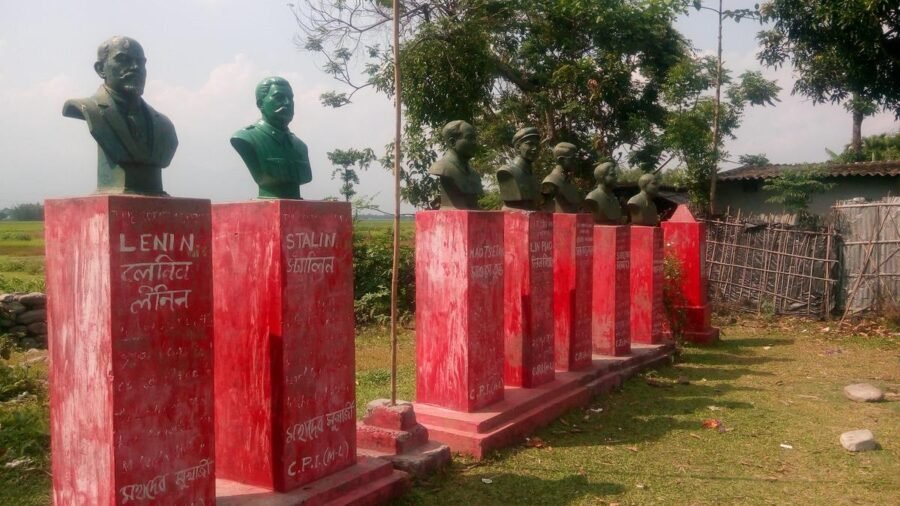
The political debate over Prime Minister Narendra Modi’s reference to “dimaagi Naxals”, or “intellectual Naxals”, has quickly acquired the familiar shape of Indian political argument. The remark has been defended by the government, attacked by the Opposition, and absorbed into a larger contest over who is entitled to define patriotism, dissent, and national security.
Union Parliamentary Affairs Minister Kiren Rijiju has pointed to then Prime Minister Manmohan Singh’s 2006 description of Naxalism as India’s “single biggest internal security challenge”. Senior Congress leader P. Chidambaram, in turn, has said that he is “proud to be a dimaagi Naxal”, turning the expression back on the government. The BJP has used his response to reinforce its argument that the Opposition is trivialising the threat.
Both sides are making a political point. Neither has really addressed the central question.
What exactly is a “dimaagi Naxal”?
That question is not a semantic exercise. It goes to the heart of the present debate about the limits of political disagreement in India.
Serious security problem
There should be no ambiguity about one thing: Naxal violence is a serious security problem. India has spent decades dealing with an armed insurgency that has killed civilians and security personnel, attacked state institutions, and sought to establish political authority through violence. No democratic argument requires the state to be passive in the face of such violence.
Manmohan Singh’s government recognised this clearly. In April 2006, Singh told a meeting of Chief Ministers that “it would not be an exaggeration” to call Naxalism the country’s biggest internal security challenge. His response, however, was not confined to rhetoric. His government emphasised policing, intelligence, coordination between the Centre and the States, and security operations, while also arguing that the problem had roots in deprivation, governance failures, land and rights.
That history is relevant because the present debate should not be reduced to a partisan argument over whether Naxalism is a genuine threat. It plainly is.
The question is what happens when the vocabulary of that threat is extended.
Complicated history
The word “Naxal” itself has a complicated history. It emerged from the 1967 uprising in Naxalbari and came to describe a range of revolutionary political movements that subsequently divided into different organisations and political strategies. Contemporary left-wing extremism has a more specific organisational character, particularly in relation to the CPI(Maoist), but “Naxal” has never simply meant communist, left-wing, anti-government or critical of the ruling party.
That distinction becomes important when the Prime Minister introduces the expression “dimaagi Naxal”.
If the term means somebody who is a member of, recruits for, finances, provides material assistance to, or otherwise participates in a violent Naxalite organisation, there is a fairly straightforward answer. Identify the conduct. Establish the evidence. Apply the law.
But if the term means a person who agrees with some political arguments historically associated with Naxalism, sympathises with its stated grievances, criticises the government’s handling of tribal areas, or opposes a particular security or development policy, then the matter enters an entirely different constitutional territory. Those positions may be misguided. They may be politically radical. They may even be deeply offensive to many Indians. But they cannot simply be converted into criminal conduct by attaching the word “Naxal” to them.
This is where the current political debate needs to become more precise.
The Supreme Court’s decision in Shreya Singhal v. Union of India remains important here. In discussing freedom of speech, the court distinguished between discussion, advocacy, and incitement. The constitutional protection of speech does not disappear merely because an idea is unpopular or radical. At the same time, the protection is not a licence for incitement to violence or for participation in unlawful activity.
That distinction is neither a defence of Naxalism nor a defence of any particular political ideology.
It is a defence of categories.
A person can study Naxalite history without being a Naxalite. A journalist can investigate allegations of human-rights violations in a conflict zone without supporting an insurgency. An academic can examine the social causes of an insurgency without endorsing the violence committed by it. An activist can oppose a government policy without becoming an enemy of the state.
At the same time, a person who knowingly recruits for an armed organisation, provides it material support or participates in its unlawful activities cannot escape responsibility merely by describing himself as an activist, intellectual or political dissenter.
The distinction has to work in both directions.
‘Identify and isolate’
This is also why the words “identify and isolate”, used in the context of “dimaagi Naxals”, deserve more attention than they have received.
What does “identify” mean? Identify on the basis of what evidence? By which institution? Under which legal standard?
And what does “isolate” mean? If it means dismantling the networks through which an armed organisation recruits, finances itself or operates, that is a legitimate function of the security establishment. If it means socially, professionally or institutionally isolating citizens because they are believed to hold particular political opinions, the implications are much more serious.
The government should, therefore, clarify the distinction rather than leave the phrase to political interpretation.
Mr. Rijiju’s invocation of Manmohan Singh does not settle this issue. Singh’s 2006 statement establishes that Naxalism was, and remains, a serious security challenge. It does not establish that “dimaagi Naxal” is a sufficiently defined category.
Indeed, the Singh comparison is useful only up to a point. The former Prime Minister was speaking about an armed movement and the state’s response to it. He was not proposing a category of citizens to be identified according to their presumed ideological state of mind.
There is another reason the present debate deserves caution.
Upstaging the argument
Indian political discourse has increasingly acquired labels that compress complicated disagreements into identities: “Urban Naxal”, “tukde-tukde gang”, “Andolanjeevi”, “anti-national”, and others. These expressions have different origins and should not be treated as identical. But they have something in common: they can move the political argument away from what a person has actually said or done and towards what kind of person the speaker claims that person to be.
That is often effective politics. It is less satisfactory as a basis for public policy.
The phrase “Urban Naxal”, for instance, may be used to describe a person alleged to have actual links with Maoist organisations. Such allegations should be investigated on evidence. But the expression itself is not a legal offence. The same must be said of “dimaagi Naxal”.
This is where Mr. Chidambaram’s response, although politically provocative, inadvertently illustrates the problem. When he says he is “proud to be a dimaagi Naxal”, he is plainly trying to reverse the political charge of the expression. But the fact that the phrase can be used by one side as an accusation of ideological extremism and by the other as a badge of dissent tells us something about its present ambiguity.
A security term should not be ambiguous in this way.
There is also a larger political point that both the government and the Opposition would do well to recognise.
The BJP is right to insist that the history of Naxal violence should not be sanitised for political convenience. Families of security personnel and civilians who have been killed by insurgents do not experience Naxalism as an academic debate. The state has a duty to protect them and to prevent the return of organised violence to areas where it has caused enormous human and institutional damage.
But the Opposition is equally entitled to ask where the boundary lies between opposition to the government and ideological support for an armed movement.
Neither question invalidates the other.
The state must be capable of making that distinction because its powers are greater than those of a political party. A party can use a label in a speech. A state can investigate, prosecute, surveil, and restrict liberty. That is precisely why governmental language requires greater precision.
Differing viewpoints
It is tempting to treat this controversy as another episode in the larger BJP-Congress political contest. In one sense, that is exactly what it is. Mr. Modi’s critics will hear the phrase as part of a broader political vocabulary that has included “Urban Naxals” and other labels for ideological opponents. His supporters will see the criticism as another attempt to minimise the threat posed by extremist networks.
But the country would gain little from choosing between those two political reflexes.
The better question is a simpler one: what conduct makes someone a “dimaagi Naxal”?
If the answer is support for violence, recruitment, financing, material assistance, conspiracy or participation in an armed extremist organisation, then the government should define the conduct and enforce the law. If the answer is merely that someone holds radical, unpopular or left-wing political views, then the government has crossed from identifying unlawful conduct into categorising political thought.
That is a distinction a constitutional democracy should be reluctant to blur.
None of this requires romanticising Naxalism. Understanding the social and political conditions in which insurgencies grow is not the same as justifying the violence they commit. Criticising the government’s counter-insurgency policies is not the same as supporting an insurgency. And defending freedom of expression does not require defending every person who invokes it.
What it requires is a consistent standard.
The same standard should apply to the government and to its critics: judge conduct by evidence, judge arguments by their merits, and do not turn political disagreement into an allegation of criminal or extremist identity without establishing what connects the two.
The current debate over “dimaagi Naxal” is, therefore, worth taking seriously, not because the phrase itself is unprecedented or because every criticism of it is automatically valid, but because it raises a question that will outlast this particular political controversy.
India can be uncompromising towards armed extremism and still leave room for dissent.
In fact, the strength of a democratic state is precisely its ability to do both.
The government has every right to defeat Naxal violence. It should also be clear about where the fight against Naxalism ends and the policing of political thought begins.
Gisel Erumachadathu is the Head of Programmes at the North Eastern Institute of Language and Culture (NEILAC), a research institute in Guwahati dedicated to the preservation of Indigenous languages in Northeast India. She is closely engaged in promoting culturally rooted bilingual education within Indigenous communities across the region.

Malaika Arora, 52, reveals a dietary staple she refuses to skip: ‘I can’t have salads’
By Sohail Khan · 28 Sep
A smoke and mirrors summit in which Xi emerged with the upper hand
By Sohail Khan · 28 Sep
Why must a woman always trade curiosity about the world for safety?
By Sohail Khan · 28 Sep