Soha Ali Khan says protein is ‘essential’ for women: ‘Yet, many Indian…’

Soha Ali Khan, 47, recently emphasised that protein is essential for women. Taking to Instagram, Khan captioned a post, “Are you vegetarian and looking for protein-packed, nutritious dishes? Protein is not just for those who go to the gym – it’s essential for all women. And yet, many of us Indian women don’t get enough of it.”
Protein helps maintain muscle, strength, bone health, immunity and healthy ageing — and our protein needs become even more important as we get older. “The good news? Getting more protein doesn’t have to mean complicated recipes or hours in the kitchen. Here is a super quick, vegetarian, protein-rich dish you can actually make on busy mornings — simple ingredients, minimal prep, maximum nourishment,” said Khan.
She then detailed the recipe.
Ingredients
20–25 g rolled oats
25–30 g pea protein powder (1 scoop)
1 tbsp hemp seeds
1 tsp chia seeds
1 tsp freshly ground flaxseed
1 walnut or 2 macadamia nuts, chopped
Small handful of blueberries or strawberries
Cinnamon, to taste
Water or unsweetened nut or plant milk, as needed
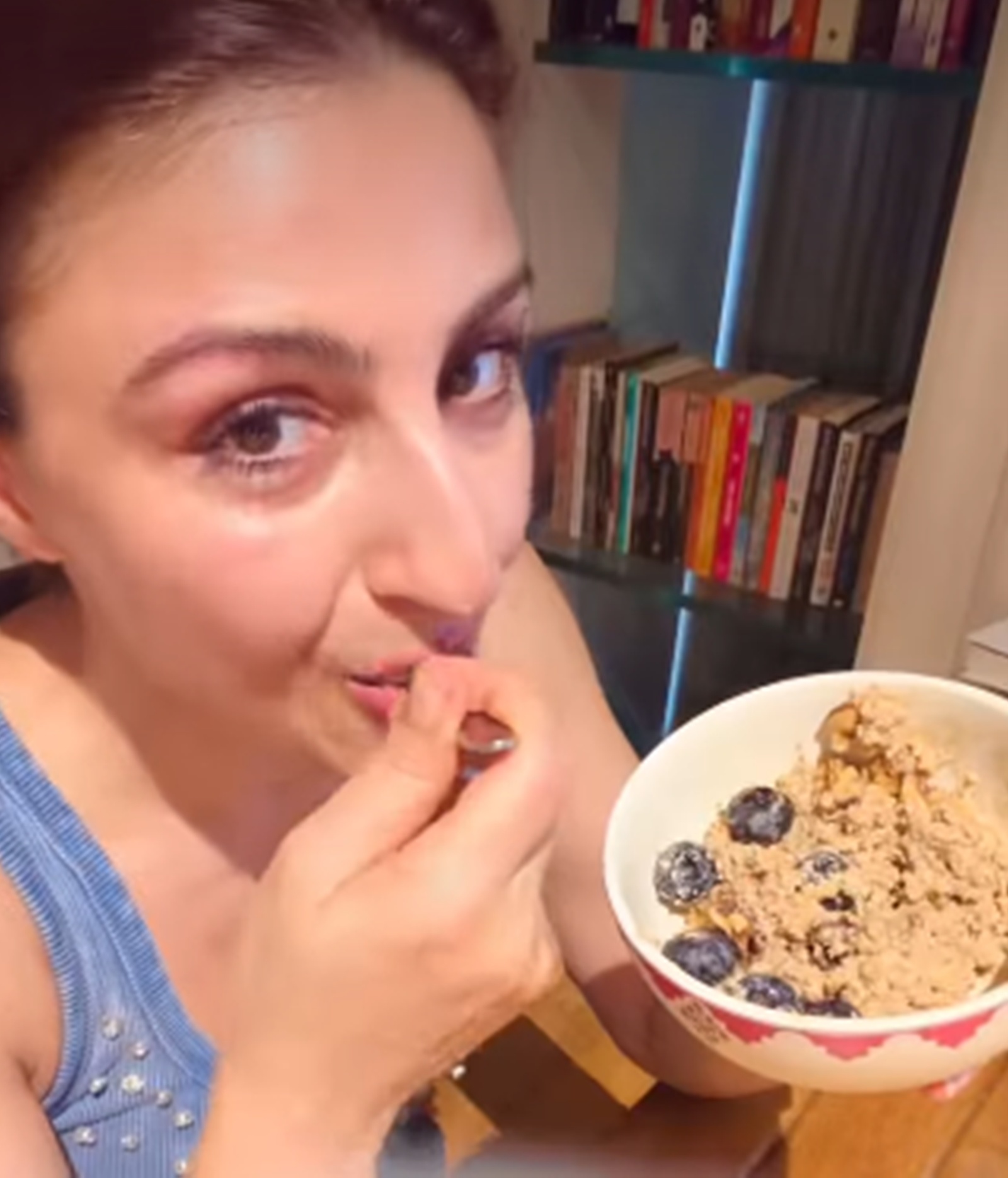 Soha Ali Khan makes oats protein breakfast
Method
*Add oats and water/plant milk to a pan and cook on low heat for 3–5 minutes, until soft.
*Turn off the heat and let it cool slightly. This helps prevent the protein powder from clumping.
*Slowly stir in the pea protein powder until smooth and creamy.
*Mix in the hemp, chia and flax seeds.
*Top with berries and chopped walnut/macadamia.
*Finish with cinnamon.
Soha Ali Khan’s point about protein being essential for women is extremely relevant, because women often focus on calories, weight loss, or “light eating,” but miss the nutrient that actually supports muscle, metabolism, hormones, hair, skin, recovery, immunity, satiety, and healthy ageing. “Protein is not just for gym-goers. It is needed by every woman, whether she is a student, working professional, mother, pregnant woman, lactating mother, perimenopausal woman, or someone trying to lose fat,” said consultant dietitian Garima Goyal.
Story continues below this ad
For a healthy adult Indian woman, ICMR-NIN lists the RDA for protein as 0.83 g/kg body weight/day, which comes to about 46 g/day for a 55 kg sedentary woman. “During pregnancy, protein needs increase by about +9.5 g/day in the second trimester and +22 g/day in the third trimester; during lactation, they increase by about +17 g/day in the first 6 months and +13 g/day from 6–12 months,” said Goyal.
For women who exercise regularly, do strength training, are trying to lose fat, or want to preserve muscle, the requirement is usually higher. “Sports nutrition guidelines commonly recommend around 1.4–2.0 g/kg/day for exercising individuals to support muscle repair, recovery, and training adaptation,” mentioned Goyal.
The healthy bowl is a well-structured, protein-rich, fibre-rich meal, emphasised Goyal. “Oats provide complex carbohydrates and soluble fibre, especially beta-glucan, which supports satiety, gut health, and better cholesterol control. Pea protein increases the protein content of the meal, making it more supportive for muscle repair, fullness, and blood sugar stability. This is especially helpful for women who struggle to meet protein needs through regular meals,” shared Goyal.
Hemp seeds add plant-based protein, healthy fats, magnesium, and minerals. “Chia seeds provide fibre, omega-3 fatty acids, and help improve fullness because they absorb water and form a gel-like texture.”
Story continues below this ad
After cooking, adding walnuts makes the meal richer in healthy fats and plant-based omega-3s, which support brain health, hormones, and satiety. “Berries add antioxidants, vitamin C, and fibre without making the meal too sugar-heavy. Cinnamon powder adds flavour and may help reduce the need for extra sugar, making the bowl more blood-sugar friendly,” said Goyal.
View this post on Instagram
A post shared by Soha (@sakpataudi)
Goyal said that this breakfast recipe works because it combines protein + fibre + healthy fats + antioxidants + slow-release carbohydrates. “That combination keeps energy stable, reduces mid-meal cravings, supports gut health, and makes the meal more balanced than plain oats. For women with PCOS, insulin resistance, weight loss goals, cravings, perimenopause, or hectic schedules, this kind of breakfast can be very useful because it is filling, nutrient-dense, and easy to customise.”
The only caution is that protein needs should be personalised. “Women with kidney disease, liver disease, uncontrolled uric acid issues, or specific medical conditions should not blindly increase protein without professional guidance. For most healthy women, however, the problem is usually not “too much protein”; it is not enough protein distributed properly across the day,” said Goyal.

Soft inside, crisp outside: How to make restaurant-style kulcha at home
By Sohail Khan · 24 Sep
‘I did it’: Hina Khan visits 17,582-ft Khardung La
By Sohail Khan · 24 Sep