Rare shooting highlights Switzerland’s relationship with guns: High ownership, low violence
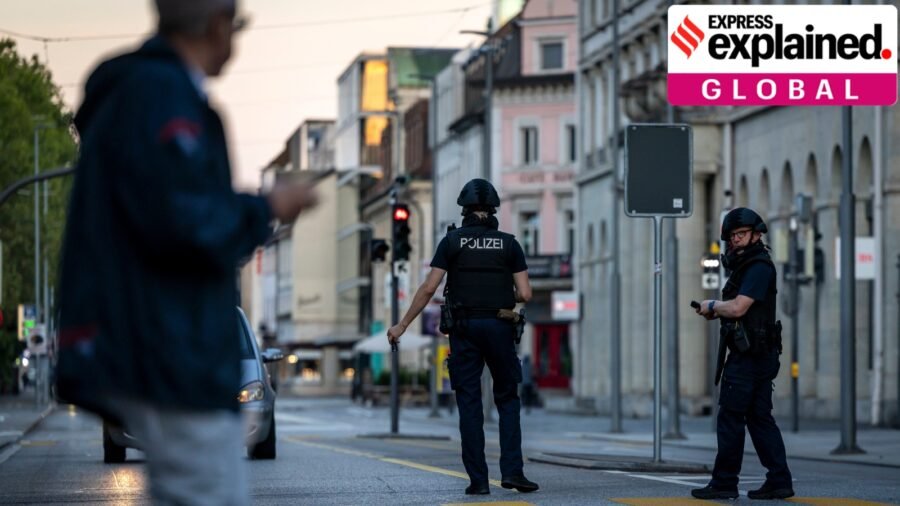
On August 30, an annual electronic music festival in Aarau, a canton in Northern Switzerland, was the site of a shooting which left a 22-year-old-woman dead and injured five people.
The music festival was hosted at the Schachen horse racing track in Aarau and local police said that all the victims of the shooting were in their 20s. The shooting happened later into the night when the crowd had thinned down. Maria Spinelli —an Italian national — succumbed to her injuries after being struck in the back by a bullet.
The perpetrators of the crime remain unidentified and preliminary investigations have indicated that the victims did not share any prior connection with one another. Aarau’s Police Commander has indicated that the end to this investigation is not yet in sight and a manhunt is currently being conducted.
Story continues below this ad
The incident comes as a shock to the nation given the rarity of systemic mass shootings and gun-related violence in the country. Despite that, however, Switzerland still maintains one of the highest rates of civilian gun ownership in Europe. For a nation that has adopted a neutral stance, why is the civilian gun ownership rate so high and what is Switzerland’s relationship with guns? We Explain.
High gun ownership, low violence in Switzerland
Switzerland simultaneously maintains one of the lowest rates of gun-violence alongside a population that owns firearms. Geneva-based Small Arms Survey reported in 2017 that approximately 2.33 million civilian-held firearms were in circulation within a population of 8.4 million. This equates to a rate of 27.6 guns for every 100 residents.
This degree of civilian ownership is tied to the model of citizen-militia and reserve military service framework observed in the nation. Able-bodied Swiss nationals undergo mandatory conscription and retain their service weapons at home to ensure rapid national mobilisation in the event of a foreign aggressor.
Civilian armament for personal defence, however, is strictly regulated. Gun culture in the Alpine nation shares deeper ties with national defence and target sports than with the protection of personal freedoms. Historically, Switzerland has experienced very low rates of firearm related homicides which have hovered around 0.2 for every 100,00 residents. In contrast, the United States has an estimated 120.5 firearms per 100 residents with a homicide rate of approximately four to ten for every 100,000 residents.
Story continues below this ad
Rules and regulations
Switzerland follows stringent regulations governing the acquisition and possession of weapons. Publicly carrying a firearms is essentially prohibited for citizens and the purchase of one requires a shall-issue permit that is accompanied by extensive criminal background checks. In 2007, a national reform banned the distribution of ‘Taschenmunition’ or pocket ammunition. This is a sealed tin of 50 cartridges that used to be kept with militiamen at home but was discontinued due to a series of high-profile homicides that employed service weapons.
Additionally, in 2019, Swiss voters overwhelmingly passed a referendum to tighten gun laws, restricting high-capacity semi-automatic weapons and improving the traceability of firearm components to comply with the European Union’s Schengen directives.
The last event of comparable shock was the Zug massacre on September 27, 2001. A lone gunman named Friedrich Leibacher who was armed with legally acquired weapons (including a SIG SG 550 and a pump-action shotgun), stormed the cantonal parliament, and killed 14 politicians before committing suicide.
Interestingly, the Aarau shooting now left behind cartridge casings that pointed to two different calibers of ammunition used. This complicates the profiling of the perpetrator(s) of this crime.
Containment
Story continues below this ad
The Aarau canton police are evaluating terrorism, mass shooting and targeting criminal feuds as equally probable motives. The investigation is complicated due to a lack of information about the shooter and the motive.
The shooting took place a full thirty minutes after the music festival had wrapped up. Of an estimated 3,500 attendees, only about a 100 were still present. The perpetrator also escaped in a timely manner without engaging the police, which was the case in the 2001 Zug massacre. The use of heavy weaponry, multiple firing locations, and a clandestine escape aligns closely with organised criminal violence.
The entire constabulary of the Aarau police was mobilised and a manhunt remains underway. Specialised state assets like Argus special intervention unit and the Cantonal Disaster Response Element were also deployed. The Swiss army’s Super Puma helicopters are assisting with reconnaissance and monitoring escape routes up to 30 kilometers away.
Aarau’s location near the South German border has extended the investigation into neighboring areas and police from Freiburg, Germany are linked to this case. Cooperation relies on the Schengen information system (SIS), a large database used by European nations to share border security data.

Saif Ali Khan says the Kapoors can eat Chinese food thrice a day: ‘Not only Kareena…’
By Sohail Khan · 30 Sep
Scientists identify a new penguin species for the first time in more than 100 years
By Sohail Khan · 30 Sep