PoK’s newly-appointed Prime Minister and the Islamabad factor
In 2006, while I was staying in Muzaffarabad, a serving young Deputy Commissioner of Pakistan-occupied Kashmir came to visit me one evening. What took me by surprise was the candour with which he described the extent of Islamabad’s institutional domination over the everyday governance of PoK. Here, “Islamabad” is often used in the broader political sense to denote the power establishment comprising the Pakistani civilian political executive and the military establishment, whose interests and influence often converge on matters concerning PoK. The officer spoke at length about how deeply “the federal government” was embedded in the region’s administrative and political structures, leaving little doubt, in his view, that the autonomy suggested by PoK’s constitutional arrangements was far narrower in practice. I was taken aback not merely by the substance of what he was saying, but by the fact that a serving senior administrator was willing to articulate it so openly.
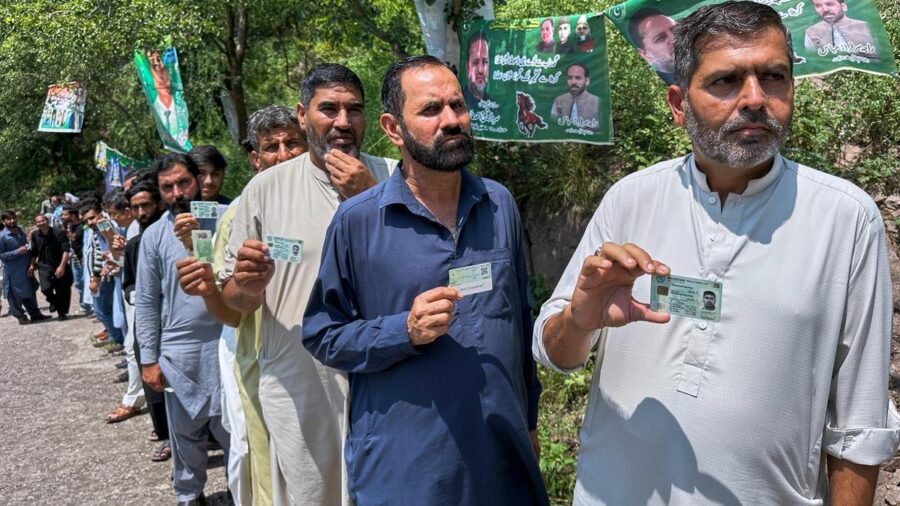
Nowhere is this more evident than it is today, 20 years later, after an electoral process that unfolded against the backdrop of unprecedented protests that rocked the region for nearly three months. The unrest, which has claimed dozens of lives, with one human-rights monitor putting the civilian death toll at 89 by early August, has brought long-suppressed questions about PoK’s political and institutional architecture into the mainstream. This may be the rare occasion since the Partition of British India in 1947 and the bifurcation of Jammu and Kashmir that PoK has emerged as a major political spotlight. For most of these eight decades, it has been Jammu and Kashmir hat has remained in the news, for one reason or another, while developments in PoK have largely escaped sustained international attention.
Many aspects of the PoK political system that had remained largely outside public debate have now entered the mainstream of the political conversation, most notably the question of the refugee seats. But the latest choice of the so-called post of prime minister has provided perhaps the most potent symbol of the underlying problem.
In the 2026 elections, the PML-N emerged as the largest party, winning 25 of the 45 directly elected seats, compared with 12 for the PPP. The 45 seats include 12 refugee seats. The PML-N position was subsequently strengthened through the eight reserved seats: the PML-N won six of the eight, taking its total Assembly strength to 31, while
The PPP secured the remaining two reserved seats and 14 seats overall. The electoral outcome, therefore, gave the PML-N a clear parliamentary majority and paved the way for a government led by the party. Yet the choice of Iftikhar Gilani has brought the question of electoral legitimacy back to the centre of the debate. Mr. Gilani had lost the “general election” from Muzaffarabad, only to return to the Assembly through a seat reserved for professionals and technocrats and subsequently emerge as the PML-N’s candidate for the so-called post of prime minister, with his nomination approved by Nawaz Sharif. His nomination was announced after a meeting in Islamabad involving Pakistani Prime Minister Shehbaz Sharif and senior PML-N figures from PoK, including Shah Ghulam Qadir and former prime minister Raja Farooq Haider. Ultimately, in a display of his displeasure, PML-N PoK president Shah Ghulam Qadir was absent from the Assembly during the August 28, 2026 vote to elect the so-called prime minister. Mr. Gilani secured 30 of the 44 votes polled.
The sequence of events is interesting because it points directly to the underlying power structure of Pakistan. At the meeting, it was reportedly former Interior Minister and PML-N leader Rana Sanaullah, who is known to be brash, who delivered the bad news to the two senior leaders. Both were reportedly stunned, having expected the premiership to go to one of them. When they protested, Rana Sanaullah is said to have reminded them that even the PML-N, despite winning two-thirds majorities on two occasions in Pakistan, had been forced to see its governments cut short. The message was unmistakable: electoral mandates and parliamentary majorities do not, by themselves, determine political outcomes in Pakistan. The decision to appoint Mr. Gilani therefore appears to have reflected the hard reality of Pakistani politics, in which the endorsement of the military establishment remains crucial to the survival and functioning of an elected executive. It also leaves little doubt about where the impetus for the choice came from or, at the very least, whose backing was required to make it possible.
The nomination of 46-year-old Barrister Syed Iftikhar Ali Gilani as the Pakistan Muslim League-Nawaz’s candidate for the post of so-called prime minister of PoK has produced an unusual political paradox. The manner in which he has returned to the Assembly, after losing the recent “general election” in Muzaffarabad, provides precisely the kind of ammunition that protesters have been using to question the representative character of the political system. Given Pakistan’s present hybrid model of governance, the military establishment retains considerable influence over major policy decisions. This is particularly true in matters of national
Security, which the Pakistani military has long regarded as its prerogative. Against this backdrop, it is difficult to rule out the possibility that Mr. Gilani’s selection originated with the military establishment. PoK is one area where the military has a direct influence over crucial political and governance decisions.
Mr. Gilani contested LA-29 Muzaffarabad-III as the PML-N candidate and lost to PPP’s Mukhtar Ahmed Abbasi, receiving 16,507 votes against Abbasi’s 20,045. Yet only weeks later, he re-entered the Assembly after winning the reserved technocrat/professional seat with 26 votes. On August 27, PML-N president Nawaz Sharif nominated him for the premiership; the Assembly elected him for the so-called post of the prime minister on August 28. His name was a surprise for everyone, including the old guard of the party, as they were stunned by the nomination of a relatively younger colleague.
In PoK, political power has traditionally revolved around three principal centres: the Mirpur lobby, representing southern PoK and the erstwhile areas of the Poonch estate in central PoK, and Muzaffarabad in northern PoK. Since the Speaker was appointed from Mirpur, the Prime Minister was expected to come from the latter. Until the last moment, Shah Ghulam Qadir was widely seen as the inevitable choice, largely because of his proximity to the Sharif family and his longstanding record as a winning legislator in the Assembly. He was re-elected from a constituency in the Neelum Valley, strategically located close to the Line of Control and Kashmir valley’s northern frontier, further adding to his political profile. Another contender was Raja Farooq Haider, the former prime minister and a veteran PML-N leader. His experience and political stature also made him a natural contender for the post.
The choice may also reflect an attempt to address the generational deficit in PoK’s political leadership. Like Pakistan, PoK has a young population, with a median age of around 24 years, compared with about 21 years in Pakistan. India’s median age, in contrast, is 29 years. The calculation is that a relatively young and middle-aged educated prime minister could therefore help assuage criticism that the region’s political leadership remains dominated by an older generation with a clannish mentality and is increasingly out of step with the aspirations of its younger population. The broader unease among younger generations across South Asia, where political establishments are increasingly confronting demands for greater accountability, representation and opportunities, is perhaps not entirely lost in this context. Mr. Gilani’s education in the U.K .provides an additional dimension, allowing the party to signal to
The large and influential PoK diaspora there that it has chosen a prime minister with a more modern outlook and a commitment to new ideas and governance reforms.
However, for protesters, the sequence is difficult to ignore. Their larger complaint has been that Islamabad can influence political outcomes in PoK not merely through overt political intervention but through institutional mechanisms embedded within the electoral architecture itself. A candidate rejected by voters in a general constituency can, under the existing rules, return to the legislature through a reserved category and then potentially occupy the highest elected office in the region. The episode therefore risks becoming a particularly vivid illustration of what protesters describe as the ability of the system to circumvent, rather than simply reflect, the popular mandate.
This takes the debate beyond the migrant or refugee seats, whose abolition has long been demanded by sections of PoK’s political class. This and other aspects have been outlined in my earlier four pieces on the subject. The current controversy draws attention to the reserved categories as well: five seats for women, one for Ulema and Mashaikh (religious leader), one for overseas PoK residents and one for technocrats and professionals. The eight seats may have been designed to broaden representation, but their political use this time will raise questions about whether they have become instruments through which party leadership alters the composition of the Assembly, particularly the executive head, after the electorate has spoken.
The irony is that Mr. Gilani himself may have been selected precisely because he is different from the archetypal PoK politician. He is not an outsider to the region’s politics: he comes from a prominent political family in Muzaffarabad and has represented the area in the Assembly. But his professional background and socially elite Muslim lineage are markedly different from the traditional politics of patronage and local factionalism. He studied in Islamabad, went to Britain for higher education and obtained a Bar-at-Law qualification before practising law in Islamabad for roughly a decade. He subsequently entered electoral politics and served as an Assembly member in 2011 and 2016. He also served as education minister for five years.
It is his record in education that may offer the most important clue to the thinking behind his selection. Mr. Gilani has previously argued that the education department became deeply entangled with political patronage, with government jobs being distributed as political rewards. He has called for structural changes in the sector and warned of institutional decline. His experience in education could therefore acquire greater significance at a moment when PoK’s young population is increasingly impatient with a political system that appears to offer neither adequate employment nor effective governance.
There may also be another calculation behind the choice. PoK politics has historically been deeply shaped by local identities, biradari and caste alignments. These networks remain an important part of electoral mobilisation, particularly at the constituency level. A leader whose political appeal rests less on a particular caste bloc and more on professional credentials and administrative experience could, at least in theory, offer Islamabad and the PML-N a different model of governance: one centred on running the administration efficiently rather than constantly negotiating the region’s intricate social and factional equations.
That does not necessarily mean that Mr. Gilani himself is free from the political networks that dominate PoK. His family has been part of the region’s political establishment, and his career has been closely associated with the PML-N. Nor should his nomination automatically be read as evidence that Islamabad has deliberately chosen an “administrator” over a politician.
This could become particularly important because the immediate challenge before the incoming government is not simply the distribution of political offices. The protests that have convulsed PoK have exposed a much deeper sense of alienation, especially among younger residents. The demands are “economic and administrative,” but they are also about dignity, accountability and the feeling that decisions affecting the region are too often made through political calculations beyond the direct control of its electorate. In that sense, Mr. Gilani’s nomination contains both an opportunity and a danger for Islamabad. A government that can demonstrate competence in education, employment, public services and institutional reform could begin to address the frustrations that have fuelled the protests.
But the manner of his return to the Assembly creates an immediate legitimacy problem. It allows opponents to argue that even a potentially competent “administrator” has been brought to power through precisely the structural arrangements they are challenging. The message from the street could therefore be blunt: if the objective is to restore faith in representative government, administrative efficiency cannot substitute for political legitimacy.
The emerging choice of Iftikhar Mr. Gilani, therefore, fits a larger historical pattern: in PoK, the political executive in Islamabad may determine the broad direction of the choice, while the enduring requirement is that the individual eventually selected does not cross the red lines of the military establishment. What changes is the name; the underlying political equation remains remarkably constant.
Even recent history shows that politics in PoK has rarely been determined by the electoral arithmetic of the region alone. The pattern is visible in the succession of governments after the 2021 elections: PTI’s Abdul Qayyum Niazi became prime minister in 2021, followed by his party colleague Sardar Tanveer Ilyas in 2022 after Imran Khan’s removal from office in Islamabad; Chaudhry Anwarul Haq, initially associated with PTI and subsequently heading its dissident forward bloc, took over in 2023 with the support of a coalition of opposition parties and dissident PTI members. Most recently, Faisal Mumtaz Rathore of the Pakistan Peoples Party (PPP) replaced Haq in November 2025 after a no-confidence motion. Rathore’s elevation was particularly instructive: as the PPP’s influence at the centre grew within the governing arrangement in Islamabad, the prime minister in Muzaffarabad once again came from the PPP. The succession of Niazi, Ilyas, Haq and Rathore, belonging respectively to PTI, PTI, a PTI dissident grouping and PPP, thus offers more than a record of changing personalities; it illustrates how closely the political fortunes of Muzaffarabad have tended to mirror the balance of power in Islamabad.
The decision to bring Iftikhar Gilani into the Assembly through a reserved professional/technocrat seat and then put him forward for the prime minister’s office is particularly surprising at a time when the protests in PoK have become an international story and a considerable embarrassment for Islamabad. The entire Kashmir narrative that Pakistan has projected for decades had rested heavily on portraying the electoral process on the Indian side as lacking popular legitimacy.
Yet the developments across the Line of Control will merely add ammunition to the protesters’ argument that the political system in PoK does not necessarily reflect the will of the masses. A political system in which a candidate defeated by voters in a general constituency can return to the legislature through a reserved seat and then potentially become prime minister inevitably raises questions about the relationship between electoral choice and political power.
For Pakistan, which has consistently sought to cast doubt on the representative character of elections in Jammu and Kashmir, the episode is particularly awkward and a potential self-goal. More importantly, the choice appears to have been made without fully factoring in its wider political consequences. The recent protests have already brought the political architecture of PoK, including the role of the refugee seats, into sharper international scrutiny.
Twenty years ago, a serving Deputy Commissioner told me candidly about Islamabad’s institutional dominance over PoK. Two decades later, the latest political developments suggest that little has changed in the underlying equation. The names may change, governments may come and go, and elections may be held but the question of how much political choice ultimately rests with the people of PoK remains unresolved.
(Luv Puri is the author of two books on Jammu and Kashmir, Uncovered Face of Militancy and Across the Line of Control, the latter based on fieldwork in the region and published by Columbia University Press.)

We need more mega-science projects, says CERN Director-General
By Sohail Khan · 31 Aug
The republic of examinations
By Sohail Khan · 31 Aug
Tara Sutaria on living with a ‘maths learning disability’: ‘Need my accounts team’
By Sohail Khan · 31 Aug
Leave a Reply