Op Safed Sagar to now: How India spies on enemy positions from the air
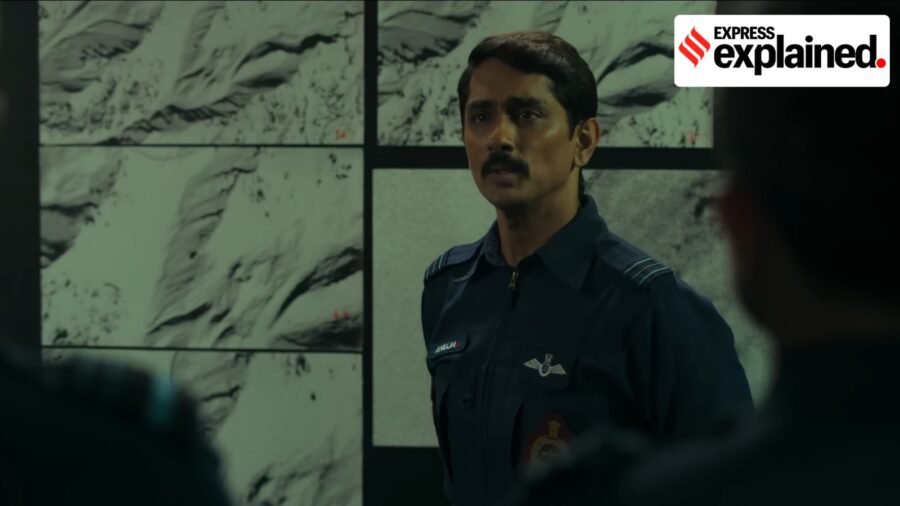
Operation Safed Sagar — the acclaimed Netflix series based on real events from the air operations conducted by the Indian Air Force (IAF) during the 1999 Kargil war — highlights the photo reconnaissance (photo-recce) missions executed by the No. 17 ‘Golden Arrows’ squadron during that time.
The squadron, equipped with MiG-21 aircraft, played a crucial role in conducting multiple photo-recce sorties. These missions, along with those carried out by other IAF fighter squadrons, were instrumental in identifying the extent of the Pakistani intrusion along the Line of Control.
What are photo-reconnaissance missions, why are they critical and how have they evolved over the years with the acquisition of drones and satellites?
What is a fighter aircraft photo reconnaissance mission?
A fighter aircraft photo-recce mission is one in which a fighter or fighter-derived aircraft is tasked with collecting the imagery of an area, installation or activity for intelligence purposes, rather than attacking the target.
It is different from a strike and an air defence missions, which are meant, respectively, for destroying a decided target, and for locating and engaging one. An aircraft on a photo-recce role may fly into or close to a hostile location, capture images and return.
They are typically used to map enemy positions, identify and locate targets for subsequent strike missions, assess damage after an air strike, monitor military activity, and update intelligence on enemy deployments and defensive positions.
They can also be used to conduct terrain or route reconnaissance, particularly around difficult or contested areas, assist in battle-damage assessment after an operation and provide imagery for mission planning, including routes, target coordinates and changes to the battlefield.
Story continues below this ad
Such missions can also be flown to locate wreckage of any aircraft.
Which aircraft and squadrons had a dedicated photo recce role?
The erstwhile Canberra PR.57/67 and MiG-25R squadrons were dedicated to photo-reconnaissance roles. Aside from that, the Jaguars, MiG-21s, MiG-27s, Mirage 2000s and the latest Su-30s have also been earmarked for this role at different points.
For instance, the No. 17 squadron, depicted in Operation Safed Sagar, was flying dedicated photo reconnaissance missions in the initial part of the Kargil conflict and was later given bombing roles. Similarly, the No. 14 squadron played a critical role in photo recce missions during Operation Parakram, which followed the Kargil conflict.
Story continues below this ad
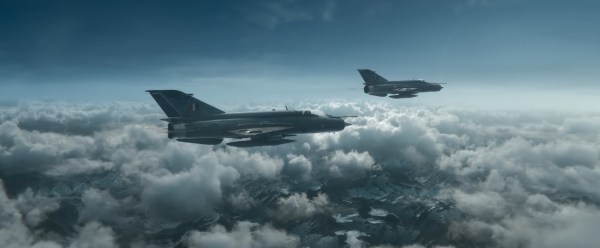 A still from the Netflix show Operation Safed Sagar. YouTube
As of today, with all MiG-21 squadrons being phased out, only the Jaguars and the Su-30s perform photo reconnaissance missions. That is just one of their many roles.
How has fighter photo reconnaissance evolved over the years?
Earlier, older cameras with photographic film were used for such missions, which would then be later developed into high-resolution images and analysed to decide the further course of action.
During the Kargil war, tactical photo recce was carried out by MiG-21s using the Vinten 751 camera. Its focal length of only three inches — a shorter focal length provides a wider field of view — helped the aircraft in taking pictures from a low level, said Air Chief Marshal B S Dhanoa (retd), who was then the Commanding Officer of the No.17 ‘Golden Arrows’ squadron.
“It was a British camera placed inside a Russian fuel tank,” he said. While Dhanoa’s squadron specifically conducted tactical photo reconnaissance missions, strategic photo reconnaissance missions were undertaken by other IAF squadrons.
Story continues below this ad
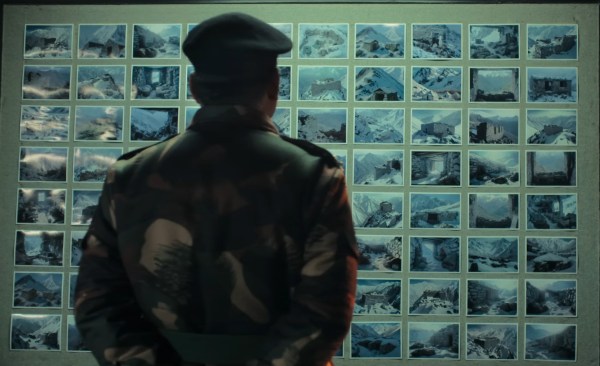 A still from the Netflix show Operation Safed Sagar. YouTube
Air Vice Marshal Sunil Nanodkar (retd), who was the Commanding Officer of the No. 14 Squadron during Operation Parakram, explained that the Jaguars would fly multiple sorties for strategic photo recce. The Ambala-based No.14 Squadron is equipped with Jaguars.
“We would stay within the border and undertake oblique photography up to 75 km, using Long-Range Oblique Photography (LOROP). (The) camera would capture imagery of major enemy deployments deep inside the enemy territory,” he said.
Nanodkar explained that multiple types of cameras and equipment were deployed around that time to capture imagery, including the LOROP, Vicon pods and the British Aerospace pod.
Photo recce missions
Photo recce missions have evolved significantly since then.
Nanodkar explained that recce light pods and Litening targeting pods are now used for photo recce missions. “The images are no longer captured in a photographic film but are relayed directly to commanders through ground stations on a real-time basis and are simultaneously examined for further course of action,” he said.
Story continues below this ad
But with the increased deployment of satellites and drones, are fighter photo recce missions still required? Yes, particularly during wartime.
“All three can provide real-time images of the ground. However, satellites have specific revisit times, and drones can be vulnerable during a conflict or war. In such situations, fighter jets could carry out high-speed photography at any given time,” Nanodkar said.

The Koran and politics of purdah
By Sohail Khan · 22 Sep
Persistent antagonism towards Urdu
By Sohail Khan · 22 Sep
How ‘kaata wash’ helps preserve the delicate Dhakai jamdani sari
By Sohail Khan · 21 Sep