Nuclear power operator plans new design unit to support private players
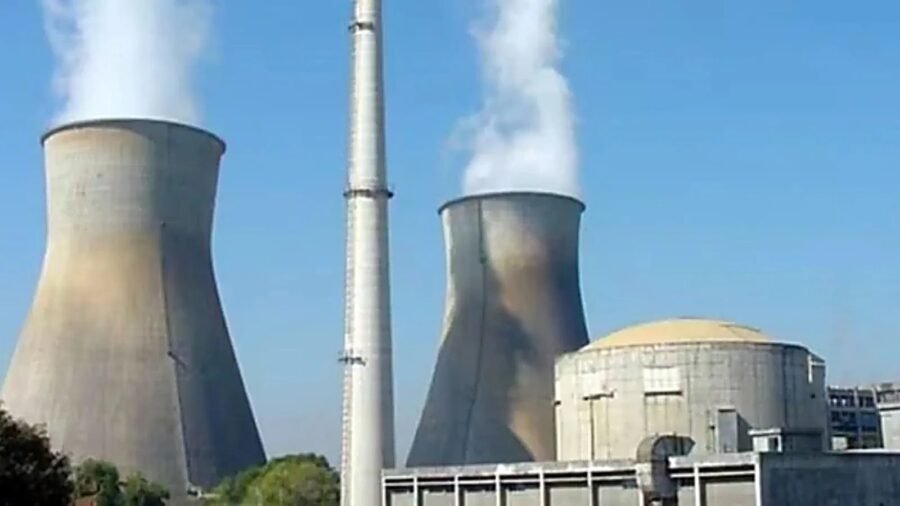
Months after the country’s tightly regulated nuclear power sector was opened to private participation, the Nuclear Power Corporation of India Ltd (NPCIL) plans to set up a new design vertical which will provide technological support to private players and state governments seeking to deploy indigenous nuclear reactor technology.
The proposal for the new vertical is currently under process, has learnt.
With the draft rules under the Sustainable Harnessing and Advancement of Nuclear Energy for Transforming India (SHANTI) Act — it was enacted in December 2025 — now released and expected to provide greater clarity on the legal framework around licensing for new nuclear projects once notified, the state-owned company plans to streamline its functions through the new vertical.
Story continues below this ad
This vertical will be a gateway for entities seeking access to pressurised heavy-water reactor (PHWR) technology and technical expertise, including technology support, design reviews and quality assurance.
The move comes amid growing interest in PHWRs among prospective public and private sector entrants as a preferred technology for the initial phase of India’s nuclear capacity expansion, given its established domestic supply chain and ecosystem.
Currently, NPCIL implements PHWR-based nuclear power projects through indigenous technology developed in India. The country has a nuclear power capacity of 8.7 gigawatt-electric (GWe), all of which is run and operated by NPCIL.
Earlier, the Central Electricity Authority (CEA), in its roadmap for achieving 100 GWe nuclear capacity by 2047, had also identified PHWRs as a prime candidate for adoption by other public sector undertakings and private companies.
Story continues below this ad
“However, NPCIL having in its own pipeline expansion plans may find it difficult to hand hold all the new entrants interested in setting up PHWR plants. Therefore there is a compelling requirement for a dedicated and independent entity to provide technical support to other utilities,” the CEA said.
It suggested that the proposed agency could be established under the Department of Atomic Energy (DAE), with experts drawn from the Bhabha Atomic Research Centre (BARC), the Indira Gandhi Centre for Atomic Research and other specialised DAE units.
Among global nuclear reactor technologies, India’s indigenous PHWR is seen as the most cost-effective option for its price-sensitive power market, where high project costs can undermine nuclear power’s competitiveness.
Story continues below this ad
India has seen similar challenges previously. The proposed French-assisted nuclear power project at Jaitapur in Maharashtra has remained stalled for years, with the high projected cost of electricity emerging a key hurdle to its progress.
Industry insiders said foreign reactor technologies such as light water reactors (LWRs) or pressurised water reactors (PWRs) are more expensive than indigenous PHWRs. Some estimates peg the cost of Indian reactors at around Rs 18 crore per megawatt-electric (MWe), compared with about Rs 34 crore per MWe for Russian reactors, while reactors from France and the US are estimated to cost much more.
ExplainedWhy PHWRs are key to n-expansion
Domestic PHWRs are considered the most viable nuclear option, at around Rs 18 crore/MWe, for the price-sensitive Indian power market. Imported Russian, French and US technologies cost a lot more. Established design standards and a mature domestic supply chain are being flagged as key advantages for deployment of PHWRs in the initial phase of nuclear expansion.
“The cost of foreign technologies can be viable in India only with bulk purchases. But that is difficult at this stage as no one is likely to order 15 or 25 reactors in one go. So, unless the cost of foreign reactors comes down, private players are most likely to initially opt for PHWRs, which are currently more cost-effective,” a nuclear industry sector expert told .
Industry executives also point to established design standards and a mature domestic supply chain as key advantages for deploying PHWRs during the initial phase of India’s nuclear expansion.
Story continues below this ad
Last week, executives from two leading Indian private companies, Adani Atomic Energy and Jindal Steel, said the existing 700 MWe PHWR design could provide a practical starting point for scaling up nuclear capacity, given the availability of established design standards, a mature domestic supply chain and an established ecosystem of vendors and technical expertise.
According to them, foreign reactor technologies and small modular reactors (SMRs) could play a role at a later stage as the sector matures.
Both Adani Group and Jindal Steel are planning to develop 10 GWe and 18 GWe of nuclear capacity, respectively, in the coming years.

CJI Surya Kant defends confidentiality of Collegium dissent at CNLU interaction
By Sohail Khan · 26 Sep
Maharashtra crisis about large regional variation in rainfall; Marathwada, Solapur worst hit
By Sohail Khan · 26 Sep