Need to root public health education in Indian realities
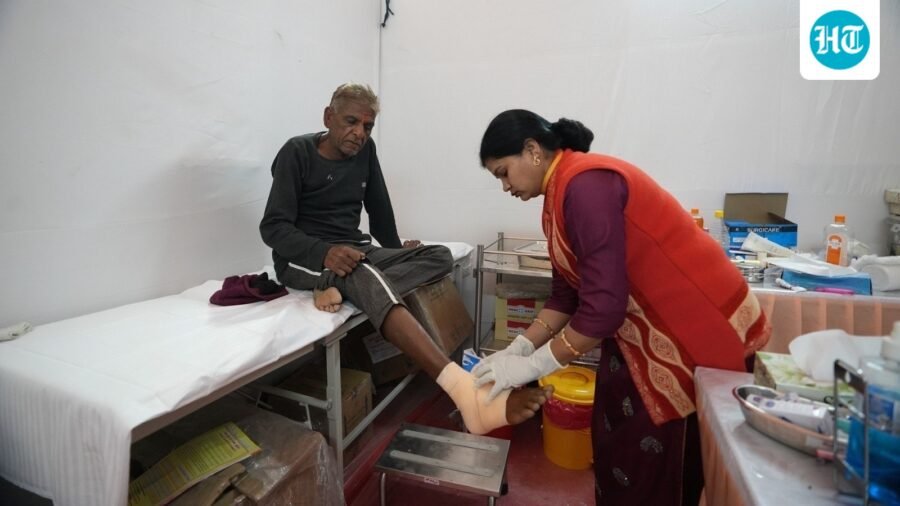
While clinical medicine is about diagnosing and treating individual patients, public health addresses populations or community health problems
Published on: Aug 20, 2026, 11:10:03 IST
Prefer HTon Google
Share via
Copy link
Photo caption: [Photo credit: Reuters]
The student protests focused the nation on medical education. But its poorer cousins — dental, nursing, or public health education — don’t seem to be registering on the policy radar. Their problems go beyond the traditional challenges that the education sector suffers from — poor quality, lack of teachers and infrastructure. Public health education principally entails the MPH (Master of Public Health) programme with some institutions also offering undergraduate and doctoral programmes.
While clinical medicine is about diagnosing and treating individual patients, public health addresses populations or community health problems. Public health functions broadly include health surveillance, protection, promotion, planning, regulation, services organisation, delivery, and evaluation. Public health also requires a wide gamut of workforce trained in public health nutrition, occupational and environmental health, epidemiology and biostatistics, health administration and management, informatics, social sciences, economics, and policy analysis. Clinical services and public health services are complementary and together improve a nation’s health.
Given the wide range of competencies required to deliver comprehensive public health, a diversity in disciplinary backgrounds of students joining the profession is necessary: medicine, allied health sciences, social sciences and law to name a few. The MPH programmes are offered by a wide variety of institutions, from medical colleges to social sciences as well as agriculture universities with each having their own eligibility criteria. At the same time, the expectation is to produce postgraduates with similar exit-level competencies. There is hardly any other professional course that has this wide diversity at the entry level and the challenge to produce a relatively homogenous end-product.
States that have a public health cadre — Tamil Nadu, Maharashtra and Odisha — currently have about one public health specialist per 100,000 population or less. Efforts are on to create a public health management cadre to meet the norm of three per 100,000 population. Even this target pales in front of the current realities in countries such as the US which has about 55 public health professionals per 100,000 population. In India, currently 125 MPH programmes produce about 5,000 postgraduates a year in contrast to the US producing about 17,000.
The basic clinical skills of recording medical history, measuring pulse, auscultation of breaths and heart sounds are universal; what differs across countries is their interpretation. High fever in a patient can mean malaria in a specific season or typhoid or dengue in other places or seasons.
Similarly, basic public health competencies and principles of epidemiology, biostatistics, management, social sciences or communication are universal but contexts and local particularities have a bearing on community behaviours, health systems, programmes or policies. MPH programmes in India are rooted in Western models which may train candidates in the same competencies but miss out real-world Indian contexts. MPH programmes are run as classroom courses that are highly sanitised, an antithesis of both a public health course and discourse.
The lack of a centralised regulatory body is taking a toll on quality of these courses. Regulation of MPH programmes has fallen between two stools — National Medical Commission (NMC) and University Grants Commission (UGC). Since medical, dental, and AYUSH graduates account for the bulk of MPH candidates, should it be regulated by these councils? At the same time, MPH is not inherently a medical, dental or AYUSH degree. Many non-medical universities regulated by the UGC offer this degree too. Aligning MPH programmes with the National Education Policy (NEP) 2020 and the UGC framework which advocates academic flexibility, credit transfer, and multiple entry-exit options is a challenge given that this is a professional course.
Do we have a credible road map for reform? A group of concerned academics (both of us are part of it) have initiated efforts to advocate for corrective measures. The group recently released its report and we summarise its key findings and recommendations here.
First, India needs to expand to a broad-based public health service, beyond mere clinical provision. There is a need to advocate for a specialised public health cadre in all the states and open up career opportunities for trained MPH professionals. In the event of India failing to expand to a diverse set of functions and activities, MPH graduates may face the same challenges that dental and engineering graduates faced earlier — closure of these colleges and an uncertain future. There is a need for better management of the demand and supply of public health workforce to address the present deficiency, but also to not end up with overproduction of the professionals.
Uniform and inclusive eligibility criteria nationwide need to be established to ensure consistency, transparency, and inclusiveness. The entry criteria for MPH programmes must reflect the field’s interdisciplinary nature and include those with health, science, and social science disciplinary backgrounds. Introduction of key foundational courses is critical to ensure that everyone is at the same stage at the start of the course.
India-specific MPH programmes need to be designed while adopting best global practices to address India’s disease burden with a focus on primary health care. Public health schools must impart a basic and uniform set of skills and competencies and ensure sufficient time is allocated to acquire these. Adequate exposure to health system and primary health care should be ensured.
Like any professional course, MPH degree needs accreditation systems and councils. A separate Public Health Education Council of India should be set up, which should be an apical, multidisciplinary body that sets standards, accredits programmes, fosters interdisciplinary collaboration, and promotes workforce development.
Public health education in India needs to be anchored in the country’s realities to deliver the maximum efficacy.
Anand Krishnan is a professor at the All-India Institute Medical Sciences, New Delhi, and Rajib Dasgupta is a professor at the Jawaharlal Nehru University, New Delhi. The views expressed are personal
Get Current Updates on India News, Elections 2024, Lok sabha election 2024 voting live , Karnataka election 2024 live in Bengaluru , Election 2024 Date along with Latest News and Top Headlines from India and around the world.
See Less

Malaika Arora, 52, reveals a dietary staple she refuses to skip: ‘I can’t have salads’
By Sohail Khan · 28 Sep
A smoke and mirrors summit in which Xi emerged with the upper hand
By Sohail Khan · 28 Sep
Why must a woman always trade curiosity about the world for safety?
By Sohail Khan · 28 Sep