Mumbai Auto-Taxi Fare Hike: Minimum Fares Rise To ₹27 For Autos, ₹33 For Cabs From September 1
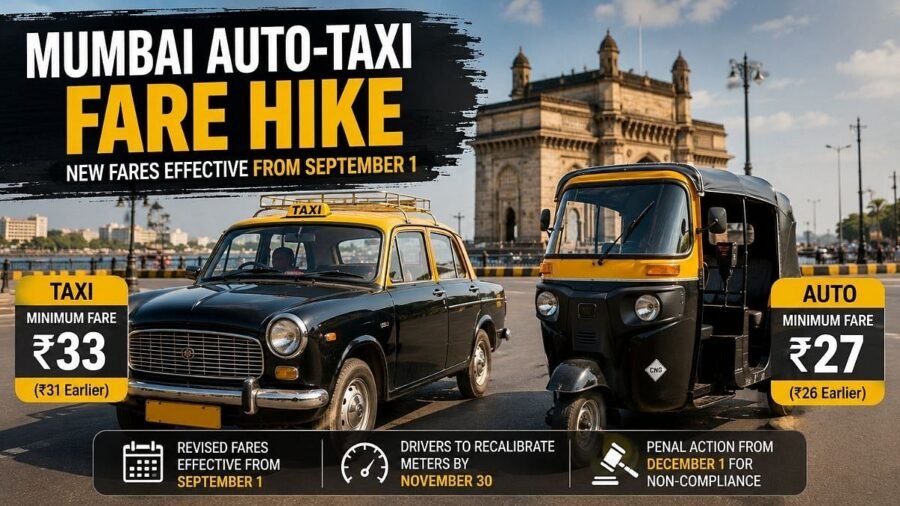
Mumbai’s revised taxi and autorickshaw fares will take effect from September 1, with the minimum taxi fare rising from Rs 31 to Rs 33 and the auto fare from Rs 26 to Rs 27. Drivers have until November 30 to recalibrate meters, with penalties proposed for non-compliance from December 1.
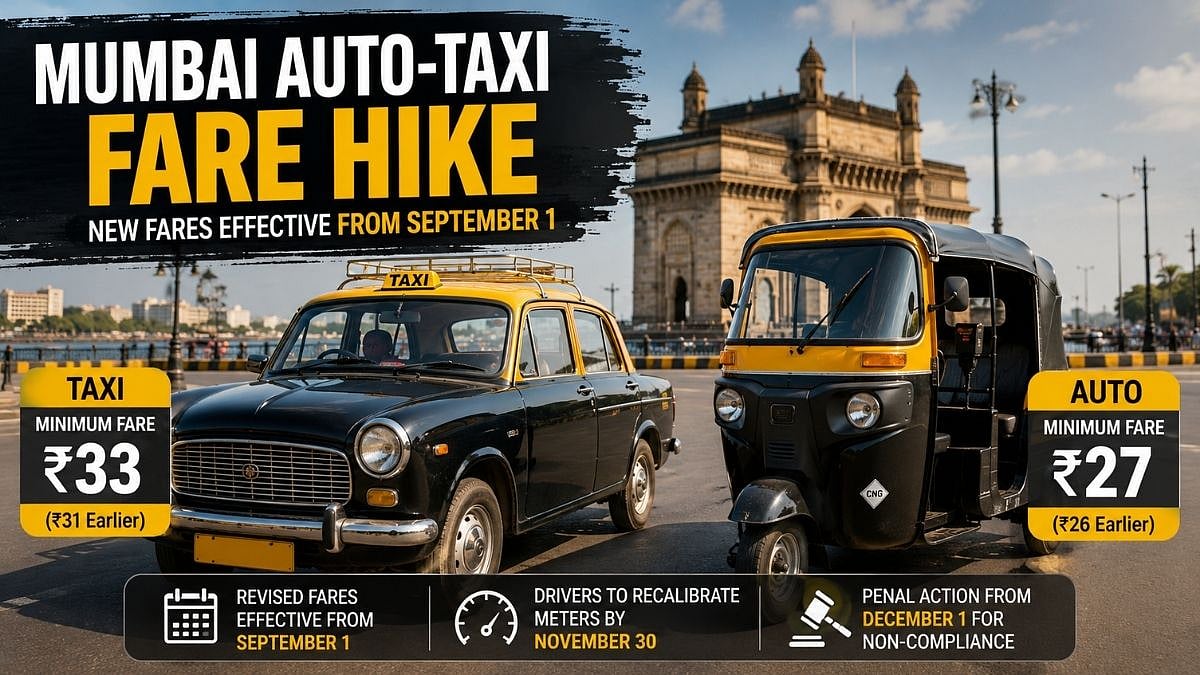
Mumbai commuters will pay higher minimum fares for kaali-peeli taxis and autorickshaws from September 1 | AI Generated Representational Image
Mumbai, August 31, 2026: Commuters travelling by Mumbai's kaali-peeli taxis and autorickshaws will have to pay more from September 1, with the revised fares approved by the Mumbai Metropolitan Region Transport Authority (MMRTA) coming into effect.
The minimum fare for taxis will rise by Rs 2, from Rs 31 to Rs 33, while the minimum autorickshaw fare will increase by Re 1, from Rs 26 to Rs 27.
The fare revision comes after a gap of 18 months. The previous increase of Rs 3 for both taxis and autorickshaws had come into effect on February 1, 2025. However, while the new fares take effect from Tuesday, drivers have been given until November 30 to recalibrate their electronic meters.
Until then, they have been directed to charge passengers according to the revised fare chart. Senior RTO officials said drivers who fail to recalibrate their meters by the deadline could face penal action from December 1, including a proposed daily fine of Rs 50, subject to a maximum of Rs 5,000.
`;
Meter Recalibration Challenge
The recalibration exercise, however, could pose a major challenge. The Mumbai Metropolitan Region has around 4.17 lakh registered autorickshaws and 44,825 kaali-peeli taxis, but only around 15 to 20 authorised centres are available for meter testing and recalibration. This could lead to long waiting periods as lakhs of vehicle owners attempt to complete the process within three months.
Under the process, an authorised dealer will update the meter with a revised chip and conduct an initial test. The vehicle will then undergo a 1.5-km real-time road test in the presence of RTO officials before receiving clearance.
Until meters are updated, passengers and drivers will have to rely on the revised fare chart, making the transition to the new rates a logistical challenge for both authorities and the transport sector.
Commuters Raise Cost Concerns
Everything is becoming expensive day by day. Transport fares, food and other household expenses have all increased, but salaries are not rising at the same pace. Our salary increment has also been affected in recent months because of the economic uncertainty caused by the war. For a daily commuter, even a small increase in taxi or autorickshaw fares adds to the monthly burden. The government should consider the financial pressure on common people before approving repeated fare hikes. — Ankit Tiwari, Daily commuter
Milk prices and other essential commodities are continuously becoming more expensive, while income and salaries remain almost the same for many people. Now even transport costs are increasing. The question is how an ordinary family is expected to manage its monthly budget when every basic expense goes up but income generation does not improve. A Re 1 or Rs 2 increase may appear small individually, but for people who depend on autos and taxis every day, it eventually becomes a significant burden. — Varsha Purohit
Drivers Defend Fare Revision
The fare revision is justified and was necessary because operating costs for drivers have increased considerably over the past few months. CNG and diesel prices have gone up multiple times due to the global situation and the impact of the war. Drivers also have to bear expenses related to vehicle maintenance, repairs, insurance and permits. The increase in the minimum fare is modest and will provide some relief to drivers who have been struggling to maintain their daily earnings amid rising costs. — KK Tiwari, President of the Bharatiya Janata Party Taxi Rickshaw Aghadi
“The revised fares are a welcome decision for the taxi and autorickshaw industry. Fuel prices have increased two to three times in recent months, while the cost of maintaining vehicles has also gone up sharply. Drivers cannot continue operating at old fares when every component of their business is becoming expensive. The hike is not excessive; it is a necessary adjustment to ensure that drivers can cover their operational expenses and earn a reasonable livelihood for themselves and their families.” — Thampi Kurien, President, Auto-Rickshaw Union
“People often look only at the fare paid by passengers, but they do not see the expenses a driver has to manage every day. Fuel, servicing, tyres, spare parts, insurance and other vehicle-related costs have all increased. After paying these expenses, the actual income left for drivers is not very high. This small fare revision was necessary to balance rising operational costs. We also have families and household expenses, which have become increasingly difficult to manage.” — Saroj, Auto driver, Kandivali
Also Watch:
Taxi Driver Backs Increase
This increase is necessary for drivers to continue earning a sustainable livelihood. The cost of operating a taxi has risen significantly, particularly because of higher fuel prices and maintenance expenses. At the same time, drivers are facing increased competition and cannot always get enough trips during the day. The fare revision will provide some financial relief, although it will not completely solve the challenges faced by the industry. We believe passengers will understand that this is linked to rising overall costs. — Moti Pal, Taxi driver
To get details on exclusive and budget-friendly property deals in Mumbai & surrounding regions, do visit: https://budgetproperties.in/

Add As a
Trusted Source 


67 Maharashtra Citizens Missing After Nepal-Tibet Floods As State Steps Up Rescue Efforts
By Sohail Khan · 31 Aug
Leave a Reply