Memories of Partition from a railway station in Delhi
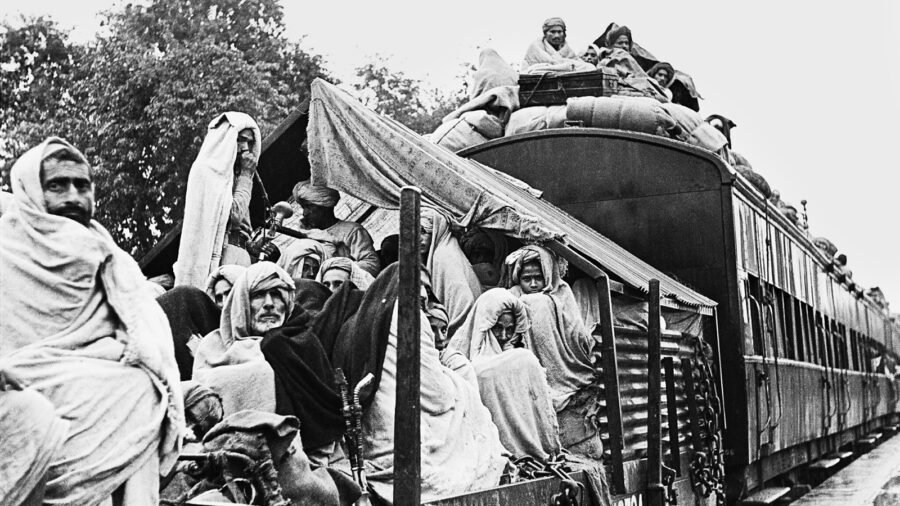
The quiet world of Lodhi Colony Railway Station sits far from the busy Lodhi Road. Silence hangs over the station. A deep sadness seems to be the permanent mood. One cannot help but wonder whether this melancholy comes from the cries it heard during Partition. The station witnessed thousands of Muslims saying goodbye forever to their homeland and their loved ones. From here, trains used to leave regularly for Lahore.
The family of the former Pakistani fast bowler and now well-known cricket commentator Sikander Bakht also took the train to Pakistan from Lodhi Colony Railway Station. His father, Jawan Bakht (referred to as J Bakht), lived in Karol Bagh and had studied at St Stephen’s College for some time. The cricket world came to know Sikander Bakht when he took eight Indian wickets for sixty-nine runs in a test match at Feroz Shah Kotla stadium during the 1979-80 series. On that visit, he also went to Karol Bagh to see the old family house and touched its every wall. Sikander Bakht recalls that his family was not completely sure about shifting to Pakistan. There were differences of opinion. In the end, they decided to move. By then, riots had broken out in Delhi.
Advertisement
Trains between Delhi and Lahore began running from the second week of August 1947 and continued until 22 November 1947. From Lodhi Colony Railway Station, two or three trains would leave for Lahore every day. One departed at 7 am and another at 9 am. If a third train ran, it left by 12 noon. The timings were fixed so that the trains would reach Lahore in daylight. In those terrible days, trains were special targets for rioters.
Historian-professor Gyanendra Pandey explains that people going to Pakistan had to collect their tickets and other papers from a temporary office of the Pakistan government located in the L Block of Connaught Place. Pandey’s research on Delhi confirms the existence of this ‘Pakistan Transfer Office’, which handled the movement of officials and property and, for a time, also became a gathering point for refugees.
The trains leaving were packed. Some passengers even sat on the roofs. Former Railway Board member Dr Ravindra Kumar says that after leaving Lodhi Colony Railway Station, the train reached New Delhi Railway Station within a few minutes. There, extra coaches were attached for government employees who were also going to Pakistan. Most were with the railways. In the capital’s largest railway colony at Kishanganj, nearly 25 per cent of the houses fell empty at the time. Dozens of Muslim railway workers, khalasis, linemen, guards and others, left for Pakistan. Several railway families from the Sabzi Mandi railway colony also migrated.
Advertisement
It is possible that the family of former Pakistani President Pervez Musharraf also crossed the border by train. His father, Syed Musharrafuddin, was a government servant and lived with his family on Minto Road. RP Puri, later the owner of the famous Central News Agency bookshop in Connaught Place, used to deliver newspapers to Syed Musharrafuddin’s government quarters. On 14 August 1947, Pakistan appeared on the world map. One morning around that time, Syed Musharrafuddin was waiting for Puri. He had news. After Puri had delivered the paper and started to ride away on his bicycle, Syed Sahib called him back. “Puri Bhai, we have had a very good relationship. From now on, please stop delivering the newspaper. We are leaving for Pakistan.” Puri could hardly believe what he was hearing. Later, he opened Central News Agency. He used to say that the Musharraf family was highly educated.
Sajjad Muneer, a Pakistani international squash player who now lives in Toronto, Canada, recalls that in the third week of August 1947, his maternal grandfather, Khan Mohammad Tufail Mohammad, and his paternal grandfather, Allah Ditta, both civil engineers, left their respective homes. The families started living in the Purana Qila camp. Muslims going to Pakistan were housed in Purana Qila and Humayun’s Tomb.
An eight-year-old Mamnoon Fatima was living in a flat on Babar Road near Bengali Market with her mother. The flat had been allotted to her father, Ghulam Sabir Kazmi, a government servant. Just before Partition, Kazmi had received a transfer order to Karachi and left, but the family was still in Delhi. Before they could also leave, riots had started to spread. Hindu neighbours on Babar Road hid the family in their prayer room to keep them safe, Mamnoon Fatima, who later became the sister-in-law of historian-professor Irfan Habib, would later tell her son, Hamza Farooq Habib, a well-known journalist with Pakistan’s ARY News channel.
At Lodhi Colony Railway Station itself, senior Congress leaders such as Lala Deshbandhu Gupta, Mir Mushtaq Ahmed, Lala Roop Narayan, Chaudhary Brahm Prakash and Sarla Sharma stood with folded hands and begged the departing Muslims to change their minds and stay in India. After listening to them, some people at the station turned back and went home. Most, however, continued their journey.
The writer is Ex-Advisor (History), Indira Gandhi Centre for Arts and Culture
From Nepal to India, how AI is improving disaster management
By Sohail Khan · 28 Sep
40 years ago September 28, 1986: Relief for Haryana farmers
By Sohail Khan · 28 Sep
Between Trump’s US and Xi’s China, the trap India must avoid
By Sohail Khan · 28 Sep