Love thy neighbour
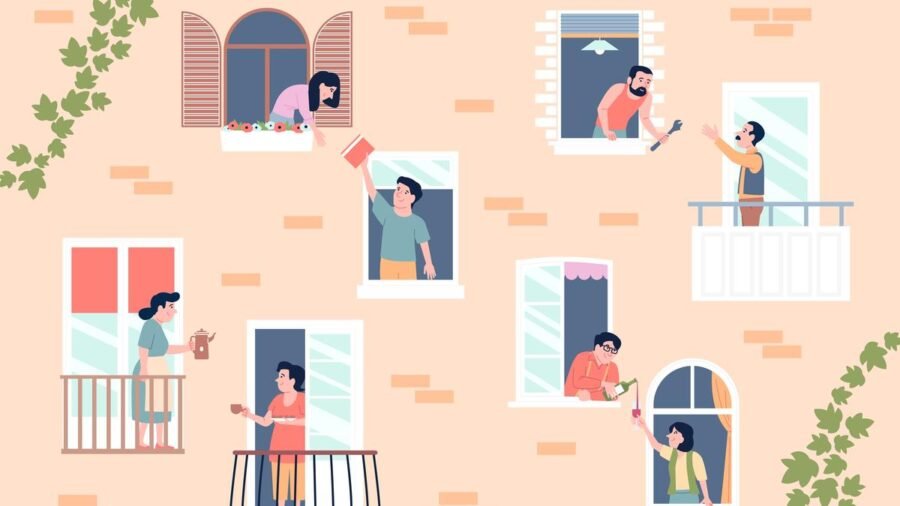
I was awakened early one morning by the deafening noise of building materials being unloaded on the roadside opposite my house. When I requested my neighbour who had ordered the stuff, to relocate it as it would hinder free movement of vehicles and pedestrians, he snapped, “It’s not your road”. In another incident, when flood water entered houses in a low-lying area of the city due to torrential rains, neighbours rushed to rescue an elderly couple who were caught in neck-deep water, unmindful of their own safety. These examples represent two extremes in the matter of neighbourly relationships in our society.
During my recent visit to Singapore, I was struck not only by the high civic sense and discipline of its citizens, but also by the various measures taken by the Singapore Government to promote a powerful sense of neighbourliness among them. For instance, its Housing and Development Board (HDB) has built housing units in soaring tower blocks spread all over the city which serve as the primary platform for promoting civic harmony among the 80 per cent of its population who reside there. Units of varying sizes are juxtaposed on the same floor to prevent income-based geographic segregation. As per its ethnic integration policy, HDB ensures balanced representation of Chinese, Malay, Indian and other minority races to prevent ethnic enclaves. The ground floor of HDB Blocks is intentionally left empty to host communal facilities like benches, tables, and senior activity corners.
The Singapore model is the result of decades of top-down government engineering, public education campaigns, and strict and consistent legal enforcement. Interestingly, the city-state has earned the sobriquet “Fine City,” a nickname that highlights both Singapore’s pristine and sophisticated environment and the hefty fines imposed by it to maintain public order.
In contrast, India, a much larger country, relies on a bottom-up and a culturally organic framework rooted in philosophies like ‘Vasudhaiva Kutumbakam’ (the World is One Family) and Group living (traditional Mohallas, family compounds and group homes), and structurally decentralised framework. As a result, most neighbourliness initiatives are driven by state governments, local bodies, and community organizations rather than by a single national programme.
Another distinguishing feature of our society is the rural-urban differential in neighbourly behaviours. Rural life fosters deep interdependence. Neighbours frequently pitch in with farming, emergencies, and large tasks. Rural residents know all or most of their neighbours as populations are small and more stable. On the other hand, due to high population density, urban attitudes centre on privacy and boundary maintenance. In apartment complexes of cities, residents have only a nodding acquaintance, meeting briefly only at meetings organised by neighbourhood associations or at planned events.
On the darker side, maintaining neighbourly relationships is disrupted frequently by clashing lifestyles, boundary violations, and caste prejudices. Frequent parking disputes between neighbours in Chennai, for example, have escalated into a major civic issue due to the rapid rise of vehicle ownership and lack of adequate space. There have also been reports of neighbours fighting violently over pet dogs spoiling shared areas or biting people. Tensions and public altercations among neighbourhood women often arise due to recurring water quality issues, pipe bursts, and supply disruptions.
These are only a sample of the innumerable disputes that frequently arise between neighbours. Resolving these issues requires understanding local housing bylaws, engaging in constructive dialogue, and utilising formal complaint mechanisms when necessary.
As India witnesses a growing elderly population and rapid urbanisation, neighbourly relationships remain critical buffers for personal wellbeing. Recent studies have confirmed that in densely populated areas like cities, online social networks like neighbourhood group chats, community apps, and digital boards, effectively substitute for the traditional practice of having personal contacts with neighbours.
Yet, by and large, face-to-face interaction remains the preferred choice for neighbourly relations as it builds deeper trust and fosters mutual respect, and a keen sense of belonging that digital tools cannot provide. Moreover, due to digital divide, many senior citizens living alone would prefer that their neighbours personally respond quickly, when an emergency crops up.
Eventually, with rapid advancement and popularisation of digital technology, it is hoped that communities will adopt a hybrid network model to foster greater trust and collective efficacy.

Stocks down again — but what are the outliers in India’s share market slide?
By Sohail Khan · 29 Sep
Cash transfers alone cannot tackle the problem of educated unemployment
By Sohail Khan · 29 Sep
Rabbit vs hare: Why one runs and the other hides
By Sohail Khan · 29 Sep